
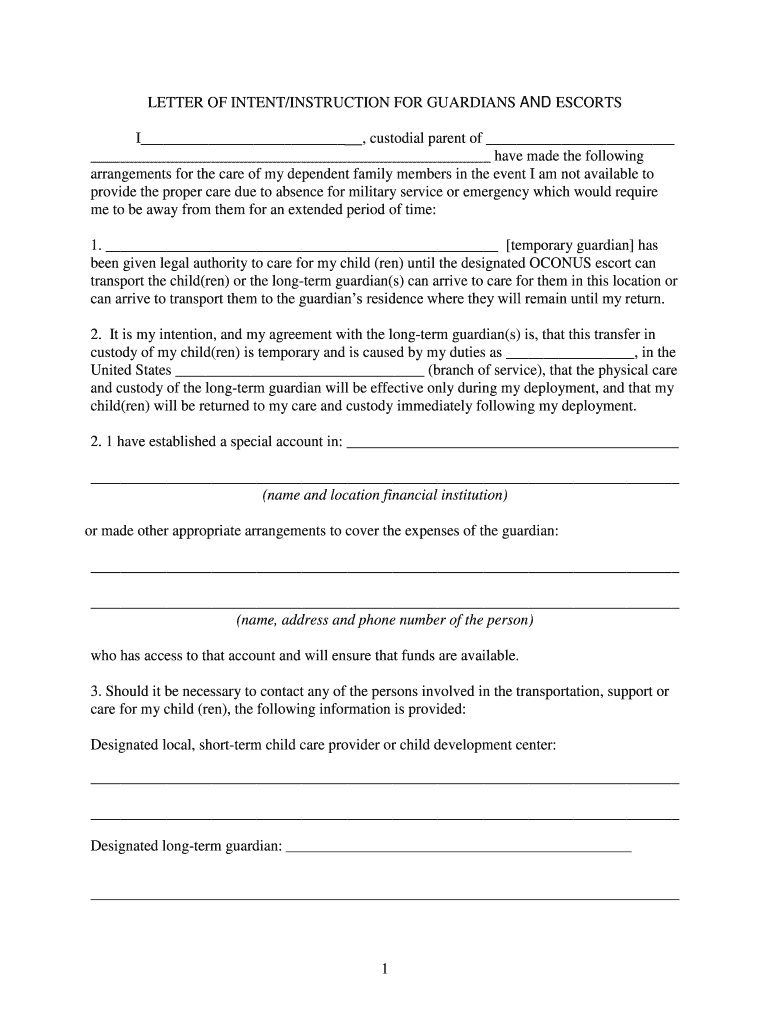







Definition & Meaning of the Family Care Plan Letter of Instruction
The family care plan letter of instruction is a critical document used primarily by custodial parents, particularly in military families, to outline care arrangements for their dependent family members during periods of absence. This absence can arise from military deployment, emergencies, or any situation requiring a temporary transfer of caregiving responsibilities. The letter serves to designate temporary and long-term guardians and provides essential information regarding financial provisions, contacts for medical emergencies, and return instructions to the custodial parent post-absence.
This document is not merely a formality; it is a comprehensive guide ensuring the well-being of dependents. It outlines key information that includes:
- Appointment of Guardians: Clear identification of individuals who are granted temporary guardianship over children or dependents during the parent's absence.
- Financial Arrangements: Details about financial support and provisions aimed at covering the needs of the dependents.
- Medical Care Directives: Instructions for medical care providers on what to do in emergencies regarding treatment and care preferences.
- Communication Protocols: Processes to communicate issues regarding guardianship, ensuring that information flows smoothly between the parent and designated guardians.
Understanding this letter's meaning and implications is crucial for any custodian preparing for a potential absence, ensuring that their loved ones remain safe and cared for.
How to Use the Family Care Plan Letter of Instruction
Using the family care plan letter of instruction involves a systematic approach to ensure that all necessary components are accurately completed and clearly communicated. Here are the steps involved:
-
Identify and Designate Guardians:
- Select the individuals who will serve as temporary guardians. Ensure these individuals are aware of their responsibilities and are agreeable to the arrangement.
-
Draft the Letter:
- Begin with the basic information, including the names of dependents, the duration of the absence, and the appointed guardians.
- Include sections that outline emergency contacts, medical preferences, and specific instructions regarding day-to-day care.
-
Financial Provisions:
- Clearly state how financial support will be provided during the absence. This may include details of bank accounts, access to funds, or any applicable benefits.
-
Medical Information:
- Provide detailed health information for the dependents, such as allergies, existing health conditions, and insurance details.
-
Review and Revise:
- Carefully review the letter to ensure all information is accurate and comprehensive. Consider involving a legal advisor if needed to ensure compliance with state and federal laws.
-
Distribute Copies:
- Give copies of the letter to the appointed guardians, healthcare providers, and any parties involved in the care or emergency management. It may also be beneficial to have a copy on hand in a secure location.
Compiling a family care plan letter of instruction requires careful thought and attention to detail, ensuring that the guidance given is clear and actionable.
Steps to Complete the Family Care Plan Letter of Instruction
Completing a family care plan letter of instruction involves multiple steps to ensure thoroughness and clarity. Here’s a structured breakdown:
-
Gather Information:
- Collect personal details for all dependents, including full names, birth dates, and addresses.
- List key guardians, their contact information, and the relationship to the dependents.
-
Outline Care Instructions:
- Create sections for daily routines, dietary restrictions, and specific needs for each dependent.
- Include caregiving preferences, such as schools attended and extracurricular activities.
-
Determine Financial Arrangements:
- State how the guardians will receive financial support, including any pre-arranged funds or stipends.
-
Include Medical Information:
- Summarize critical health information, including medication prescriptions, doctor contacts, and any ongoing treatment plans.
- Add instructions for emergencies, who to contact and what to sign if medical intervention is required.
-
Draft the Communication Protocols:
- Establish clear guidelines for communication between the parent and guardians. Specify how often updates should be provided and what methods are preferred (e.g., phone, email).
-
Finalize and Sign:
- Review the document for clarity and any missing information.
- Include a signature line for the parent and optionally for the guardians to acknowledge their understanding and agreement to the responsibilities outlined.
-
Keep Copies Organized:
- Maintain copies in a secure location and ensure that guardians have access to a copy. Consider digital storage options for easy access.
Each step in this process is vital to create a reliable and effective family care plan letter of instruction that provides peace of mind during the parent's absence.
Key Elements of the Family Care Plan Letter of Instruction
When drafting a family care plan letter of instruction, several key elements must be included to ensure it meets all necessary requirements and provides complete guidance. These components include:
-
Guardian Designation:
- Clearly identify who will be responsible for the dependents. This includes legal names, relationships to the dependents, and contact information.
-
Contact Information:
- List necessary contact numbers for the custodial parent, guardians, and emergency contacts such as family members or close friends.
-
Financial Arrangements:
- Detail how funds will be provided to guardians, specifying the amount, frequency, and method of transfer.
-
Health and Medical Details:
- Include a detailed account of any medical conditions, medications, allergies, and healthcare providers.
-
Education and Routine Information:
- Outline educational arrangements, including school contacts, and daily routines to help maintain continuity for the dependents.
-
Emergency Protocols:
- Provide clear instructions on how guardians should handle emergencies, including who to contact and what procedures to follow.
-
Communication Guidelines:
- Define how and when the custodial parent would like to receive updates regarding the dependents' well-being.
-
Legal Considerations:
- Mention any legal documents related to guardianship that may accompany the letter to clarify roles further.
Each of these elements is essential in a family care plan letter of instruction, ensuring that guardians have all the necessary information to care for dependents effectively.
Legal Use of the Family Care Plan Letter of Instruction
The family care plan letter of instruction has significant legal implications, especially for custodial parents in military contexts or other situations where absence is anticipated. Here are some legal aspects to consider:
-
Designation of Guardianship:
- This letter serves as a legal vehicle to appoint guardians for a minor during the absence of the parent. It should be clear and unambiguous in terms of the authority granted to the appointed individuals.
-
Temporary Custody Arrangements:
- The document delineates that custody is temporary and reverts back to the custodial parent upon their return. This is crucial in preventing disputes and ensuring clarity regarding custody transitions.
-
Medical Authority:
- Guardians appointed via the letter may need medical authorization to make healthcare decisions on behalf of the dependents. It’s essential to clarify in the letter that guardians have this authority during the period specified.
-
Compliance with State Laws:
- Each state has its own laws regarding guardianship and custodial agreements. It is imperative that the letter complies with local regulations to ensure its validity.
-
Court Recognition:
- Some courts may require that guardianship arrangements be documented in a specific format or filed with local agencies. Consult with legal professionals to determine if additional legal measures are needed.
Understanding the legal significance of the family care plan letter of instruction ensures that custodial parents are better positioned to protect the welfare of their dependents during their absence. Properly executed, this document can provide peace of mind and legal clarity.




