




01. Edit your personal data sheet online
Type text, add images, blackout confidential details, add comments, highlights and more.

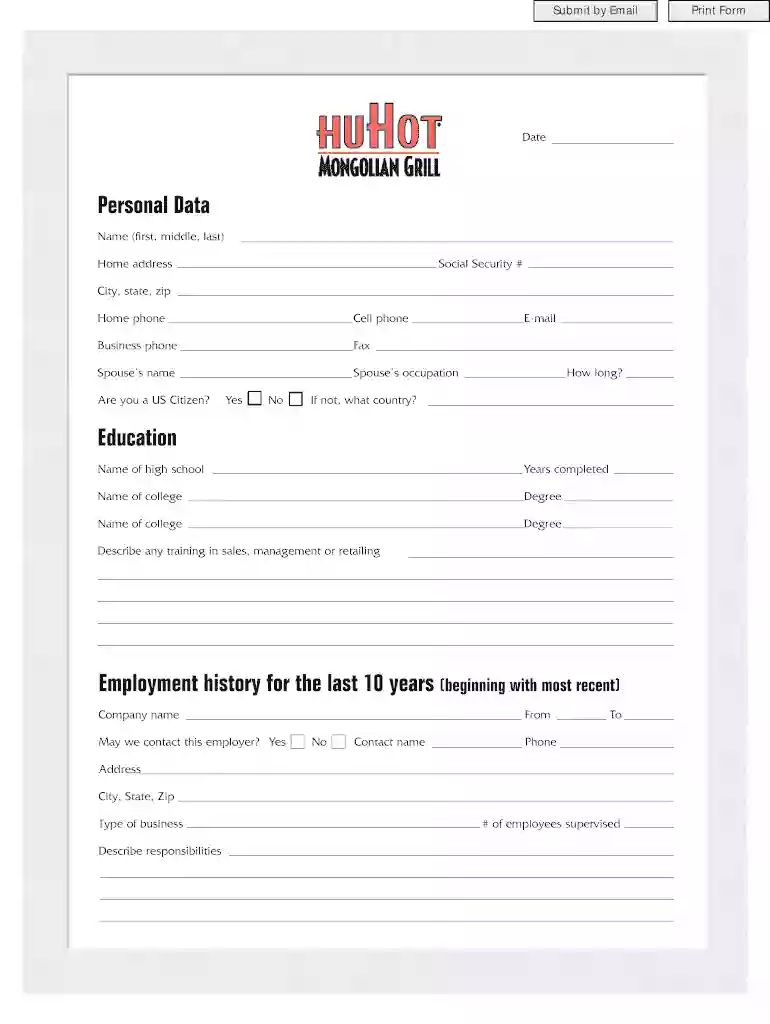
Type text, add images, blackout confidential details, add comments, highlights and more.

Draw your signature, type it, upload its image, or use your mobile device as a signature pad.

Send employee personal data sheet via email, link, or fax. You can also download it, export it or print it out.
A personal data form for employees serves as a critical document for collecting essential information that organizations require to maintain accurate employee records. This form typically requests various details, including personal data, contact information, educational background, employment history, and possibly financial particulars. The main purpose of the form is to establish a comprehensive employee profile which assists in administrative processes such as payroll, benefits management, and compliance with labor laws.
Understanding what a personal data form for employees entails is crucial for both employers and employees. For employers, it ensures that all necessary data is collected for operational efficiency, while employees need to be aware of what information is being requested and how it will be used. Fields commonly found on the form may include:
The personal data form for employees contains several essential components that ensure comprehensive information collection for effective human resource management. Key elements typically include:
Personal Information: This section collects the basic personal details necessary for identification, including full name, Social Security Number, date of birth, and marital status. Accurate data in this field is vital, especially for tax purposes.
Contact Details: Employers require up-to-date contact information. This typically includes current residential address, home phone number, personal mobile phone number, and email address. Ensuring this information is accurate enables quick communication regarding job-related matters or emergencies.
Employment and Education History: This part of the form gathers historical data on the employee's previous job positions, responsibilities, and any relevant educational qualifications. Employers use this information for background checks and to evaluate the candidate’s qualifications.
Benefits Information: Some forms may contain sections where employees can indicate beneficiaries for insurance and retirement plans, along with enrollment information for various employee benefits.
Acknowledgements and Signatures: The form usually concludes with a section where the employee acknowledges the accuracy of the information provided and consents to information sharing as necessary for employment purposes. This signature is crucial for legal and compliance reasons.
Completing the personal data form for employees is a straightforward process, but it involves several important steps to ensure accuracy and completeness. Here’s how to properly fill it out:
Read Instructions Thoroughly: Before filling out the form, carefully review any accompanying instructions. Understanding what information is required and any specific formatting requests will prevent mistakes.
Fill in Personal Information: Begin by entering your name, date of birth, and Social Security Number. Ensure that this information matches your official documents to avoid discrepancies.
Provide Contact Information: Enter all pertinent contact information, including your current address and phone numbers. Double-check for typos.
Detail Employment and Education History: Fill out sections regarding your previous employment and education. For employment history, include relevant dates, job titles, and responsibilities.
Complete Benefits Information Carefully: If applicable, provide the requested details related to benefits and beneficiaries. Make sure to carefully read any options or selections provided.
Review and Sign: Once completed, review the form for any errors or omissions. Then, sign and date the form in the designated area to confirm that the information is accurate to the best of your knowledge.
The personal data form for employees is used by various stakeholders within an organization, and its significance spans multiple roles:
Human Resources Departments: Primary users of the form, HR teams rely on the collected data to manage employee records, facilitate benefits administration, and ensure compliance with legal obligations.
Payroll Departments: Accurate data is crucial for payroll processing, and the information collected helps in calculating salary, benefits, deductions, and taxes correctly.
Management Teams: Managers may request access to the form to get a more complete view of their team's skills, backgrounds, and qualifications, which can inform staffing decisions.
Legal and Compliance Officers: To ensure that the organization adheres to employment laws and regulations, compliance officers use the information for audits and legal inquiries.
New Employees: Individuals completing the form do so to provide necessary information for their employment process, ensuring their records are accurately maintained from the start of their hiring process.


Understanding the legal implications of using a personal data form for employees is essential for organizations to mitigate risks and ensure compliance. Key considerations include:
Data Protection Laws: Organizations must comply with federal and state data protection regulations, such as the General Data Protection Regulation (GDPR) and the California Consumer Privacy Act (CCPA), focusing on how personal data is collected, processed, and stored.
Non-Discrimination Regulations: Employers must adhere to Equal Employment Opportunity (EEO) guidelines, ensuring that the collection of personal information does not lead to discrimination based on age, gender, race, or other protected characteristics.
Retention Policies: Employers need clear policies outlining how long personal data will be retained and the procedures for securely disposing of data that is no longer needed.
Confidentiality and Security: Organizations should ensure data collected on personal data forms is kept confidential, implementing strong security measures to protect sensitive employee information from breaches or unauthorized access.
Compliance with these legal aspects builds trust and fosters a safe working environment for employees, emphasizing the importance of careful handling of personal data.
At DocHub, your data security is our priority. We follow HIPAA, SOC2, GDPR, and other standards, so you can work on your documents with confidence.
Dec 1, 2022 Personal Data: personal data means any information relating to an identified or identifiable natural person (data subject); anRead more
EMPLOYEE PERSONAL DATA FORM. This form is to be utilized for individuals who have been extended an offer of employment or newly hired employees only. LastRead more
Demographic and Administrative Forms for New Employees. Form Number (if applicable), Form Description. I-9, Employment Eligibility Verification.Read more


