







Definition and Meaning
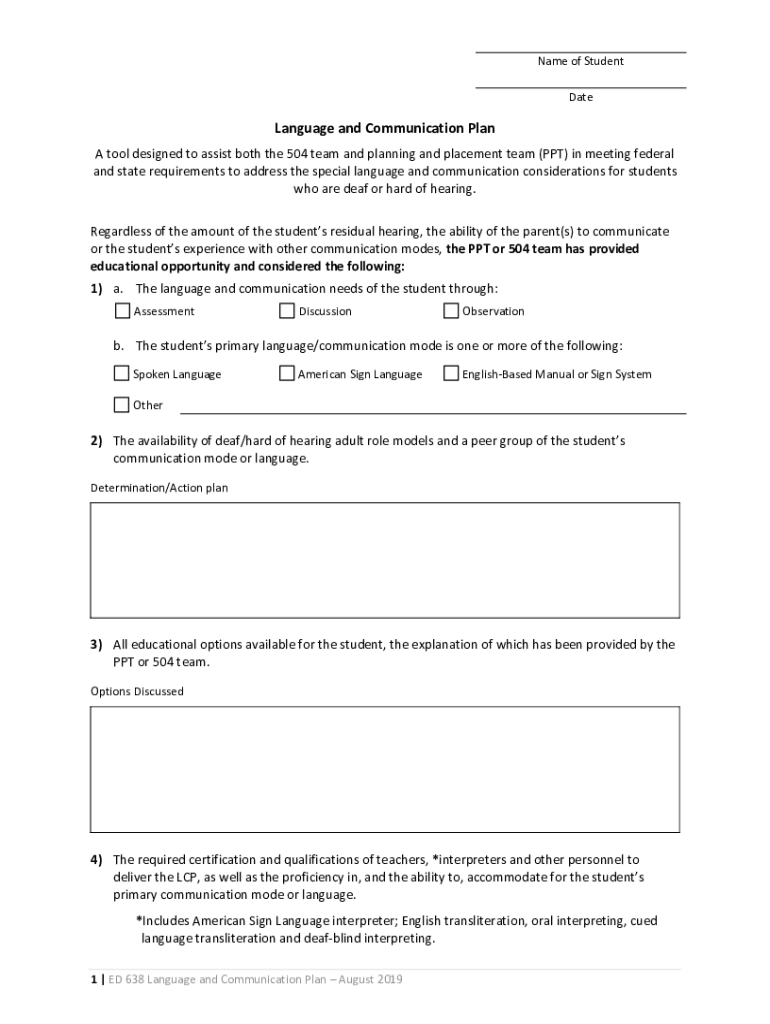
The Language and Communication Plan for Connecticut (abbreviated as "Language and Communication Plan For - ct") is a tool used to support students who are deaf or hard of hearing within the educational system of Connecticut. This plan is designed to address the comprehensive communication needs of these students by assessing their communication skills, providing relevant educational options, and ensuring necessary accommodations are in place. The primary goal is to facilitate effective learning and communication opportunities while maintaining compliance with federal and state regulations.
How to Use the Language and Communication Plan For - ct
To properly utilize the Language and Communication Plan For - ct, educators and stakeholders must first conduct an assessment of the student's individual communication needs. This involves evaluating their current level of comprehension, preferred modes of communication, and any barriers they might face in a typical learning environment. Once the assessment is complete, the plan should be tailored to fit these specific requirements. The document becomes a guide that outlines the strategies, resources, and adaptations necessary to support the student’s learning journey.
Common Elements in the Plan
- Communication Assessment: A detailed evaluation of the student’s communication capabilities and preferences.
- Educational Options: Overview of available educational pathways that align with the student’s needs.
- Qualified Personnel: Identification of staff who are trained and certified to work with deaf or hard of hearing students.
- Accessible Instruction: Adaptation of teaching materials and methods to ensure inclusivity.
- Emergency Procedures: Customized protocols to ensure the student's safety during emergencies.
Key Elements of the Language and Communication Plan For - ct
The structure of the Language and Communication Plan For - ct comprises several crucial elements that ensure its effectiveness. These key components address everything from the student’s specific needs to the educational environment they are placed in.
- Student Communication Needs: Specifics about how the student best receives, processes, and uses information.
- Educational Options and Accessibility: Ensures the student has access to suitable educational programs and support services.
- Personnel Qualifications: Verification of educator capabilities and their ability to support the student effectively.
- Instruction and Service Accessibility: Adaptation of instructional methods and materials.
- Accommodations and Modifications: Any additional support strategies needed to maximize learning outcomes.
- Emergency Preparedness: Inclusion of safety measures tailored for the student.
Examples of Accommodations
- Use of sign language interpreters during class.
- Provision of written transcripts for audio materials.
- Installation of visual alert systems in classrooms.
Steps to Complete the Language and Communication Plan For - ct
Completing the Language and Communication Plan For - ct requires a collaborative approach and involves several sequential steps.
- Initial Evaluation: Gather comprehensive data about the student's current communication abilities and challenges.
- Consultation: Engage with parents, teachers, and specialized personnel to gain diverse perspectives.
- Plan Drafting: Develop a preliminary version of the plan based on gathered information and proposed strategies.
- Review and Approval: Present the draft to relevant stakeholders for feedback and necessary adjustments.
- Implementation: Begin executing the plan with ongoing monitoring and adjustments as needed.
- Review Cycle: Conduct regular reviews to assess the effectiveness of the implemented strategies.
Who Typically Uses the Language and Communication Plan For - ct
This plan is primarily used by educators, speech and language therapists, and other professionals involved in the education and development of deaf or hard of hearing students. Additionally, parents and guardians play a critical role in the development and implementation of the plan, ensuring it aligns with the home environment and any extracurricular needs.


Legal Use of the Language and Communication Plan For - ct
The Language and Communication Plan For - ct complies with state and federal laws, ensuring that educational institutions uphold the rights of students who are deaf or hard of hearing. It is aligned with legislation such as the Individuals with Disabilities Education Act (IDEA), which mandates the provision of free and appropriate public education in the least restrictive environment.
State-Specific Rules for the Language and Communication Plan For - ct
Connecticut has implemented specific guidelines and requirements unique to its educational framework to better serve students with hearing impairments. These directives ensure that the plans are tailored to the state's legal, social, and educational contexts, offering solutions that are both effective and compliant with local regulations.
Examples of State-Specific Guidelines
- Regional Support Systems: Access to state-provided networks that offer specialized resources.
- Certification Requirements: Specific qualifications required for educators involved in implementing these plans.
- Funding Allocations: State funds designated to support students under this plan and related services.
Examples of Using the Language and Communication Plan For - ct
Several real-world case studies illustrate the effectiveness of the Language and Communication Plan For - ct. For example, a high school student who struggled with traditional classroom interactions successfully used a custom-tailored plan to integrate speech-to-text technology. This, combined with scheduled check-ins with communication specialists, drastically improved their academic performance and social engagement.
Additional Scenarios
- A middle school interpreter introduced visual aids to supplement verbal instructions.
- An elementary student thrived by accessing a custom curriculum adapted to their hearing and speech capabilities.
Important Terms Related to the Language and Communication Plan For - ct
Understanding the terminology associated with the Language and Communication Plan For - ct aids in its effective application.
Common Terms
- American Sign Language (ASL): A visual language used by deaf communities in the U.S.
- Individualized Education Program (IEP): A legal document outlining tailored educational goals and services for students with disabilities.
- Assistive Technology (AT): Devices and services that support individuals with disabilities in educational environments.
Detailed Definitions
- Evaluation Tools: Instruments used to measure communication skills and needs.
- Alternative Communication Systems: Methods used to convey information beyond standard oral or written communications.




