
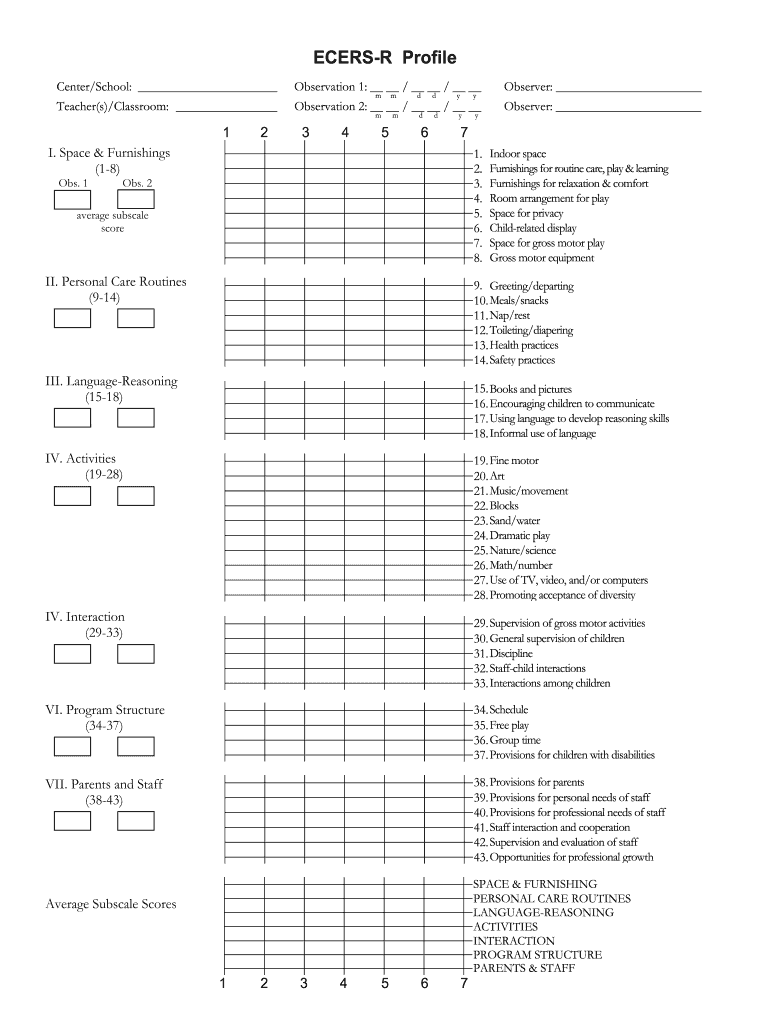







Understanding the ECERS-R Profile
The ECERS-R (Early Childhood Environment Rating Scale-Revised) profile serves as a valuable assessment tool designed to evaluate the quality of early childhood education programs. This profile is critical for assessing various aspects of the learning environment, which ultimately impacts child development and learning.
Essential Components of the ECERS-R Profile
The ECERS-R profile is divided into several key sections, each addressing specific areas of early childhood education:
- Space and Furnishings: Evaluates the physical environment, such as the classroom layout and resources available for children.
- Personal Care Routines: Focuses on how daily routines are implemented, including meal times and hygiene practices.
- Language and Reasoning: Assesses the opportunities provided for children to engage in language interactions and problem-solving activities.
- Activities: Looks at the variety of activities offered, ensuring they are age-appropriate and accessible to all children.
- Interactions: Measures the quality of interactions between teachers and children, including responsiveness and support for development.
- Program Structure: Reviews the organization of the program, including schedules and transition times.
- Provisions for Parents and Staff: Considers how the program engages parents and supports staff development.
How to Use the ECERS-R Score Sheet
The ECERS-R score sheet is an essential tool for tracking the performance of a program based on observational data. To effectively use the score sheet, follow these steps:
- Conduct Observations: Spend time observing the classroom environment and interactions over several days to gather comprehensive data.
- Fill Out the Score Sheet: Use the observations to complete the ECERS-R score sheet, ensuring each criterion is evaluated thoroughly.
- Assign Scores: For each item, assign a score based on established criteria that can range from one (inadequate) to seven (excellent).
- Calculate Total Score: Sum the scores to see the overall rating of the program.
- Identify Strengths and Weaknesses: Analyze the scores to pinpoint areas that excel and those that need improvement.
Importance of Completing the ECERS-R Profile
Completing the ECERS-R profile is crucial for various reasons:
- Quality Improvement: The evaluation provides a framework for understanding strengths and weaknesses within the program, guiding targeted improvements.
- Compliance with Standards: Many state and national early childhood education standards reference the ECERS-R, making it essential for compliance.
- Professional Development: The results can be used as a basis for professional development opportunities, allowing educators to focus on areas for growth.
Key Elements Related to the ECERS-R
Several terms and concepts are important to comprehend when working with the ECERS-R profile:
- ECERS-R Score Sheet: The document used for recording observations and evaluations during assessments.
- ECERS Rating Scale: A tool utilized to assess the different dimensions of early childhood education environments.
- ECERS 3 Score Sheet: The updated version of ECERS that includes modifications reflecting contemporary practices in early childhood education.
Examples of Effective Use of ECERS-R
Real-world examples illustrate the practical application of the ECERS-R. Consider the following scenarios:
- A preschool makes changes to the physical layout of the classroom based on the ECERS-R evaluation, creating distinct learning areas for different activities. This adjustment enhances children's engagement and promotes autonomy.
- An early childhood center utilizes the feedback from an ECERS-R assessment to revamp their daily routines, ensuring personal care routines are more seamless, thereby providing better support for children during transitions.
Legal and Ethical Considerations
Using the ECERS-R profile responsibly includes ensuring that all observations and evaluations are conducted ethically. Here are key considerations:
- Informed Consent: Ensure that parents have consented to observations being conducted in classrooms.
- Confidentiality: Maintain confidentiality of the information collected, only sharing it with relevant stakeholders in a manner that respects the privacy of children and families.
Common Challenges and Solutions
Implementing the ECERS-R profile can present challenges. Awareness of these challenges can lead to effective strategies:
-
Challenge: Difficulty in observing all elements within a limited time frame.
- Solution: Schedule multiple observations over different days to gather comprehensive data.
-
Challenge: Resistance from staff to adopt recommended changes based on the ECERS-R profile.
- Solution: Provide training and support to illustrate the benefits of the changes for children's development.
Understanding and effectively utilizing the ECERS-R profile can significantly enhance the quality of early childhood education programs, providing children with enriching and supportive environments for learning and development.


