




01. Edit your standardized prior authorization request form online
Type text, add images, blackout confidential details, add comments, highlights and more.

Type text, add images, blackout confidential details, add comments, highlights and more.

Draw your signature, type it, upload its image, or use your mobile device as a signature pad.

Send massachusetts standardized prior authorization request form pdf via email, link, or fax. You can also download it, export it or print it out.
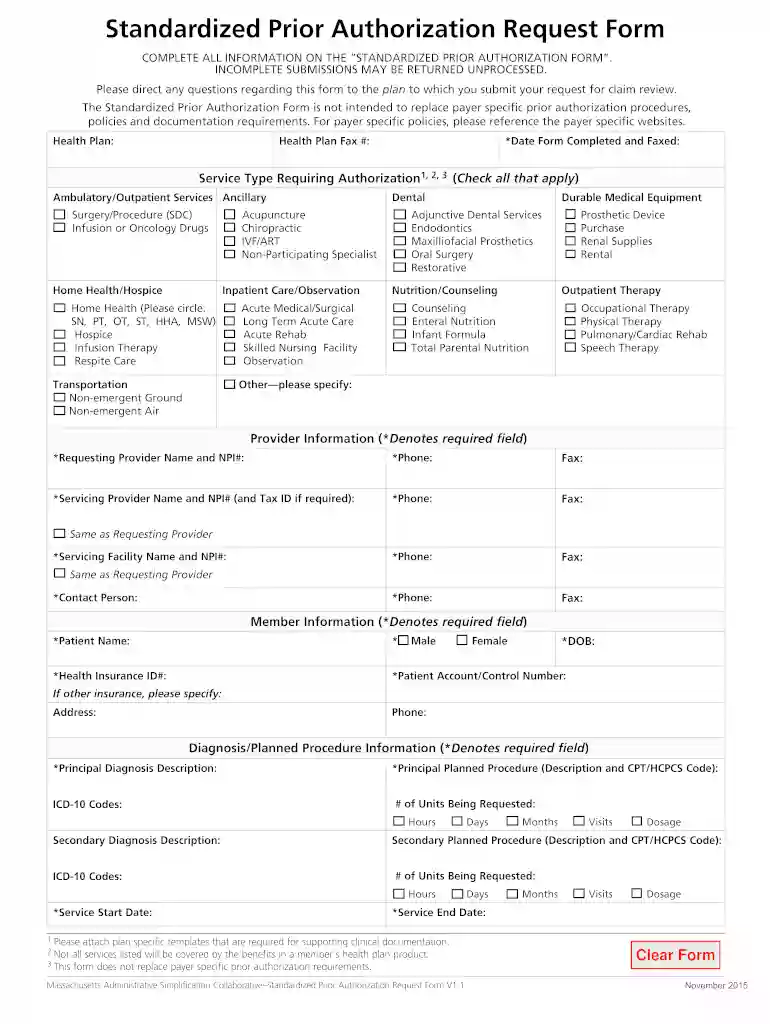
The Medication Prior Authorization Request Form for Tufts Health Plan is a critical document used by healthcare providers to request pre-approval for specific medications. This process is necessary to determine if the prescribed medication meets the health plan's clinical criteria before a patient can receive it. The authorization process aims to ensure that prescribed medications are appropriate based on medical necessity and are covered under the patient's health plan.
The form is designed to facilitate communication between healthcare providers and the insurance company, ensuring that all relevant information is presented. Key aspects that may be included in the request are:
This form serves as a crucial part of the healthcare process, ensuring patients receive medically relevant treatments that are covered by their insurance.
Completing the Medication Prior Authorization Request Form for Tufts Health Plan involves several methodical steps to ensure accuracy and compliance with insurance requirements.
Obtain the Form: Access the form through the Tufts Health Plan website or the healthcare provider’s office.
Fill in Patient Information: Accurately enter the patient’s demographic data, ensuring that the details match what is on file with Tufts Health Plan.
Provider Information Section: Include the name and credentials of the provider making the request. Contact details should also be current to facilitate follow-up communication.
Specify the Medication: Clearly state the medication being prescribed. Include the correct dosage and frequency to prevent any misunderstanding.
Clinical Justification Section: Provide comprehensive clinical information supporting the need for the specific medication. This could involve previous treatment trials, diagnosis details, and relevant test results.
Review and Sign: Ensure that all sections are completed and accurate. The prescribing provider should sign the document before submission.
Submit the Form: Send the completed form per Tufts Health Plan's submission guidelines, which can include fax, mail, or online submission options.
Following these steps carefully assures that the request is complete, which can facilitate a quicker review and approval process.
Understanding specific terminology associated with the Medication Prior Authorization Request Form enhances clarity and helps navigate the complexities of the approval process. Important terms include:
Knowledge of these terms aids healthcare providers in effectively communicating during the authorization process and addresses common questions that may arise.
The Medication Prior Authorization Request Form is utilized by a variety of stakeholders within the U.S. healthcare system, ensuring proper protocol is followed for medication approval. The primary users include:
Healthcare Providers: Physicians, nurse practitioners, and specialists prescribe medications and submit prior authorization requests on behalf of their patients.
Pharmaceutical Representatives: These individuals may assist healthcare providers in understanding the authorization process and the specifics relating to particular medications.
Office Staff: Administrative personnel in medical offices often assist in gathering necessary documentation, filling out forms, and submitting requests to health insurers.
Patients: While patients do not fill out the forms, they are key stakeholders, as the authorization greatly affects their ability to access necessary medications.
By understanding the roles involved, all parties can ensure a smoother experience in obtaining necessary medications.


The legal use of the Medication Prior Authorization Request Form for Tufts Health Plan requires adherence to specific guidelines to ensure compliance with healthcare policies and regulations. Critical aspects include:
Confidentiality: Compliance with the Health Insurance Portability and Accountability Act (HIPAA) mandates that patients' personal and health information be kept confidential during the prior authorization process.
Accuracy: All information submitted on the form must be truthful and reflect the patient’s current medical condition and prescribed treatment. Misrepresentation can lead to denial of coverage and potential legal issues.
Timeliness: Submissions should comply with the turnaround times specified by Tufts Health Plan to ensure timely patient care and minimize delays in treatment.
Documentation Retention: Providers must keep copies of submitted forms and any related correspondence for a specified duration as required by state and federal regulations, which can facilitate appeals or audits if necessary.
Understanding these legal considerations protects both providers and patients while navigating the medication authorization process.
We've got more versions of the standardized prior authorization request form form. Select the right standardized prior authorization request form version from the list and start editing it straight away!
At DocHub, your data security is our priority. We follow HIPAA, SOC2, GDPR, and other standards, so you can work on your documents with confidence.
Do you need to request a prior authorization (PA) for a prescription drug? Search for the right forms here. Search for the right forms here. at (800) 841-2900
Tufts University-Tufts. Health Insurance and Immunization Forms 617-636-2700. Phone 617-636-7000


