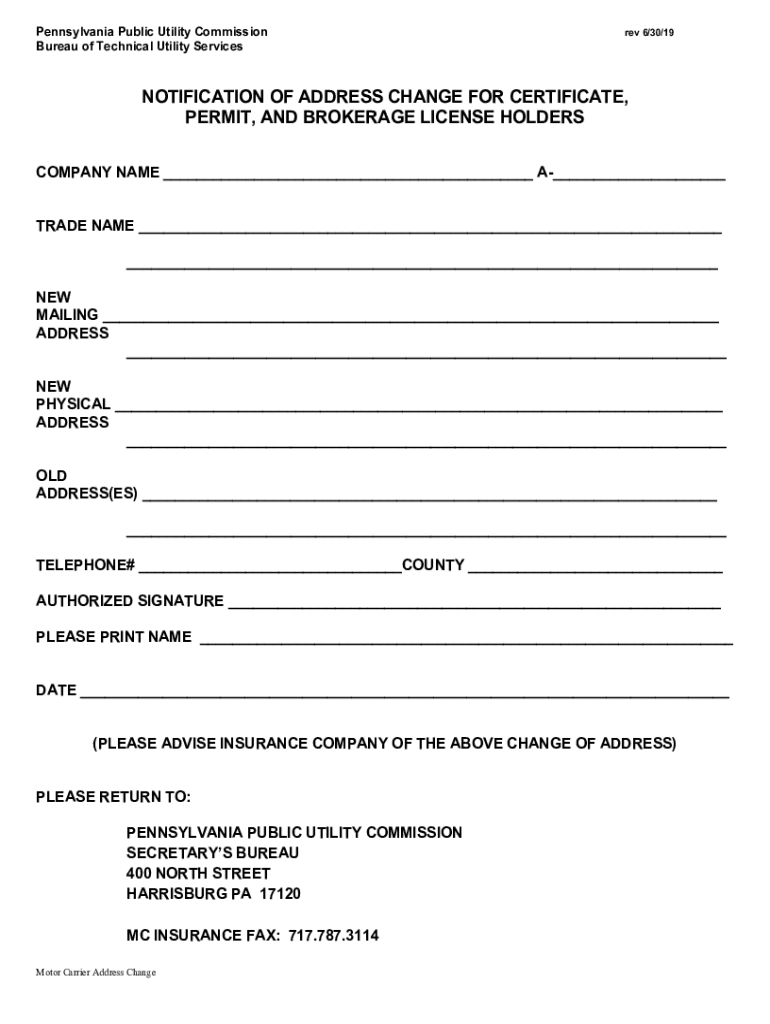
See more APPLICATION CHECKLIST Motor Common Carrier or - PA PUC versions
We've got more versions of the APPLICATION CHECKLIST Motor Common Carrier or - PA PUC form. Select the right APPLICATION CHECKLIST Motor Common Carrier or - PA PUC version from the list and start editing it straight away!
What is motor common carrier or motor contract carrier?
Common carrier means a person holding itself out to the general public to provide transportation for compensation. Contract carrier means a person providing transportation for compensation under continuing agreements with one person or a limited number of persons. Government rate tender under 49 U.S.C.
What is the difference between a motor contract carrier and a motor common carrier?
While contract carrier companies are those that perform shipping duties for specific clients under contract, common carriers perform the same duties without such limitations or directions. These contracts often detail types of goods or services, agreed upon prices or discounts, or specialized services.
Who needs a PA PUC number?
Limos, Taxis, TNCs Movers Limos, taxis, transportation network companies (Uber, Lyft) and movers must be licensed by the PUC.
What does a contract carrier mean?
A contract carrier is a transportation carrier that serves specific customers under contract with one or a limited number of customers as opposed to a common carrier, which transports freight for the public.
What does PUC stand for in trucking?
The California Public Utilities Commission (PUC or CPUC) regulates for-hire passenger carriers, such as limousines, airport shuttles, and charter bus companies both PSC and TCPs in the state.
Related Searches
Application checklist motor common carrier or pa puc pdfPUC motor carrierPa motor carrier enforcementPA PUC filing RequirementsPA PUC numberPa PUC exemptionEfile PUCPuc licensing
Security and compliance
At DocHub, your data security is our priority. We follow HIPAA, SOC2, GDPR, and other standards, so you can work on your documents with confidence.
Motor carrier vehicle. (1) A truck, truck tractor or combination having a gross vehicle weight rating, gross combination weight rating, registered gross weight, registered combination weight or actual gross weight of 17,001 pounds or more.
What is a motor property common carrier?
What is a motor carrier of property? A motor carrier of property is any person who operates a CMV as defined in Section 34601(c) CVC. A private motor carrier of property transports their own property, goods, or products, even if a fee is charged for such delivery (Section 34601[a] and [d] CVC).
What is the difference between common contract and or exempt for hire carriers?
Within the for-hire industry, there is also a distinction between common and contract carriers. Common carriers offer their services to the general public. Contract carriers operate under specific contracts and can be more selective about their clients.
Related links
APPLICATION CHECKLIST Motor Common Carrier of Property
This application is required to request a Certificate of Public Convenience to operate as a commercial carrier of property for compensation between points in
Mar 30, 1996 Pennsylvania Public Utility Commission State Employes Detailed list of contents appears inside. Checks for subscriptions and individual copies
Cookie consent notice
This site uses cookies to enhance site navigation and personalize your experience.
By using this site you agree to our use of cookies as described in our Privacy Notice.
You can modify your selections by visiting our Cookie and Advertising Notice.