







Understanding the DS-2031 Certificate
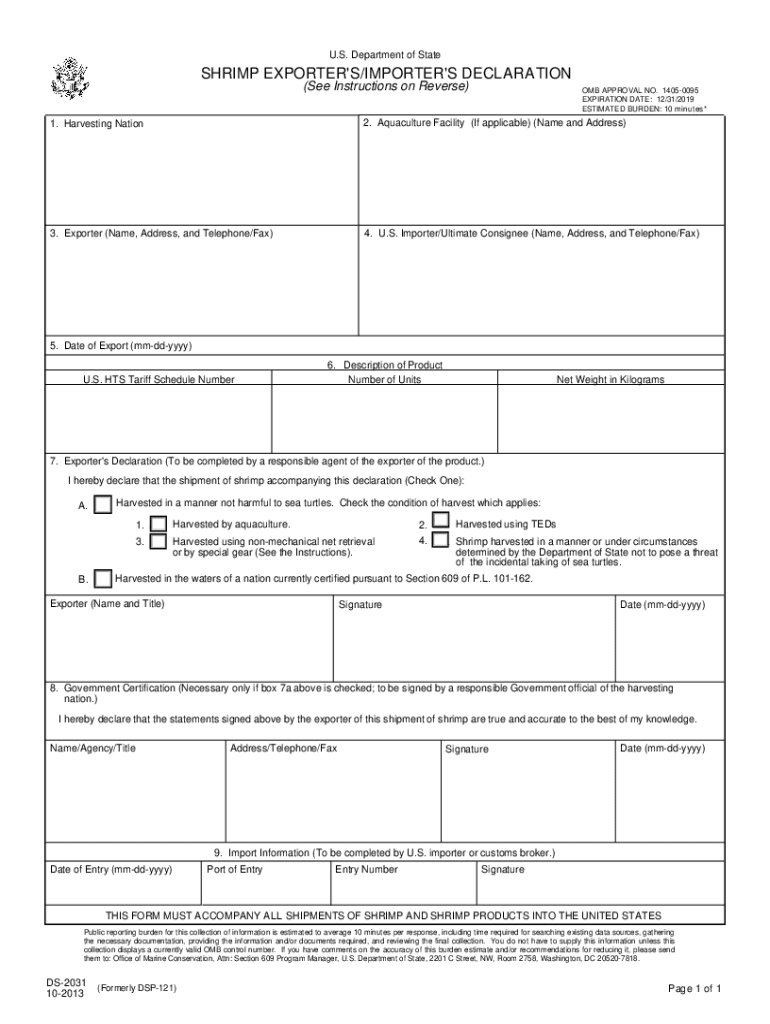
The DS-2031, also known as the Shrimp Exporter's/Importer's Declaration, is a crucial document for the importation of shrimp and shrimp products into the United States. It is designed to ensure compliance with regulations aimed at protecting the environment, particularly sea turtles. This form collects necessary information regarding the shrimp being imported, including details about the harvest process and compliance with relevant legal standards.
Importance of the DS-2031 Form
The DS-2031 form serves several important purposes in the importation process:
- Regulatory Compliance: It ensures that all shrimp products meet U.S. import regulations, thus protecting both consumers and the ecosystem.
- Traceability: The form provides documentation that helps track the source of imported shrimp, ensuring it has been harvested legally and sustainably.
- Protection for Exporters and Importers: By requiring detailed information on shrimp imports, the DS-2031 protects responsible business practices while holding violators accountable.
Steps to Complete the DS-2031
Completing the DS-2031 requires careful attention to detail. Follow these steps to accurately fill out the form:
- Gather Necessary Information: Collect information on the shrimp species being imported, including the scientific name, country of origin, and method of harvest.
- Fill in Importer and Exporter Details: Provide complete contact information for both the importer and exporter involved in the transaction.
- Document the Harvesting Method: Indicate how the shrimp were harvested, ensuring compliance with conservation laws.
- Sign and Date the Form: The form must be signed by a responsible party to verify its accuracy.
- Submit the Form: Depending on the specific requirements from the U.S. Customs and Border Protection (CBP), submit the form electronically or in printed format.
Who Typically Uses the DS-2031?
The DS-2031 is primarily used by:
- Shrimp Exporters: Businesses exporting shrimp products to the U.S. must complete this form to comply with import regulations.
- Importers and Brokers: Individuals or companies that import shrimp need to ensure that the products meet U.S. standards.
- Regulatory Agencies: Government bodies such as the National Marine Fisheries Service (NMFS) and CBP use the information for monitoring and enforcement of marine conservation laws.


Key Elements of the DS-2031 Form
Understanding the key elements of the DS-2031 can help ensure proper completion:
- Certification Statement: A declaration affirming that all information provided is true and compliant with regulations.
- Details on Harvest Locations: Information about where the shrimp were harvested is crucial for traceability.
- Compliance with Conservation Efforts: A section affirming that shrimp were not harvested illegally or from sensitive habitats is vital for environmental protection.
Legal Uses of the DS-2031 Form
The DS-2031 has legal implications in the context of U.S. import laws. Failure to comply with its requirements can lead to significant legal penalties, including:
- Fines and Penalties: Non-compliance may result in fines, and products may be rejected at the border, leading to financial losses.
- Criminal Charges: In severe cases, acting against environmental protection laws can lead to more serious consequences for the responsible parties involved.
The DS-2031 is an essential tool for ensuring responsible shrimp importation into the United States, contributing to both legal compliance and environmental sustainability.




