




01. Edit your affidavit of heirship new york pdf online
Type text, add images, blackout confidential details, add comments, highlights and more.

Type text, add images, blackout confidential details, add comments, highlights and more.

Draw your signature, type it, upload its image, or use your mobile device as a signature pad.

Send sample affidavit of heirship new york surrogate's court via email, link, or fax. You can also download it, export it or print it out.
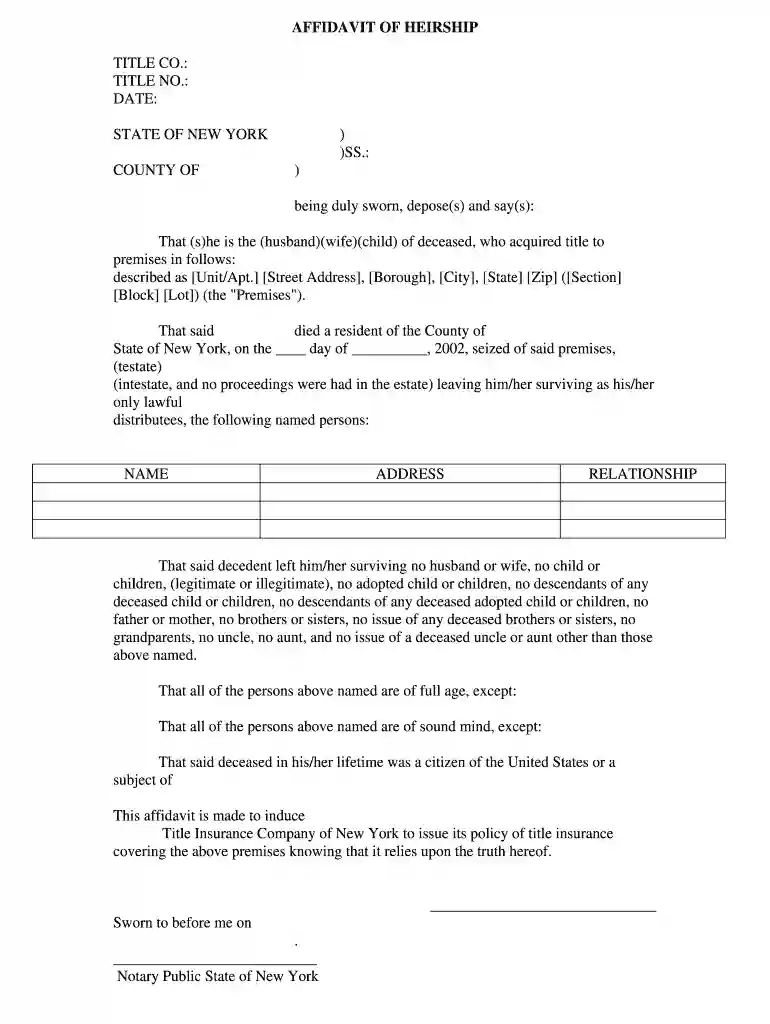
An affidavit of heirship is a legal document used in New York to formally declare the heirs of a deceased person. This sworn statement is essential for establishing the rightful heirs when the deceased did not leave a will. The affidavit details the relationship of the affiant (the person creating the affidavit) to the deceased, lists surviving distributees, and certifies that there are no other known heirs. This document is particularly useful in facilitating the issuance of title insurance for properties that were owned by the deceased, thereby streamlining the transfer of ownership to the rightful heirs.
There are specific requirements for the affidavit, including the need for the affiant to have personal knowledge of the family background of the deceased. Ensuring the document is accurate and complete is crucial, as inaccuracies may lead to legal disputes or delays in property transfer. The affidavit can be presented in legal situations, such as estate settlements, property transfers, or court proceedings, making it a vital tool in navigating the complexities of inheritance in New York.
The affidavit of heirship consists of several key elements that must be included to ensure its validity and legal enforceability. These elements are:
Affiant Information: This includes the name, address, and relationship of the affiant to the deceased. The affiant must confirm their qualifications and knowledge pertaining to the decedent's family and estate.
Decedent Information: Key details regarding the deceased, such as full name, date of death, and last known address must be documented.
Heirs Listing: The affidavit must list all potential heirs, including their names, addresses, and relationships to the deceased. This section helps clarify the line of succession and establishes who is entitled to specific assets.
Statement of No Further Heirs: The affiant must declare that, to the best of their knowledge, there are no additional heirs beyond those listed. This protects the integrity of the affidavit and reduces future disputes.
Notarization: The affidavit must be notarized to authenticate the signature of the affiant, ensuring the document is legally binding.
Including all these elements in the affidavit of heirship is vital. Missing or incomplete information may cause the affidavit to be deemed invalid, complicating the inheritance process.
Completing an affidavit of heirship requires careful attention to detail and understanding of New York's legal requirements. The following steps outline the process:
Prepare the Document: Obtain a blank affidavit of heirship form. This form may be available through legal sources or can be created based on standard templates.
Gather Necessary Information: Collect all pertinent information regarding the deceased and all potential heirs, including names, addresses, and relationships.
Draft the Affidavit: Fill out the affidavit form, ensuring all sections are completed, including personal knowledge statements and the list of heirs.
Notarization: Schedule a meeting with a notary public to have the affidavit signed. The notary will verify the identity of the affiant and witness the signing.
File the Affidavit: Depending on the context where the affidavit will be used (e.g., property transfer, court proceedings), you must file it with the appropriate body, such as the Surrogates Court or with a title company when handling property transactions.
Completing the affidavit of heirship accurately ensures clarity in the estate settlement process, helping to facilitate the transfer of assets to the rightful heirs.
In New York, the affidavit of heirship has specific legal applications and implications. Its primary role is to provide clear evidence of heirship in cases where a deceased individual did not leave a will. Here are several ways in which the affidavit is legally utilized:
Property Transfers: The affidavit serves as a foundational document for transferring real estate owned by the deceased to the heirs. Title companies often require this affidavit as part of the title insurance process.
Estate Settlement: This document can be critical during the estate settlement process, especially in small estates where formal probate may not be necessary. The affidavit simplifies how heirs can gain access to assets without undergoing lengthy legal procedures.
Court Proceedings: In situations where the distribution of assets is contested, an affidavit of heirship may be introduced in court to substantiate heirs' claims. The affidavit can help resolve disputes regarding inheritance rights.
The legal use of the affidavit depends largely on its accuracy and completeness. Failure to comply with specific requirements can lead to complications, potentially necessitating further legal intervention or court proceedings.
The affidavit of heirship in New York is typically used by various parties involved in the estate settlement and property transfer processes, including:
Affiants: Individuals who are knowledgeable about the deceased’s family structure, such as relatives, close friends, or legal representatives. They often assume responsibility for creating the affidavit.
Surviving Heirs: Family members or beneficiaries of the deceased who seek to assert their rights to their inheritance and require the affidavit to claim property or assets.
Title Companies: When transferring property ownership, title companies often request the affidavit to ensure that all heirs are clearly identified, minimizing liability risks associated with property disputes.
Legal Professionals: Attorneys involved in estate planning or probate law frequently prepare or review affidavits of heirship to ensure compliance with legal standards and assist clients in navigating the inheritance process.
Understanding who utilizes the affidavit and in what contexts is essential in ensuring that the document serves its purpose effectively and adheres to legal requirements.


At DocHub, your data security is our priority. We follow HIPAA, SOC2, GDPR, and other standards, so you can work on your documents with confidence.
Texas, for example, now allows heirs to submit an affidavit along with other documents as proof of ownership in their application for a homestead exemption.Read more
Jul 24, 2020 You are cordially invited to attend a Special Meeting (which we refer to as the Special Meeting) of the stockholders of Advanced DisposalRead more


