




Here's how it works
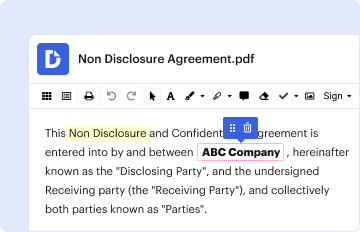
01. Edit your application form online online
Type text, add images, blackout confidential details, add comments, highlights and more.
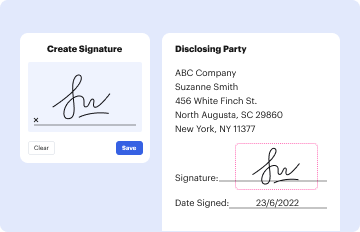
02. Sign it in a few clicks
Draw your signature, type it, upload its image, or use your mobile device as a signature pad.

03. Share your form with others
Send transfer tax declaration pdf via email, link, or fax. You can also download it, export it or print it out.
How to use or fill out transfer tax declaration with our platform

- Click ‘Get Form’ to open the transfer tax declaration in the editor.
- Begin by entering your personal information in the designated fields, including your name, address, and contact details. Ensure accuracy as this information is crucial for processing.
- Next, navigate to the property details section. Here, you will need to provide specifics about the property being transferred, such as its address and type. This helps in determining the applicable tax rates.
- In the valuation section, input the sale price or assessed value of the property. This figure is essential for calculating the transfer tax owed.
- Finally, review all entered information for completeness and accuracy before signing. Use our platform’s signature feature to add your signature electronically.
Start using our platform today to complete your transfer tax declaration easily and for free!
Fill out transfer tax declaration online
It's free
It's free
See more transfer tax declaration versions
We've got more versions of the transfer tax declaration form. Select the right transfer tax declaration version from the list and start editing it straight away!
Got questions?
We have answers to the most popular questions from our customers. If you can't find an answer to your question, please contact us.
Contact us
What is a declaration of transfer?
declaration of transfer . means a declaration authenticating the transmission of property under Section 75 of this Act; View Source.
What is the purpose of transfer tax?
The tax is generally paid when ownership of an asset is moved from one party to another. The reason these taxes exist is to generate revenue for local, state, or national governments, and they vary depending on the type of transfer and jurisdiction.
What is the purpose of a transfer tax?
Key Takeaways. A transfer tax is charged by a state or local government to complete a sale of property from one owner to another. The tax is typically based on the value of the property. A federal or state inheritance tax or estate tax may be considered a type of transfer tax.
Who pays transfer tax in NV?
The County Recorder in the county where the property is located is the agency responsible for the imposition and collection of the tax at the time the transfer is recorded. The Grantor and Grantee are jointly and severally liable for the payment of the tax.
How to avoid transfer tax in PA?
Some transactions are exempt from Transfer Tax. Some examples would be conveyances between husband and wife, parents and child, grandparent and grandchild, brothers and sisters. A one-time transfer is allowed between former spouses. Other exemptions are allowed in certain situations.
Security and compliance
At DocHub, your data security is our priority. We follow HIPAA, SOC2, GDPR, and other standards, so you can work on your documents with confidence.
Learn more


People also ask
Who pays real estate transfer tax in Maryland?
(c)(1) The entire amount of recordation tax and local transfer tax shall be paid by the seller of improved, residential real property that is sold to a first-time Maryland home buyer who will occupy the property as a principal residence, unless there is an express agreement between the parties to the agreement that the
How much is the Maryland state transfer tax?
State Transfer Tax The tax is applied to instruments that transfer an interest in real property (deed, lease, easement, contract, etc.). The tax is one half of 1 % (0.5%) of the consideration, except for deeds to a first time MARYLAND home buyer, in which case the tax is one fourth of 1 % (0.25%).
Who pays the transfer tax in New Jersey?
The State of New Jersey imposes a Realty Transfer Fee (RTF) on the seller whenever there is a transfer of title by deed. The fee is based on the sales price of the property, and the seller is required to pay the fee at the time of closing.