




01. Edit your verizon complaint form online
Type text, add images, blackout confidential details, add comments, highlights and more.

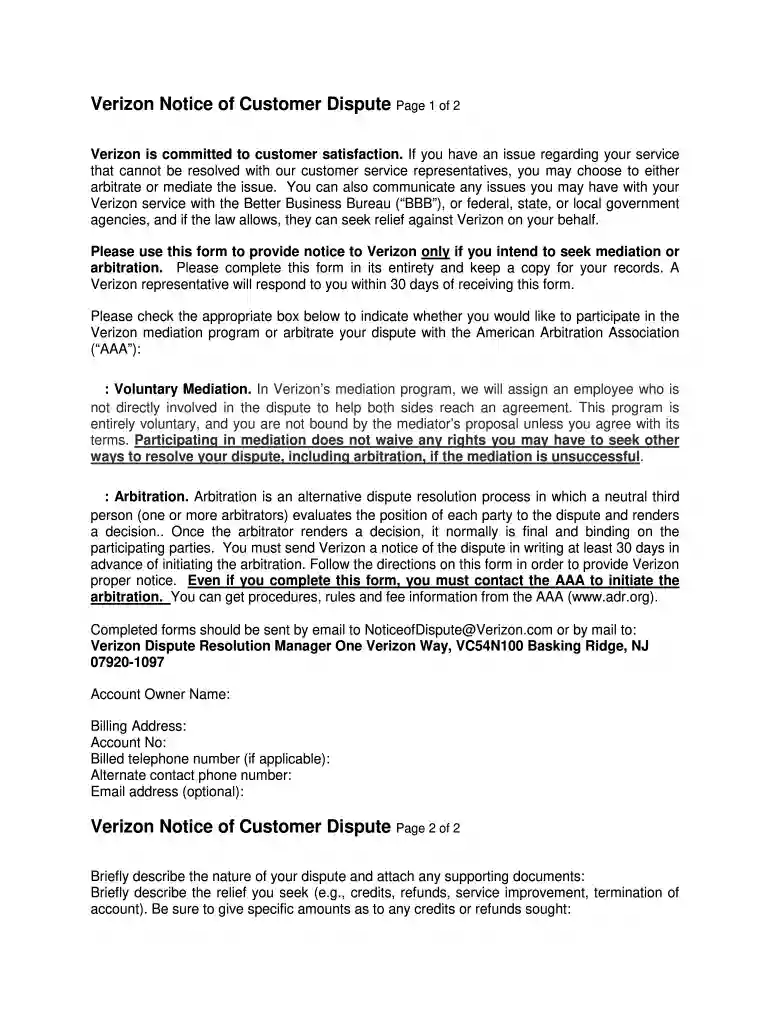
Type text, add images, blackout confidential details, add comments, highlights and more.

Draw your signature, type it, upload its image, or use your mobile device as a signature pad.

Send verizon dispute form via email, link, or fax. You can also download it, export it or print it out.
A Verizon dispute typically involves an unresolved issue between a customer and the company regarding services, billing, or equipment. Customers may file a dispute when they believe they have been wrongly charged, if there is a service issue that has not been satisfactorily addressed, or if they are facing collection actions due to alleged unpaid bills. Understanding the definition and nature of these disputes is crucial for customers seeking resolution.
Filing a dispute with Verizon involves a systematic approach to ensure your concerns are properly addressed. Here are the detailed steps to follow:
Gather Documentation:
Complete the Verizon Dispute Form:
Submit the Dispute Form:
Follow Up:
Consider Further Actions:
Understanding key elements of Verizon's dispute resolution can help customers navigate the process effectively:
Customers often utilize the Verizon notice of dispute form to formally document and submit their grievances. Understanding its components is important:
Knowing the right contact information can expedite the resolution process:
When engaging in a Verizon dispute, it's important to understand your legal rights:
Successfully navigating the Verizon dispute process requires understanding the available resources, legal rights, and the steps to take for resolution. By following the proper protocol, customers can effectively address their concerns, whether related to billing disputes, service issues, or contractual matters, ensuring a higher likelihood of satisfactory outcomes.
At DocHub, your data security is our priority. We follow HIPAA, SOC2, GDPR, and other standards, so you can work on your documents with confidence.
Sep 10, 2025 (Verizon) petitions for review of a forfeiture order of the Federal Communications Commission (FCC) imposing a $46.9 million penalty forRead more
The Commission found in favor of WorldCom, ordering Verizon to timely forward all future interconnection payments owed [WorldCom] for telephone calls placed toRead more
Oct 21, 2015 IT REQUIRES THAT DISPUTES BE RESOLVED BY ARBITRATION, RATHER THAN. CLASS ACTION LAWSUITS OR JURY TRIALS (EXCEPT FOR MATTERS THAT MAY BE TAKEN TO.Read more


