




01. Edit your lifting equipment inspection checklist pdf online
Type text, add images, blackout confidential details, add comments, highlights and more.

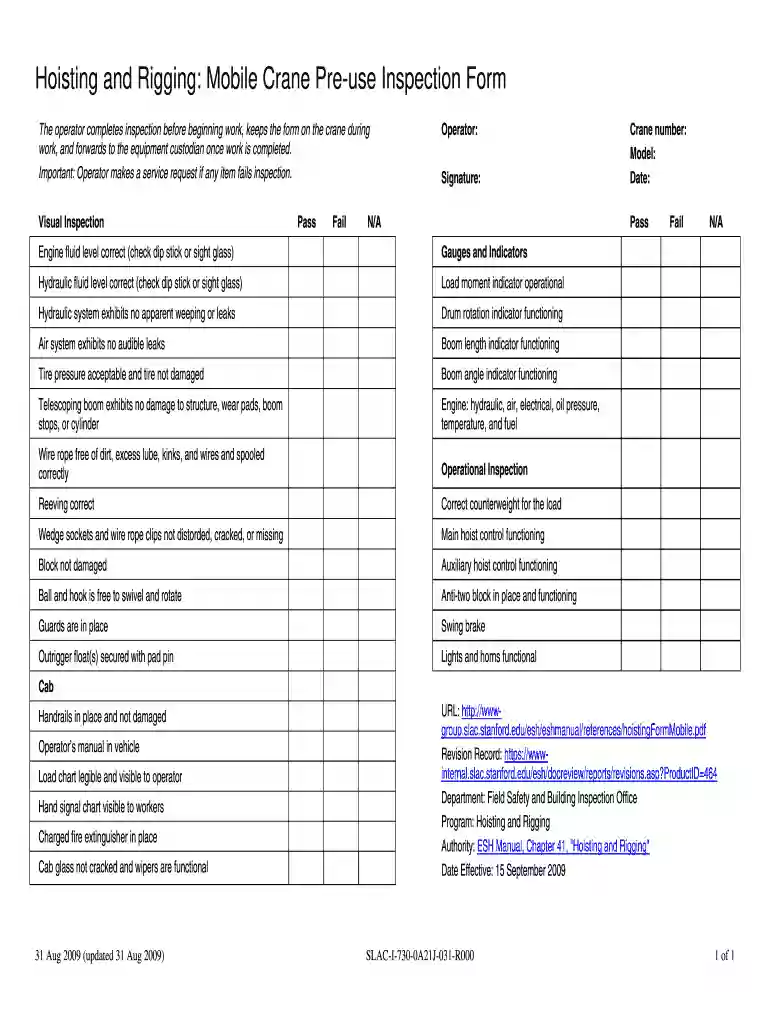
Type text, add images, blackout confidential details, add comments, highlights and more.

Draw your signature, type it, upload its image, or use your mobile device as a signature pad.

Send lifting gear inspection checklist pdf via email, link, or fax. You can also download it, export it or print it out.
The lifting gear inspection checklist PDF is a crucial document used in industries where lifting equipment is employed. This checklist serves as a comprehensive guide for operators and safety personnel to ensure that all lifting gear—such as slings, chains, and hoists—meets safety standards and is in good working condition. Regular inspections are vital for preventing accidents, promoting safety, and ensuring compliance with regulatory requirements. The checklist helps document inspection results, which can be essential for legal compliance and safety audits.
Key aspects of the lifting gear inspection checklist include:
Using the lifting gear inspection checklist PDF effectively is crucial for maintaining safety and compliance. The checklist can be easily customized according to the specific requirements of different types of lifting equipment.
Download and Print: The first step is to download the checklist in PDF format. Print as many copies as needed for different equipment types or inspection periods.
Fill in Equipment Details: Include specific information such as the equipment type, location, and operator details at the top of the checklist.
Conduct Visual Inspections: Go through each item on the checklist methodically. Inspect slings for fraying, chains for wear, and hooks for deformation. Make notes of any issues.
Document Findings: For each inspection point, indicate whether the item passes or fails. If there are issues, provide additional details in the comments section.
Sign and Date: Ensure that the person conducting the inspection signs and dates the checklist. This step establishes accountability.
Store Safely: After completing the checklist, keep the documented inspections for future reference and compliance verification.
By following these steps, operators can ensure that lifting gear remains safe for use.
A well-constructed lifting gear inspection checklist PDF consists of several critical components designed to facilitate thorough and efficient inspections of lifting equipment.
Basic Identification Information:
Evaluation Criteria:
Maintenance and Repair Recommendations: Sections for noting necessary repairs or maintenance activities, along with timelines for action.
Compliance Statements: Text affirming that the inspection aligns with industry regulations, ensuring adherence to health and safety standards.
Signature and Verification Section: Space for the inspector and supervisor to sign off on the inspection, confirming that all items were checked.
Including these elements ensures that the lifting gear inspection checklist is comprehensive and effective.
Adhering to legal standards is paramount when utilizing a lifting gear inspection checklist PDF. The use of this document helps organizations comply with applicable regulations set forth by the Occupational Safety and Health Administration (OSHA) and other relevant authorities.
Key legal aspects to consider include:
Documentation: Maintaining thorough documentation of inspections is essential. In the event of an accident or safety audit, having complete records can demonstrate due diligence.
Regulatory Compliance: Many states have specific laws governing the use of lifting equipment. This checklist should align with those regulations, ensuring that inspections meet local and federal requirements.
Accountability: The checklist promotes accountability among operators and safety personnel, as it requires signature verification from individuals who conducted the inspections.
Regular Updates: As safety standards evolve, it is important to regularly update the checklist to incorporate new regulations or industry best practices.
By ensuring legal compliance, organizations can mitigate risks associated with lifting operations.
Understanding key terminology associated with the lifting gear inspection checklist PDF is essential for its effective application. Familiarity with these terms supports clearer communication and enhances the inspection process.
Lifting Gear: Any equipment used to lift, move, or support suspended loads such as slings, chains, hoists, and other rigging tools.
Inspection Frequency: The intervals at which lifting gear should be inspected, which may vary according to usage, environment, and manufacturer recommendations.
Load Limit: The maximum weight a piece of lifting equipment is rated to safely handle, which must be documented in the checklist.
Defective Equipment: Any lifting equipment that shows visible signs of wear, damage, or failure to operate as intended.
Certification: The process by which lifting gear is validated for safety and compliance, often requiring documentation of inspection findings.
Knowledge of these terms enhances the effectiveness of those using the lifting gear inspection checklist and helps in maintaining the necessary standards for workplace safety.
With DocHub, you can easily approve your lifting equipment checklist template or any other document on iOS, even without setting up additional applications. You can access your DocHub account from any web-connected browser and fill out and sign your document in any way you like with just a few clicks.
Document editing with DocHub is equally convenient on desktop and mobile devices. You only need an internet browser to edit your lifting gear inspection checklist on Android. Open our website and sign in to access the instruments you need. Add your document and introduce your intended changes. After that, you can keep your form in your document storage or send it out immediately.
At DocHub, your data security is our priority. We follow HIPAA, SOC2, GDPR, and other standards, so you can work on your documents with confidence.
Apr 17, 2020 Pre-start inspections must be performed by the operator, must be documented, and must include items on the Pre-start Inspection Checklist. Pre-Read more
No information is available for this page.
ALL LIFTS-This checklist is to be used for all automotive lifts and for accessory wheels - free devices employed on lifts with runway superstructures. MakeRead more


