
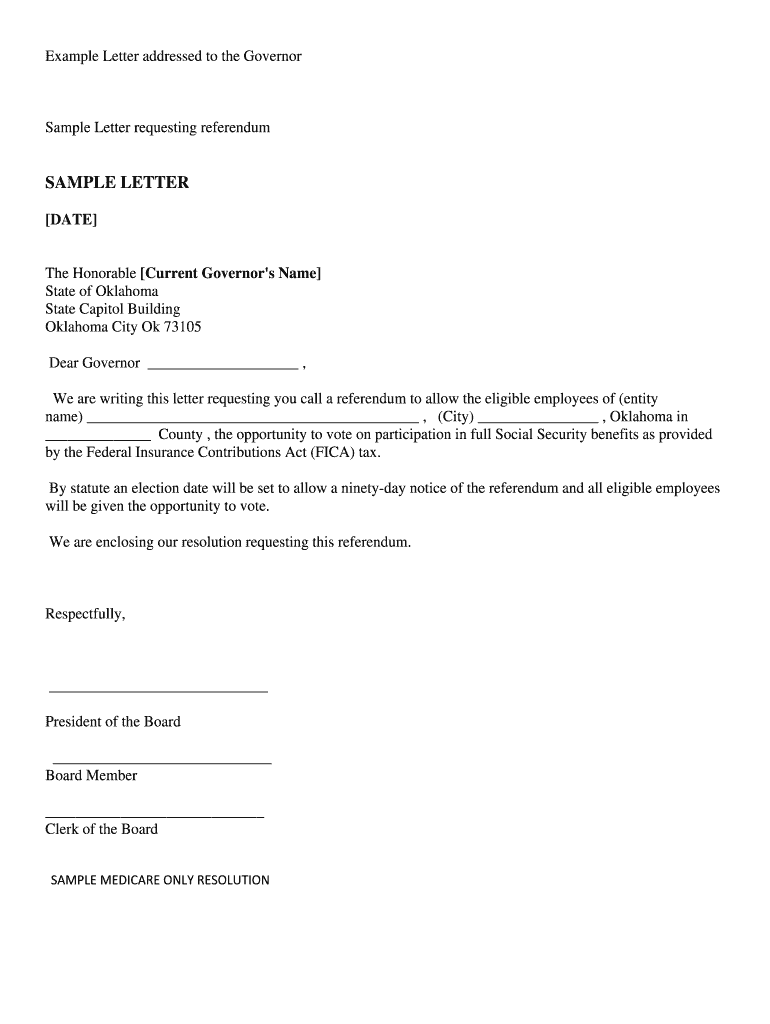







Definition and Meaning of the Educational Assistance Letter for Governor
An educational assistance letter for the governor is a formal correspondence that outlines a request for financial support or educational resources from the state government. This letter typically targets the governor's office, highlighting the need for assistance related to educational programs, scholarship funds, or other support mechanisms that facilitate learning opportunities for individuals or groups.
Such a letter may be utilized by non-profit organizations, educational institutions, or individuals seeking financial assistance to pursue specific educational initiatives. The purpose is to provide a structured request that details the needs of the applicant and how the funding or support will impact the educational landscape.
Core Objectives of the Letter
- Identify Needs: Clearly articulate the specific educational needs or goals.
- Request Support: Formally ask for financial or programmatic assistance.
- Detail Impact: Explain how assistance can benefit the community or targeted group.
Key Elements of the Educational Assistance Letter for Governor
An effective educational assistance letter for governor should encompass several key elements to ensure clarity and persuasiveness. Each component plays a vital role in conveying the request effectively.
Essential Components
- Salutation: Begin with a professional greeting, using the governor's formal title (e.g., "Dear Governor [Last Name]").
- Introduction: State who you are, your position or organization, and the purpose of the letter right away.
- Specific Request: Clearly outline what you are asking for—whether funds, support for a specific project, or a program.
- Justification: Provide detailed reasons for the request, including statistics, anecdotes, or case studies that illustrate the educational needs.
- Conclusion: Reaffirm your request, express gratitude for the governor’s consideration, and provide contact information for follow-up.
Example Structure of the Letter
- Opening Paragraph: Introduce yourself and your organization.
- Middle Paragraphs: Describe the educational program, its goals, and the resources needed.
- Closing Paragraph: Thank the governor for their time and express willingness to discuss further.
How to Use the Educational Assistance Letter for Governor
Utilizing an educational assistance letter effectively involves understanding the audience and the goals of your communication.
Steps to Use the Letter
- Research: Understand the governor’s priorities and past initiatives related to education in your state. Tailor your letter accordingly.
- Draft the Letter: Use a clear, polite, and concise tone when drafting your letter.
- Provide Supporting Documents: Include relevant attachments or documents that substantiate your request, such as data on educational needs or previous success stories.
- Submit the Letter: Choose an appropriate submission method, whether online, via mail, or in person, based on guidelines from the governor's office.
Importance of Personalization
Personalizing the letter to fit the specific context and educational issues relevant to your state or locality can greatly increase the chances of a favorable response.
Steps to Complete the Educational Assistance Letter for Governor
Completing the educational assistance letter entails several steps that guide the writer in formulating a comprehensive and effective request.
Step-by-Step Process
- Gather Information: Collect data and details that will support your request, including names, statistics, and relevant points of impact.
- Draft an Outline: Lay out the structure of your letter following the key elements discussed.
- Write Clearly and Concisely: Keep your sentences simple and focused. Avoid jargon unless essential for clarity.
- Edit and Revise: Review your draft for grammatical accuracy and clarity. Consider seeking feedback from peers or mentors.
- Finalize and Format: Ensure the letter is professionally formatted, adhering to formal letter standards.
Importance of Review
Conducting a thorough review ensures the letter is polished, professional, and effectively communicates the intended message.
Application Process and Approval Time for Educational Assistance Requests
Understanding the application process and expected timelines for approval of requests via an educational assistance letter is crucial for anticipating outcomes.
Typical Process
- Submission: The letter is submitted to the governor’s office, often through a designated channel.
- Initial Review: Staff members in the governor’s office review the letter for relevance and thoroughness.
- Evaluation: The request is evaluated based on alignment with state educational priorities and available funding.
- Response: Applicants receive a response detailing the approval status or further steps if additional information is required.
Expected Timelines
- Submission to Response: The timeline may vary, but applicants can generally expect to receive a response within a few weeks to a few months, depending on the complexity of the request and the governor's schedule.
Examples of Using the Educational Assistance Letter for Governor
Illustrative examples can provide context on effective use of the educational assistance letter.
- Community College Initiative: A community college may write a letter requesting funding for student scholarships. The letter would outline the number of students impacted, the importance of accessible education, and potential job creation in the community.
- Non-Profit Educational Program: A non-profit organization might seek funding for a literacy program aimed at adults. The letter would present statistics on adult literacy rates in the state and describe the anticipated positive outcomes of the funding.
Lessons from Examples
Real-world examples emphasize the necessity of clarity, research, and alignment with state educational goals. Each letter should tell a compelling story while remaining precise and focused on legislative priorities.




