
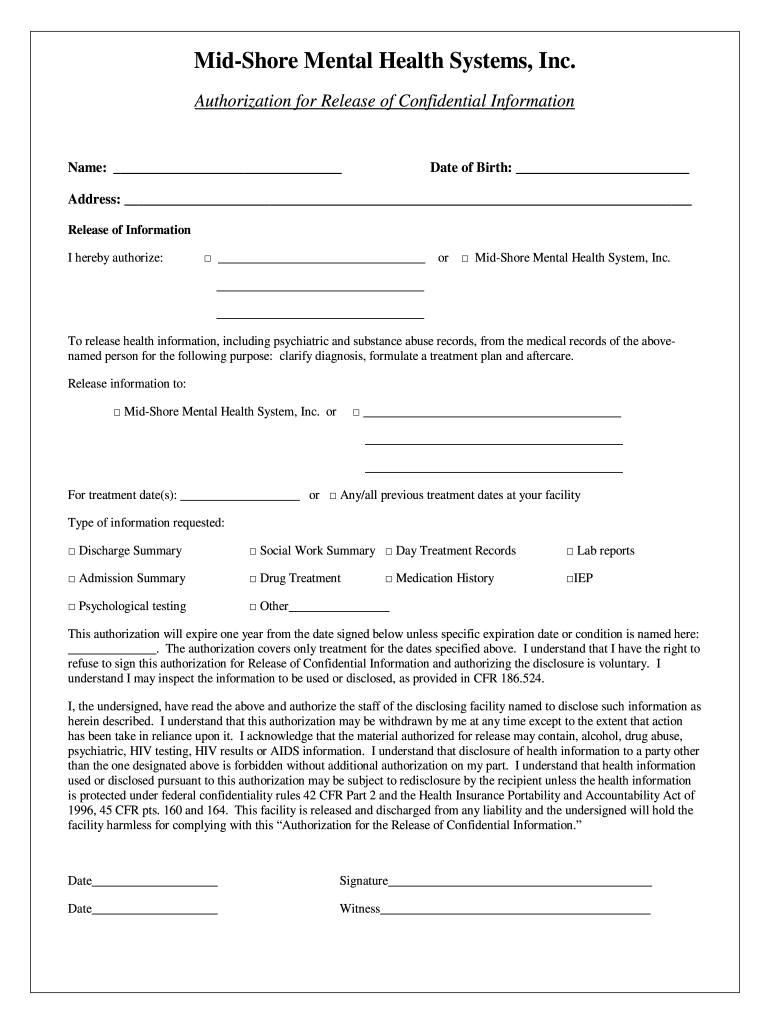







Understanding the Mental Health Release of Information Form
The mental health release of information form is a critical document used to authorize the sharing of mental health records between professionals or organizations. This form allows individuals to communicate their consent for releasing confidential health information, which is essential in the context of treatment and ongoing care.
Purpose of the Form
The main purpose of this form is to facilitate the communication of essential mental health records while ensuring that the rights of the individual are upheld. Key functions include:
- Clarifying Diagnosis: Sharing relevant mental health information helps healthcare providers understand the patient's condition better and develop appropriate treatment plans.
- Coordinating Care: When multiple professionals are involved in a patient's care, this form ensures all parties have access to the necessary information without compromising patient confidentiality.
- Legal Compliance: The form adheres to health information privacy regulations, including HIPAA (Health Insurance Portability and Accountability Act), which governs how personal health information should be treated.
Key Information Included on the Form
The mental health release of information form typically captures critical details to ensure clarity and compliance. Key sections often include:
- Patient Information: Name, address, phone number, and date of birth.
- Recipients of Information: Details regarding who will receive the information (e.g., doctors, hospitals, therapists).
- Information to be Released: Clear identification of the types of records to be shared, such as evaluations, treatment records, or specific diagnoses.
- Purpose of Disclosure: Explanation of why the information needs to be shared (e.g., for treatment continuity or referral purposes).
- Expiration of Consent: A specified date or event when the authorization expires, ensuring the individual's control over their information.
- Patient Rights: Notification of the patient's right to refuse consent and the implications of such a decision.
Completing the Form
Filling out the mental health release of information form should be done thoughtfully to ensure accuracy and uphold confidentiality principles. General steps include:
- Gather Personal Information: Ensure the patient’s details are accurate and up-to-date.
- Identify Recipients: Carefully choose who will receive the information.
- Specify Information to Disclose: Clearly indicate what records or data are to be shared.
- Determine Purpose: Provide a precise reason for this release of information.
- Set Expiration Date: Decide how long the authorization will remain valid.
- Review Rights: Educate the patient about their rights concerning the release.
Important Legal Considerations
Working with mental health records involves navigating several legal standards to safeguard patient information. Key legal aspects include:
- HIPAA Compliance: The form must ensure that all releases of information comply with federal regulations related to health confidentiality. Patients must consent before any disclosure occurs.
- State-Specific Regulations: Understanding local laws that may impose stricter regulations on the release of mental health information is crucial. Variations can significantly affect processing and compliance procedures.
- Documentation: Keeping meticulous records of signed releases is essential for audit purposes and to avoid potential legal complications.
Variants of the Form
Different types of mental health release of information forms serve varying needs, including:
- Therapist-Specific Forms: Some professionals or facilities may require their own forms tailored to their standards or legal frameworks.
- General vs. Specific Releases: While some forms may encompass broader categories, others might be explicitly for specific diagnoses or treatments.
- Printable Templates: Many offices provide easy-to-fill templates as PDFs to facilitate the process for both providers and patients.
Sample Scenarios for Use
Understanding real-world applications can clarify when and how to use a mental health release of information form. Common scenarios include:
- Transferring Care: When a patient is moving from one mental health provider to another, this form enables the streamlined transfer of pertinent information.
- Consulting Specialists: If further specialized treatment is necessary, sharing the mental health history can help the specialist provide informed care.
- Legal Proceedings: In cases where legal matters arise, such as custody disputes, a release may be necessary to provide relevant information to legal entities.
Conclusion
The mental health release of information form is a vital tool in managing communication between mental health providers while respecting patient rights. Familiarity with the purpose, legal considerations, and processes associated with this form is essential for both healthcare providers and patients to ensure efficient and compliant practices in mental health care.




