




01. Edit your free 3 day notice form florida online
Type text, add images, blackout confidential details, add comments, highlights and more.

Type text, add images, blackout confidential details, add comments, highlights and more.

Draw your signature, type it, upload its image, or use your mobile device as a signature pad.

Send 3 day notice calculator via email, link, or fax. You can also download it, export it or print it out.
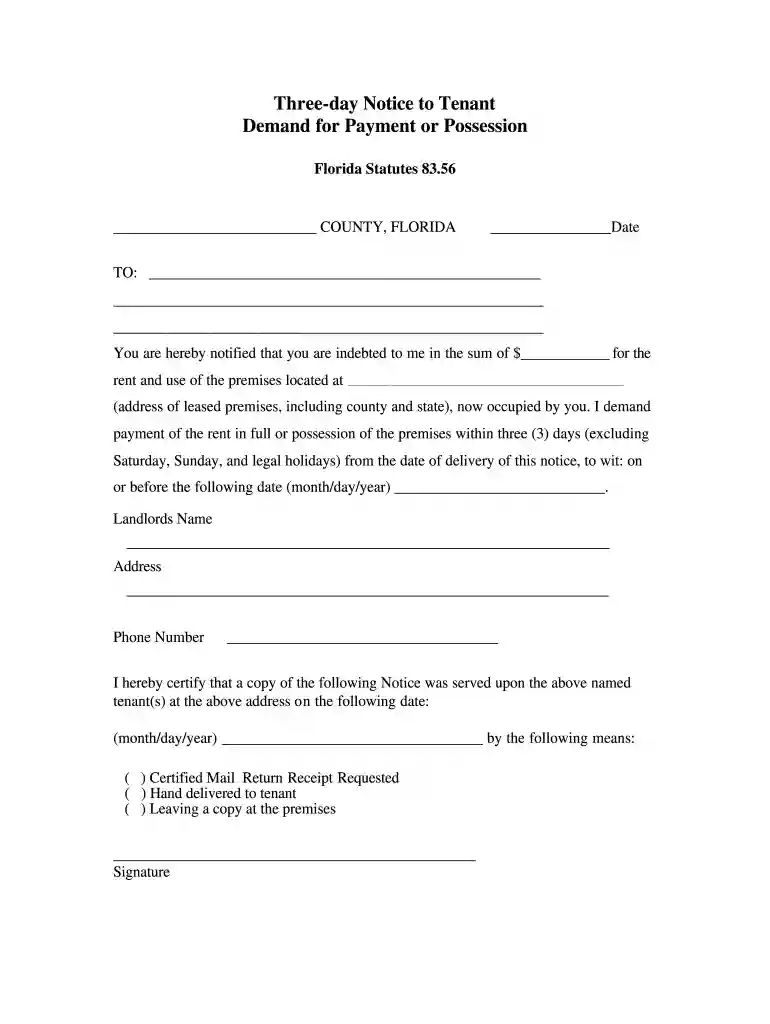
A Three-day Notice is a crucial legal document for landlords within the United States, specifically designed to communicate to tenants that they have three days to pay overdue rent or face potential eviction. This notice serves as a formal warning, initiating a specific timeline for action.
The essential components of a Three-day Notice include:
Tenant Information: The notice must clearly state the tenant's name and residential address, ensuring it accurately identifies the individual responsible for the lease.
Amount Owed: It should outline the specific amount of overdue rent that is due, allowing tenants to understand their financial obligation.
Landlord Information: The document also must include the landlord's name and contact information, providing a clear channel for communication.
Delivery Method Certification: The notice should indicate how it was delivered, whether by mail, personal delivery, or another method. Proper certification of delivery is vital to establish proof that tenants received the notice.
Each of these elements must be accurate and clearly presented to minimize any potential disputes regarding the notice's validity.
The Three-day Notice has a defined legal framework, especially in states like Florida. It is governed by specific landlord-tenant laws that dictate the requirements and processes involved. Key legal aspects include:
Compliance with State Law: Ensure that the notice meets state-specific guidelines regarding content, delivery, and timeframe. For example, landlords often must provide exact wording and include relevant state statutes in the notice.
Documentation of Delivery: If the notice is challenged in court, having documented proof of delivery is essential. Landlords should maintain records or receipts confirming how and when the notice was served.
Possible Variations: Different states may have nuanced requirements. For instance, while some jurisdictions might allow electronic notices, others might strictly require physical delivery.
Creating a Three-day Notice involves several clear steps:
Compile Tenant Information: Gather the necessary tenant details, including their full name and current address.
Calculate Amount Due: Determine the exact amount of rent that is overdue, ensuring accuracy.
Draft the Notice: Write the notice, ensuring it includes all required information, complies with state-specific laws, and is clearly legible.
Select Delivery Method: Choose an appropriate method for delivering the notice, whether by mail, posting on the door, or hand-delivering it.
Document the Delivery: Keep a record of how and when the notice was delivered to protect against disputes later on.
Following these steps can ensure that the notice is compliant and legally sound.
Landlords should be aware of typical mistakes that can render a Three-day Notice defective:
Incorrect Information: Failing to provide accurate tenant details or overdue amounts can invalidate the notice.
Improper Delivery: Not following the legal requirements for delivering the notice may lead to tenants contesting the notice in court.
Failure to Consult State Laws: Landlords should be familiar with state-specific regulations governing Three-day Notices, as the failure to adhere to these can delay eviction proceedings.
Awareness of these pitfalls can help landlords navigate the process more effectively.
Practical application of the Three-day Notice can help clarify its use:
Example 1: A tenant fails to pay rent due on the first of the month. On the 5th, the landlord issues a Three-day Notice demanding payment or vacate the premises by the 8th. The notice specifies the amount owed, ensuring clarity.
Example 2: A landlord delivers the notice personally. They document the date, time, and method of delivery. If the tenant does not pay by the due date, the landlord can then pursue eviction proceedings, backed by the notice.
These examples illustrate how the notice functions as a pivotal tool in managing tenant relationships and enforcing rental agreements.
When issuing a Three-day Notice, several additional factors are important:
Documentation Management: Maintain accurate records of all communications and notices sent to tenants.
Understanding Tenant Rights: Become familiar with tenant rights regarding eviction notices, including potential defenses they might raise in response.
Seeking Legal Counsel: In complex situations, hiring a legal attorney who specializes in landlord-tenant law can provide essential guidance and protect your interests.
By considering these additional factors, landlords can enhance their approach to managing tenant relationships and reduce the likelihood of complications in the eviction process.
At DocHub, your data security is our priority. We follow HIPAA, SOC2, GDPR, and other standards, so you can work on your documents with confidence.



Board members should be sure that proper notice is given for meetings, that regular meetings are held, and that members are properly appointed or elected. 4.Read more
A three-day notice is a notice served to tenants, who are delinquent in rent, demanding for the rent amount or to vacate the premises.Read more
3-day notice to pay rent or quit. Tenant is behind on rent, 3 days (not counting weekend or court holidays) ; Notice of belief of abandonment. Rent is 14+ daysRead more


