



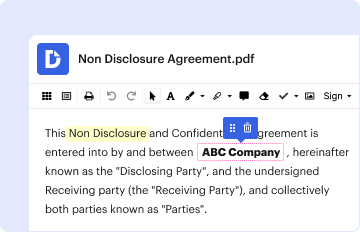
01. Edit your form online
Type text, add images, blackout confidential details, add comments, highlights and more.

Type text, add images, blackout confidential details, add comments, highlights and more.
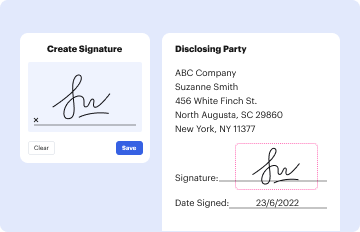
Draw your signature, type it, upload its image, or use your mobile device as a signature pad.
Send it via email, link, or fax. You can also download it, export it or print it out.
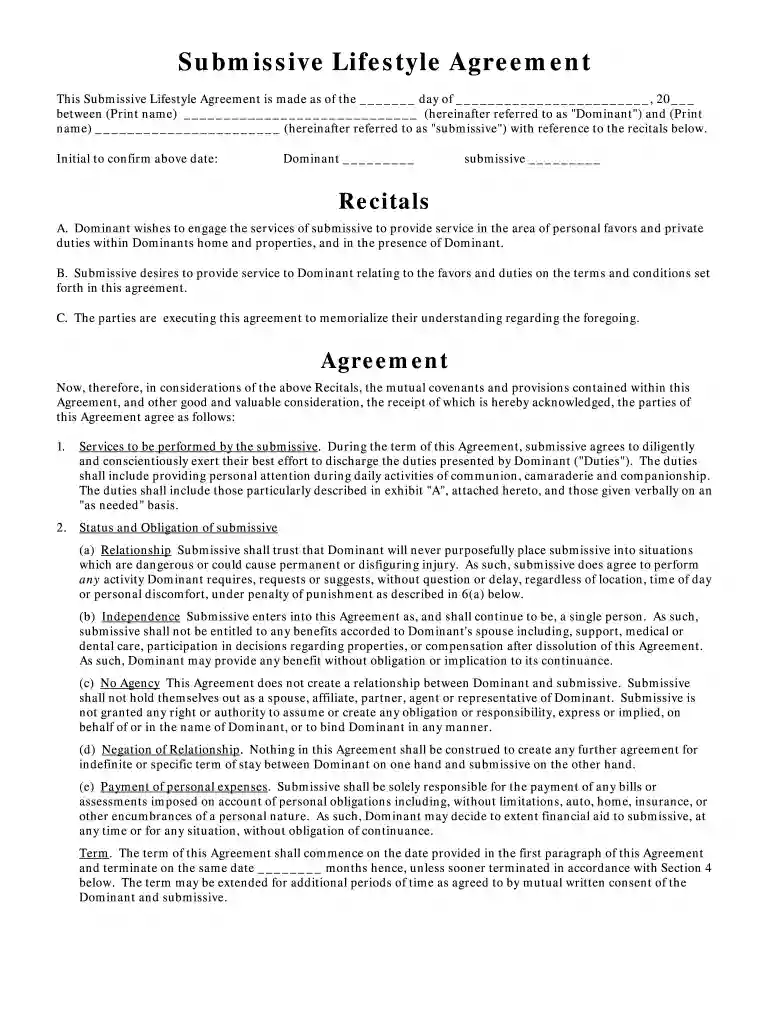
A submissive contract, often referred to as a BDSM contract, is a formal agreement between a Dominant and a submissive partner within the BDSM community. This document outlines the terms and conditions governing their relationship, detailing the submissive's responsibilities and the Dominant's expectations. It is essential for establishing clear communication, setting boundaries, and ensuring mutual consent. This agreement is not legally binding in the traditional sense but serves as a valuable tool for fostering trust and safety in the relationship.
Key components typically included in a submissive contract are:
By clearly defining these elements, both partners can engage in their dynamic with a mutual understanding of expectations.
Several key elements should be included in a submissive contract to ensure clarity and mutual respect:
Incorporating these elements allows both parties to develop a clear understanding of dynamics and responsibilities.
Using a submissive contract involves a few key steps, ensuring that both parties feel comfortable and respected throughout the process:
Drafting the Contract: Collaboratively create the contract. This process fosters communication and informs both parties of their desires and limitations. Use templates freely available online to start, but customize the content to reflect your unique dynamic.
Reviewing Together: Once a draft is created, review it together. This session should involve open discussions where both partners can address concerns, ask questions, and suggest changes.
Finalizing the Contract: After both parties agree on the content, finalize the contract. It can be printed and signed as a symbolic gesture, but remember, the true commitment lies in the ongoing relationship and communication.
Periodic Reevaluation: Establish a routine for revisiting the contract to adjust terms based on changing dynamics or growth in the relationship. This practice aids in maintaining balance and alignment with each other’s needs.
Storing the Document: Keep a signed copy in a secure location accessible to both partners. Some may choose to store it in a digital format while ensuring it's protected with encryption or password access, especially for sensitive information.
Understanding key terminology associated with a submissive contract enhances clarity and communication within the BDSM relationship:
Familiarity with these terms promotes effective communication and helps prevent misunderstandings.
While a submissive contract is primarily a social and personal document, understanding its legal implications is essential:
By integrating these legal considerations, parties can participate in the BDSM community more securely, knowing they have clarified their boundaries and responsibilities.
Examples illustrate how a submissive contract can be effectively applied in real-world scenarios:
Scenario One: A couple establishes a submissive contract that stipulates the submissive will handle specific household chores daily and submit regular reports on their completion. In return, the Dominant commits to open communication at least once a week to assess the submissive's emotional well-being.
Scenario Two: A new submissive drafts a contract that includes a "30-day check-in" commitment, allowing both partners to assess how well the established rules and dynamics are working. This initiative ensures ongoing dialogue regarding their relationship's evolution.
Scenario Three: A long-term couple revises their existing submissive contract to introduce new elements, such as limits on public displays of affection and agreements on spending quality time together. They also include provisions for aftercare, highlighting the importance of emotional support following scenes.
By analyzing these scenarios, it's clear how flexible and tailored a submissive contract can be, creating a personalized framework that serves both partners' needs effectively.
At DocHub, your data security is our priority. We follow HIPAA, SOC2, GDPR, and other standards, so you can work on your documents with confidence.


Jun 23, 2025 Pages in category Contract Items. The following 88 pages are in this category, out of 88 total. A. Altered Atreides Intel LogRead more
New York State authorities must use the Contract Submission System (CSS) to securely submit contracts and contract amendments for prior approval or filing.
A sub-award may be provided through any form of legal agreement, including an agreement that the pass-through entity considers a contract.Read more


