
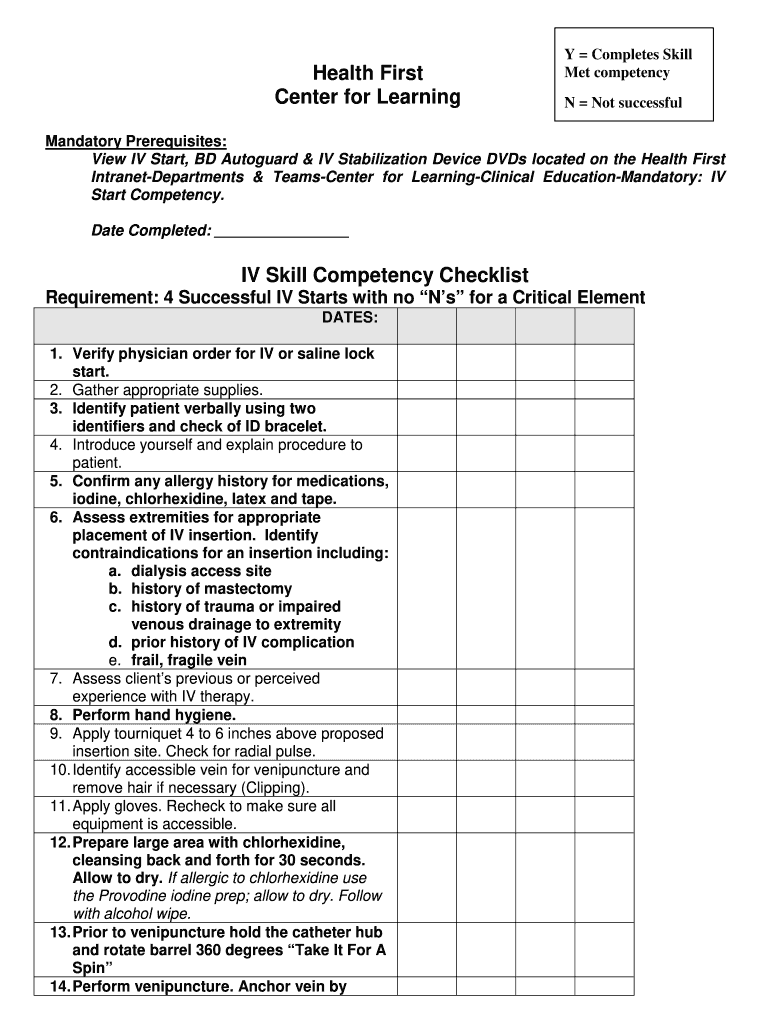







Understanding the IV Therapy Competency Checklist
The IV therapy competency checklist serves as a vital tool for healthcare professionals to ensure safe and effective administration of intravenous therapies. This document outlines key areas for assessment, including prerequisite knowledge, skills, and patient safety protocols required for IV therapy.
Essential Components of the IV Therapy Competency Checklist
The checklist is comprehensive, covering various aspects critical to performing intravenous therapy correctly. It helps healthcare providers meet both institutional standards and patient care requirements. Key components include:
- Skill Demonstration: Practitioners must demonstrate competencies such as catheter insertion, securing the IV site, and recognizing complications.
- Knowledge Assessment: The checklist verifies understanding of anatomy, potential complications, and pharmacology related to IV medications.
- Patient Safety Measures: Protocols for patient identification, informed consent, and aseptic techniques are essential elements that contribute to overall safety during IV therapy administration.
Steps to Complete IV Therapy Competency
Healthcare professionals should adhere to a systematic approach when completing the IV therapy competency checklist. This standardized method ensures consistency and thoroughness:
- Review Baseline Knowledge: Broad understanding of IV therapy principles, including the types of IV fluids and potential complications.
- Hands-On Training: Engage in supervised practice with experienced professionals. This includes using simulation tools or actual patients under direct supervision.
- Perform IV Insertion: Execute an IV insertion using appropriate techniques, such as vein selection and angle of entry, while ensuring patient comfort.
- Documentation: Securely document the procedure, including the date, time, IV site, and patient response to the therapy in the medical record.
- Evaluation: After completing the checklist, undergo evaluation by a competent supervisor to confirm proficiency in IV skills.
Documentation Requirements for IV Therapy
Proper documentation is crucial in IV therapy, ensuring that care is communicated clearly among healthcare professionals. Key elements include:
- Patient Consent: Documentation should confirm that informed consent has been obtained and understood by the patient before initiating therapy.
- IV Start Documentation: Record specifics such as the gauge of the catheter, location of the insertion site, and the number of attempts made for insertion. A sample documentation format might involve:
- Date and time of IV start
- Site assessed (e.g., right arm, left wrist)
- Type and size of catheter used
- Patient's tolerance and any immediate complications observed
- Ongoing IV Therapy Records: Maintain records of fluid type, rate, and any adverse reactions experienced during the infusion.
Incorporating Patient Access Competencies
Patient access competencies should be integrated into the IV therapy practice. This involves:
- Assessment Techniques: Proper methods to evaluate the patient's veins, including palpation and visual assessment.
- Patient Education: Informing patients about the procedure, potential side effects, and care instructions post-therapy.
- Monitoring: Establishing protocols for ongoing observation of the IV site for signs of infiltration, phlebitis, or infection.
Use of Tools in IV Therapy Competency Assessment
The IV therapy checklist includes various assessment tools designed to facilitate a thorough appraisal of a practitioner’s abilities. These tools may include:
- Skill Checklists: Clearly defined checklists to guide practitioners through essential skills like site selection, aseptic technique, and emergency protocols.
- Simulation Scenarios: Utilizing high-fidelity simulators presents realistic situations where practitioners can apply learned skills without risk to patients.
Regulatory and Institutional Standards
Adhering to institutional and national standards for IV therapy competence is vital. This entails:
- National Guidelines: Following established protocols from bodies such as the American Nurses Association (ANA) ensures the use of best practices.
- State Regulations: Familiarization with any state-specific regulations governing the practice of IV therapy, including licensure requirements and scope of practice regulations.
Examples and Case Studies in IV Therapy Administration
Real-world scenarios help illustrate the importance of adherence to the IV therapy competency checklist. Some examples include:
- Case Study of Complications: A patient experiencing infiltration due to incorrect catheter placement may require immediate intervention and thorough documentation as part of the quality assurance process.
- Simulation Training: Practicing on simulators can prepare practitioners for high-pressure scenarios such as managing a patient with specific comorbidities that affect IV therapy.
By ensuring that all healthcare practitioners are proficient and competent in IV therapy through thorough checklists, institutions will enhance patient safety and treatment efficacy. These structured approaches can significantly reduce the risk of complications and improve overall healthcare delivery.




