




Here's how it works
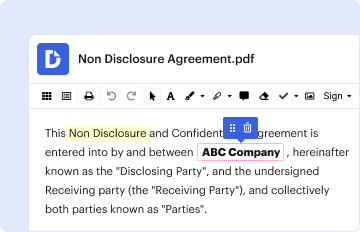
01. Edit your form online
Type text, add images, blackout confidential details, add comments, highlights and more.
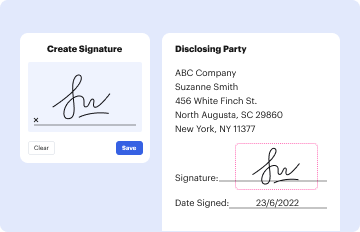
02. Sign it in a few clicks
Draw your signature, type it, upload its image, or use your mobile device as a signature pad.
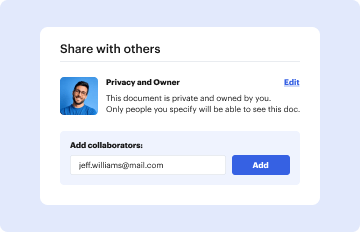
03. Share your form with others
Send it via email, link, or fax. You can also download it, export it or print it out.
How to use or fill out Functional Assessment Interview Tool (FAIT) for Staff with DocHub

- Click ‘Get Form’ to open it in the editor.
- Begin by filling in the student’s name and the date completed at the top of the form. This sets a clear context for your assessment.
- In Part A, check all positive qualities about the student that apply. This section helps identify strengths and preferences, so be thorough.
- List any known preferences or interests of the student in the designated area. This information is crucial for tailoring interventions.
- Move to Part B and check any observable behaviors that indicate potential difficulties before they occur. Provide descriptions of specific behavior concerns in the provided fields.
- In Part C, identify variables associated with occurrences of behavior by checking relevant situations or conditions that coincide with problematic behaviors.
- Finally, summarize strategies used in response to behaviors and note any changes observed over recent weeks. Ensure all sections are completed before submitting.
Start using our platform today to streamline your document editing and form completion process for free!
Fill out Functional Assessment Interview Tool (FAIT) for Staff online
It's free
It's free
See more Functional Assessment Interview Tool (FAIT) for Staff versions
We've got more versions of the Functional Assessment Interview Tool (FAIT) for Staff form. Select the right Functional Assessment Interview Tool (FAIT) for Staff version from the list and start editing it straight away!
| Versions | Form popularity | Fillable & printable |
|---|---|---|
| 2017 | 4.5 Satisfied (58 Votes) |
Got questions?
We have answers to the most popular questions from our customers. If you can't find an answer to your question, please contact us.
Contact us
What are the three areas of a functional assessment?
Functional Behavior Assessments (FBAs) work to identify the cause of challenging behavior in children with an Autism Spectrum Disorder (ASD). The ultimate goal is to identify the reasons for a behavior and then find a solution. FBAs use three main methods: indirect, observational (direct), and Functional Analysis (FA).
What are the tools for functional outcome assessment?
Examples of tools for functional outcome assessment include, but are not limited to: Oswestry Disability Index (ODI), Roland Morris Disability/Activity Questionnaire (RM), Neck Disability Index (NDI), Patient-Reported Outcomes Measurement Information System (PROMIS), Disabilities of the Arm, Shoulder and Hand (DASH),
What are the three parts of a functional behavior assessment?
The three parts of an FBA are direct observations, indirect observations, and behavior hypothesis. The BCBA will observe the child in various environments, such as at home and in school, in order to identify the situations where maladaptive behaviors frequently occur.
How to prepare for a functional assessment interview?
To complete the Functional Assessment Interview (FAI), start by conducting a personal inventory to understand the individuals behavior. Next, gather information using indirect methods like questionnaires and observations. Lastly, practice the FAI process to refine your skills and enhance your interview effectiveness.
What are the three tools used for functional assessment?
There are three main categories of functional assessment approachesindirect (e.g., questionnaires, rating scales), observational, and experimental/functional analysis.
Security and compliance
At DocHub, your data security is our priority. We follow HIPAA, SOC2, GDPR, and other standards, so you can work on your documents with confidence.
Learn more


People also ask
What is the functional assessment interview?
The Functional Assessment Interview (FAI) is an important part of a functional behaviour assessment. The FAI consists of a series of questions designed to gather information about a childs behaviour.
What is a functional assessment tool?
Functional assessments are tools that states, providers, and managed care plans use to collect comprehensive information on persons applying for, and participants in, Medicaid home and community-based services (HCBS) and long-term services and supports (LTSS) programs.