
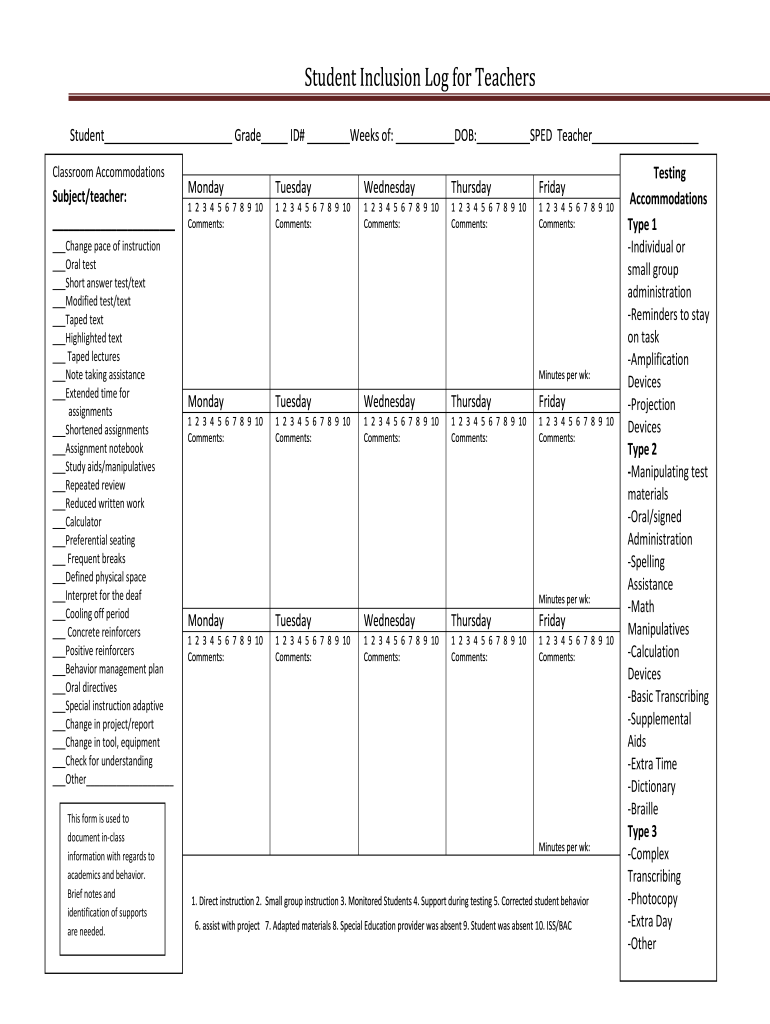







Importance of the Student Inclusion Log for Teachers
The Student Inclusion Log is an essential tool for educators, specifically tailored to monitor and document the support provided to students with special needs in the classroom. This log serves various purposes, fostering an inclusive educational environment aimed at ensuring all students receive the appropriate accommodations and support necessary for their success.
Educators utilize the inclusion log template to keep track of instructional strategies employed, testing accommodations provided, and remarks regarding student performance and behavior. This thorough documentation can also be beneficial during Individualized Education Program (IEP) meetings or when communicating with parents and guardians about student progress.
Key Features of the Student Inclusion Log
The structure of the Student Inclusion Log typically includes several crucial sections:
- Student Information: Basic details like student name, grade, and specific needs relevant to their learning process.
- Accommodations and Modifications: This section specifies what adjustments have been made to the teaching methods or assessments to cater to individual student requirements.
- Instructional Strategies: Detailed descriptions of the teaching strategies implemented to engage students, such as differentiated instruction or use of multisensory materials.
- Progress Monitoring: Regular comments on student performance, capturing their response to interventions and any shifts in behavior or academic achievement over time.
- Reflection/Notes: A space for teachers to reflect on the effectiveness of strategies used and to plan future actions based on observed outcomes.
How to Effectively Utilize the Inclusion Log
Utilizing the Student Inclusion Log involves a systematic approach that can enhance teaching strategies and increase student success:
- Initial Setup: Begin by populating the log with essential student information, ensuring all necessary background details are in place for effective monitoring.
- Regular Updates: Consistently input data into the log by documenting daily or weekly student interactions, accommodations, and strategies used.
- Communication: Use the log to facilitate discussions with support staff, administrators, and parents. Sharing this documentation provides insight into student progress and encourages collaborative problem-solving.
- Review and Reflect: Periodically review the log entries to assess the effectiveness of the accommodations and instructional strategies. This reflective practice allows for adjustment and improvement in teaching methods.
Variability in Implementation
Educators may customize the Student Inclusion Log according to their specific classroom dynamics or the individual needs of their students. Variations can include:
- Additional Sections: Some teachers may opt to include sections for social-emotional learning or specific behavioral goals.
- Digital vs. Paper Formats: Digital formats facilitate easy sharing and updating, while paper formats may be preferred for quick access during lessons.
- Collaborative Logs: Teachers may collaborate with special education staff to maintain a joint log that documents both general classroom accommodations and specialized interventions.
Examples of Usage
Illustrating the practical application of the inclusion log can provide valuable insight into its effectiveness:
- Scenario 1: A teacher documents a student's response to a modified math test. The log captures the adjustments made, such as additional time and the use of a calculator, alongside comments on the student's engagement during the assessment.
- Scenario 2: A special education teacher uses the log to note the success of a particular reading strategy that involved guided reading sessions. Feedback noted includes the student’s increased confidence and improved reading fluency.
Legal and Compliance Considerations
Educators should remain aware of legal implications surrounding documentation practices. Under the Individuals with Disabilities Education Act (IDEA), maintaining accurate and thorough records ensures compliance with federal regulations, aiding in the provision of free and appropriate public education (FAPE) for students with disabilities.
Proper documentation protects not only the rights of the student but also those of the educational institution, serving as a legal safeguard during audits or reviews. The inclusion log must therefore meet the necessary standards for clarity, specificity, and confidentiality while documenting the accommodations and educational services provided.
Trends in Inclusion Documentation
Emerging trends in inclusive education emphasize the importance of detailed documentation:
- Integration with Technology: Educators increasingly utilize digital logs that integrate with Learning Management Systems (LMS), streamlining the process of tracking accommodations and facilitating easy access for all stakeholders.
- Focus on Data-Driven Decision Making: A growing emphasis on data collection fosters evidence-based practices in the classroom, and inclusion logs can serve as a repository for such crucial data, enabling teachers to make informed decisions regarding student interventions.
The Student Inclusion Log for Teachers serves as a vital resource within educational settings, underscoring the commitment to an inclusive environment that nurtures every student's potential through tailored support and continual assessment of their educational journey.




