




01. Edit your management of change form online
Type text, add images, blackout confidential details, add comments, highlights and more.

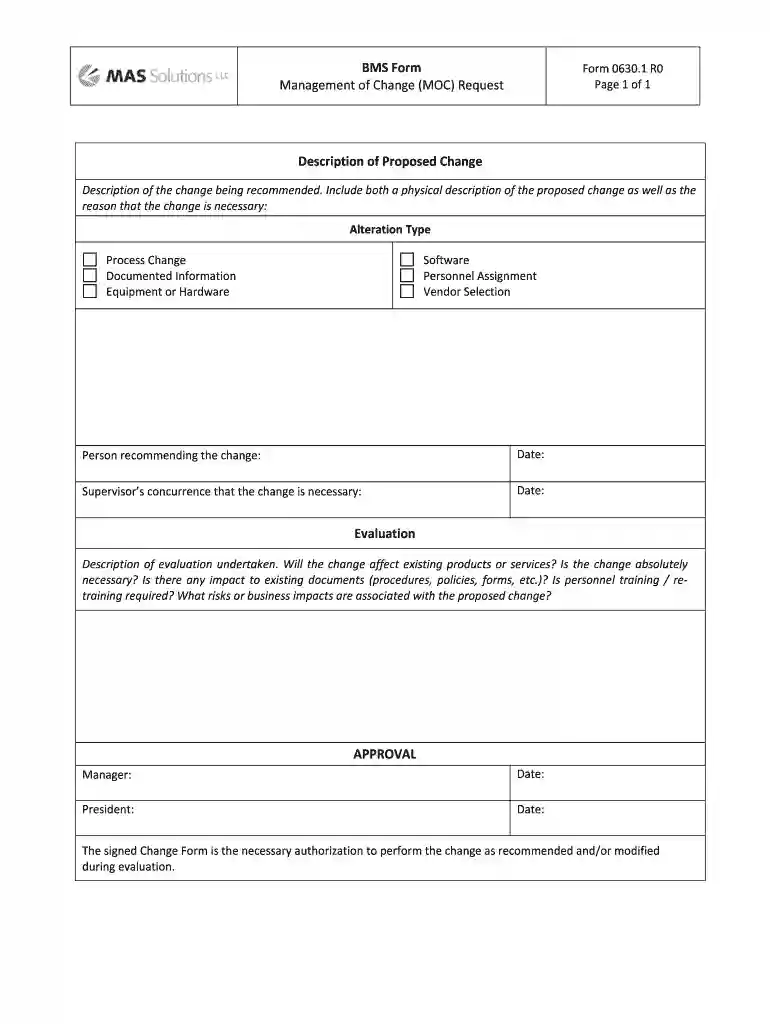
Type text, add images, blackout confidential details, add comments, highlights and more.

Draw your signature, type it, upload its image, or use your mobile device as a signature pad.

Send management of change form pdf via email, link, or fax. You can also download it, export it or print it out.
The Management of Change (MOC) form serves as a critical tool for organizations aiming to implement and document changes within their processes, systems, or structures. The MOC form facilitates an organized approach to change management, outlining the proposed alterations, assessing their potential impact, and ensuring necessary approvals are obtained.
Purpose of the MOC Form: It aids in identifying and mitigating risks that changes may introduce, ensuring continuity and compliance with organizational standards. By systematically evaluating the necessity and implications of changes, the MOC form helps maintain quality and safety in operations.
Scope and Applicability: The MOC form is relevant in various organizational contexts, including but not limited to manufacturing, construction, and information technology. It ensures that all stakeholders are aware of and agree to changes that can affect production, safety, or compliance with regulatory requirements.
A well-designed Management of Change form typically encompasses several essential sections that guide users through the process of documenting a change. Each section plays a unique role in ensuring comprehensive coverage of the change assessment.
Description of Proposed Change: This section should clearly outline what the change is, including specific details and reasons behind the proposal. For example, a manufacturing plant might propose a change in machinery to enhance production efficiency.
Impact Evaluation: The impact assessment requires an analysis of how the proposed change will affect operations, safety, and compliance. Teams should consider both direct and indirect consequences, such as how a change in process might affect material costs or employee training needs.
Approval Signatures: This area is dedicated to capturing the necessary approvals from key stakeholders and management. Required signatures confirm that the proposed change has been reviewed and authorized, serving as an essential part of the documentation process.
Risk Assessment: Identifying potential risks associated with the change is crucial. This might involve evaluating how the change could impact existing safety protocols or regulatory compliance.
Completing the Management of Change form requires a structured approach to ensure all aspects of the change are thoroughly considered. Organizations may follow a step-by-step process to complete this form effectively.
Identify the Change: Begin by clearly stating the nature and scope of the change. Gather input from relevant personnel about the reasons for the change.
Assess Impact: Conduct an analysis to explore the implications of the change. This could involve team discussions, impact analyses, and consultations with safety officers or compliance specialists.
Draft the MOC Form: Fill out the form based on gathered information. Ensure each section of the form is completed accurately, reflecting the input from your assessments.
Review and Revise: Before submission, review the completed form with the relevant stakeholders. Make adjustments based on feedback to ensure clarity and comprehensiveness.
Obtain Approvals: Finally, route the MOC form to management or designated approval authorities to get the necessary signatures and endorsements.
Training and effective communication play a paramount role in the successful implementation of changes documented through the MOC form. Ensuring that all personnel are informed and trained based on modifications is essential for minimizing risks and ensuring compliance.
Employee Training: When changes are implemented, relevant employees must be trained appropriately on new procedures, equipment, or policies. This helps mitigate any operational disruptions and cultivates an informed workforce.
Ongoing Communication: It's vital to maintain clear communication throughout the change process. Regular meetings and updates can foster a culture of transparency and allow team members to voice concerns or suggestions.
Organizations must also consider compliance with applicable regulations when implementing changes. The MOC process should align with industry standards and guidelines to ensure that changes do not introduce compliance risks.
ISO Standards: For organizations operating under various ISO standards, such as ISO 9001 or ISO 45001, adhering to these regulations within the MOC process ensures that quality management and occupational health and safety considerations are met.
Documentation Requirements: Proper documentation is key. Organizations should retain records of completed MOC forms, assessments, and training documents to demonstrate compliance in audits or inspections.
By focusing on these specific areas, the Management of Change form becomes a vital component of a structured change management process. It's essential for promoting safety, compliance, and operational integrity within organizations.
At DocHub, your data security is our priority. We follow HIPAA, SOC2, GDPR, and other standards, so you can work on your documents with confidence.
Summarize the technical basis for the proposed change and any potential health and safety impacts resulting from the proposed change.Read more
Process Safety Management. Management of Change (MOC) Form. The purpose of the MOC Form is to provide a mechanism to track and manage changes and deviationsRead more
This form must be used by the primary contact to (1) replace or update the primary contact on the vendor record or (2) make changes to non-primary contactsRead more


