




Here's how it works
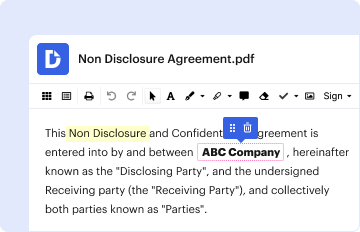
01. Edit your oh it 4708 upc online
Type text, add images, blackout confidential details, add comments, highlights and more.
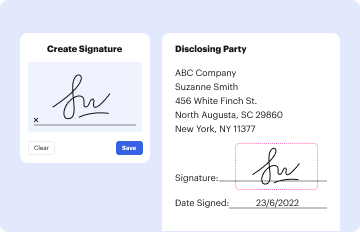
02. Sign it in a few clicks
Draw your signature, type it, upload its image, or use your mobile device as a signature pad.

03. Share your form with others
Send ohio it 4708 upc via email, link, or fax. You can also download it, export it or print it out.
How to use or fill out Ohio Form IT 4708 (Composite Income Tax Return for Certain Investors)

- Click ‘Get Form’ to open it in the editor.
- Begin by entering the reporting period dates in the designated fields. Ensure you specify both the start and end dates accurately.
- Fill in your entity's name and address, including city, state, and ZIP code. This information is crucial for proper identification.
- Select the appropriate entity type code from the options provided: S corporation (1), Limited liability company (2), Partnership (3), or Other (5).
- Indicate whether this is an estimated payment or a payment coupon by checking the corresponding box.
- Enter the amount of payment clearly in the specified field, ensuring accuracy to avoid processing issues.
- Review all entered information for completeness and accuracy before finalizing your document.
Start using our platform today to fill out your Ohio Form IT 4708 easily and for free!
Fill out Ohio Form IT 4708 (Composite Income Tax Return for Certain Investors in online
It's free
It's free
See more Ohio Form IT 4708 (Composite Income Tax Return for Certain Investors in versions
We've got more versions of the Ohio Form IT 4708 (Composite Income Tax Return for Certain Investors in form. Select the right Ohio Form IT 4708 (Composite Income Tax Return for Certain Investors in version from the list and start editing it straight away!
Got questions?
We have answers to the most popular questions from our customers. If you can't find an answer to your question, please contact us.
Contact us
What is the difference between composite return and withholding?
What exactly is the difference between the two? State withholding is when the partnership remits state tax payments on behalf of nonresident partners. A composite filing remits state tax payments on behalf of the nonresident partners and satisfies the partners filing requirement in the state.
What is the tax rate for it 4708 in Ohio?
IT 4708 PTE Composite Income Tax Return o 3.75% tax rate for periods starting 1/1/2023 but prior to 1/1/2024. o 3.50 % tax rate for periods starting 1/1/2024 or after. o Tax rates for both the withholding tax and the entity tax have been lowered to 3% for tax years beginning 1/1/2023 or after.
Who can be included in an Ohio composite return?
The composite return can be filed for all partner types except C-corporations. The composite Schedule V, Investor information includes those investors participating in the filing of the composite return as well as those not participating in the filing of the composite return.
Who needs to file an Ohio return?
Every full-year resident, part year resident and full year nonresident must file an Ohio tax return if they have income from Ohio sources. An exception is for full year nonresidents living in a border state will not have to file an Ohio tax return if wages received are from an unrelated employer.
Does Ohio allow composite tax returns?
Form IT-1140, Schedule E or Form 4708, Schedule V calculating for all partners: 1065 Ohio (OH) . The composite return can be filed for all partner types except C-corporations.
Security and compliance
At DocHub, your data security is our priority. We follow HIPAA, SOC2, GDPR, and other standards, so you can work on your documents with confidence.
Learn more


People also ask
What is the $750 tax credit in Ohio?
Scholarship Donation Credit If you file as single or married filing separately, the maximum credit is $750. If you file as married filing jointly, the maximum credit is $1,500. You may qualify if a Pass-Through Entity (PTE) that you have ownership interest in donated money to an approved SGO.
What is an Ohio qualified investor?
Individuals (or pass through entities with individuals as owners) who invest cash in a qualifying Ohio small business are deemed a qualified investor. There are two qualification provisions: investments must be made in a qualifying Ohio small business. the investment must be held for 2 years.