
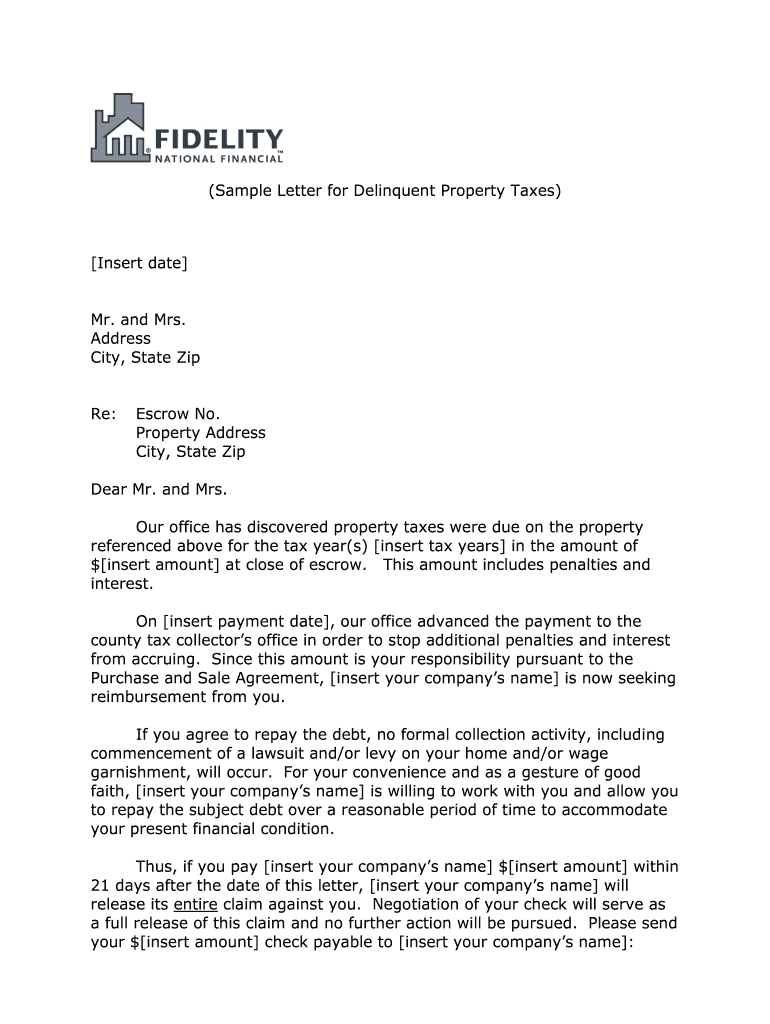







Definition and Importance of a Property Tax Delinquent Letter
A property tax delinquent letter serves as a formal notification to property owners regarding unpaid property taxes. This letter often includes critical information, such as the total amount owed, including any penalties and interest that have accrued due to late payment. It is essential for both tax authorities and property owners, as it initiates communication on outstanding debts and outlines the next steps to remedy the situation.
One of the primary purposes of a delinquent property tax letter is to inform property owners about potential consequences of non-payment, including the risk of foreclosure. This letter is a vital tool for municipalities and tax assessors to maintain revenue collection, ensuring that services funded by property taxes continue uninterrupted.
Key Components of a Property Tax Delinquent Letter
- Recipient Information: The letter should clearly state the name and address of the property owner.
- Tax Amount Due: A detailed breakdown of the principal tax owed, along with accrued interest and penalties.
- Payment Instructions: Clear instructions on how to remit payment and options for payment plans, if available.
- Consequences of Inaction: Explanation of potential legal actions that could arise from continued non-payment, including lien placements and foreclosure proceedings.
- Contact Information: Points of contact for questions or clarification.
Crafting a Delinquent Property Tax Letter
Creating a delinquent property tax letter involves several critical steps to ensure it is effective and compliant with regulations. This process must be handled delicately while maintaining professionalism and clarity.
Step-by-Step Guide for Writing the Letter
- Use a Professional Tone: Start the letter professionally, using formal salutations and maintaining a respectful tone throughout.
- Clearly State the Purpose: Begin with a declaration that this is a property tax delinquent notification and summarize the tax owed.
- Detail the Tax Amount: Provide a clear outline of the tax owed, including original tax, penalties, and interest. Be specific about deadlines and any market rates for interest.
- Offer Payment Options: If feasible, include options for payment plans that can help the property owner manage the debt.
- Convey Urgency: Mention the importance of addressing the matter promptly to avoid additional penalties or legal actions.
Sample Structure
- Date
- Recipient Name and Address
- Subject Line: Delinquent Property Tax Notice for [Property Address]
- Body
- Salutation
- Statement of delinquency
- Detailed account of taxes owed
- Payment options and instructions
- Statement on potential actions if unresolved
- Closing: A courteous closing with an invitation to reach out for further assistance.
Sample Letter for Delinquent Taxes
Below is an example of a letter addressed to property owners concerning delinquent property taxes. This model highlights crucial aspects while maintaining an appropriate tone.
[Date]
[Property Owner Name]
[Property Owner Address]
[City, State, Zip Code]
Subject: Delinquent Property Tax Notice for [Property Address]
Dear [Property Owner Name],
This letter serves as a notification regarding the outstanding property taxes on your property located at [Property Address]. Our records indicate that your account is currently delinquent, with an amount due totaling $[X,XXX]. This figure includes the unpaid taxes, penalties, and interest accrued as of [Date].
To prevent further penalties or potential legal action, we urge you to remit payment of the total amount due no later than [Due Date]. Payment can be made via check or online at [Payment Link/Instructions]. We understand that tax delinquencies can be a significant burden; therefore, we are open to discussing flexible repayment options if you require assistance.
Failure to address this matter will result in more severe consequences, including the potential for a lien on your property or foreclosure proceedings. For your convenience, please contact our office at [Phone Number] or [Email Address] if you have any questions or need assistance in resolving this situation.
Sincerely,
[Your Name]
[Your Title]
[Tax Authority Name]
[Contact Information]
Key Considerations When Issuing a Delinquent Property Tax Letter
Issuing a property tax delinquent letter requires adherence to specific legal guidelines to ensure compliance and effectiveness. Understanding the following elements can enhance the utility of such correspondence.
Legal Requirements
- Compliance with State Laws: Ensure that the letter follows state-specific regulations regarding property tax delinquency notices.
- Notification Period: Be aware of the mandatory waiting periods required before sending out delinquent notices.
Documenting Communication
- Maintain Records: Keep copies of all correspondence sent to property owners for your records.
- Proof of Delivery: Use certified mail or another verifiable method to document that the letter was sent and received.
Common Scenarios Involving Delinquent Property Tax Letters
Property tax delinquency can occur under various circumstances, each requiring tailored communication strategies in the letter. Below are some common scenarios that tax authorities might encounter.
Scenario One: First-time Delinquency
New homeowners sometimes overlook tax payments due to inexperience or confusion surrounding the tax process. A clear, supportive letter might help them understand their obligations.
Scenario Two: Repeated Delinquency
For repeat offenders, a more formal and stern tone may be appropriate, emphasizing the seriousness of the situation while offering options for assistance.
Scenario Three: Financial Hardship
Individuals facing financial difficulties might benefit from letters that explicitly offer repayment plans or further assistance, focusing on accessibility and understanding.
Conclusion on Best Practices for Delinquent Tax Letters
A professionally crafted property tax delinquent letter is essential in communicating with property owners about unpaid taxes. By ensuring clear, respectful, and comprehensive communication, municipalities can enhance their collection processes while fostering understanding and cooperation among property owners.
Every letter should be tailored to the specific circumstances of the recipient while providing essential information on the consequences of continued non-payment, ultimately encouraging prompt resolution of overdue obligations.




