



01. Edit your equipment checkout form template word online
Type text, add images, blackout confidential details, add comments, highlights and more.

Type text, add images, blackout confidential details, add comments, highlights and more.

Draw your signature, type it, upload its image, or use your mobile device as a signature pad.

Send equipment check out form template via email, link, or fax. You can also download it, export it or print it out.
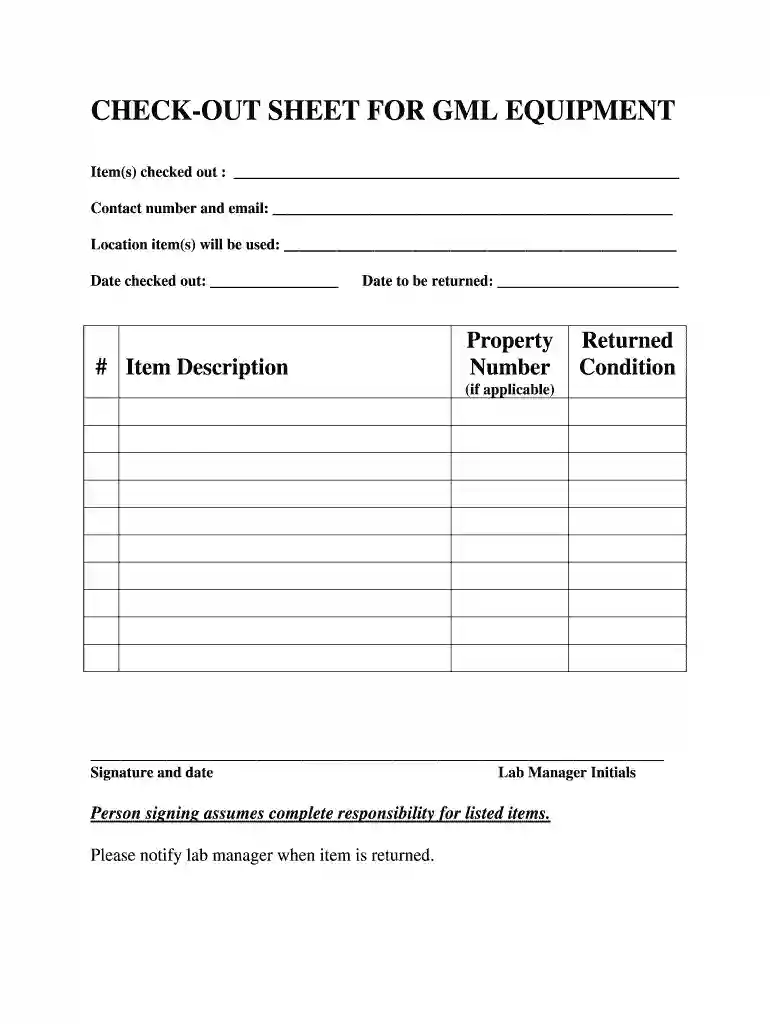
The equipment checkout and responsibility agreement is a formal document used by organizations to outline the terms under which equipment is borrowed by employees or members. This agreement establishes a mutual understanding of responsibility for the equipment while it is in the borrower's possession. The agreement typically includes details about the borrowed items, the borrower’s obligations, and the consequences of loss or damage to the equipment.
Key components within this agreement include:
By clearly defining these elements, the agreement helps to mitigate misunderstandings and outlines the party's accountability.
Using the equipment checkout and responsibility agreement involves several clear and systematic steps, ensuring all parties understand their roles and responsibilities.
Preparation of the Document: Start with a standardized template that incorporates all necessary fields, including item descriptions, borrower information, usage location, and due dates for returns.
Completion by Borrowers: The borrower should fill in their details and review the terms outlined in the agreement thoroughly, paying special attention to their responsibilities in case of equipment damage or loss.
Review and Signature: Both the borrower and an authorized representative of the organization should review the completed agreement before signing. This validation helps ensure both sides agree on the equipment's condition, expectations, and liabilities.
Retention of Copies: Each party should retain copies of the signed agreement for further reference, which strengthens accountability and can serve as a reference point in case of disputes.
Monitoring and Follow-Up: Organizations should establish a monitoring process for borrowed equipment, following up with borrowers prior to return dates to ensure timely and safe returns.
Completing the equipment checkout and responsibility agreement requires careful attention to ensure accuracy and clarity. Follow these steps:
Select or Create a Template: Utilize a standard template tailored to your specific needs or create one from scratch, ensuring it aligns with organizational policies.
Fill in Borrower Information: The borrower must provide their full name, department, contact information, and any other relevant identifying details.
Document Equipment Details: List all items being checked out, including specific identifiers such as model numbers, serial numbers, and descriptions.
Specify Return Terms: Clearly outline the expected return date(s) and condition of the items upon return, including any potential penalties for damages or late returns.
Sign and Date: Both the borrower and an authorized representative from the organization must sign and date the agreement, indicating mutual acceptance of the terms.
Distribute Copies: Ensure that all parties have copies of the signed agreement for records. This helps maintain transparency and accountability.
Understanding important terminology related to the equipment checkout and responsibility agreement can enhance clarity among users. Key terms include:
Familiarity with these terms ensures a shared understanding among all parties, reducing disputes and enhancing the effectiveness of the agreement.
Here are practical scenarios illustrating the usage of the equipment checkout and responsibility agreement:
Scenario 1: An IT department provides laptops to employees who will be working remotely. The agreement specifies that employees must notify the IT department if a laptop is damaged or lost during use.
Scenario 2: A construction company allows workers to borrow specialized tools for specific projects. The agreement highlights that tools should be returned in the same condition, or the borrower will be liable for repair or replacement costs.
Scenario 3: A school district lends musical instruments to students. The agreement stipulates that students must maintain the instruments and that any damages must be reported immediately. The agreement outlines consequences for failure to comply, fostering accountability.
By providing these examples, organizations can ensure that all borrowers understand the importance of adhering to the terms outlined in the equipment checkout and responsibility agreement.
At DocHub, your data security is our priority. We follow HIPAA, SOC2, GDPR, and other standards, so you can work on your documents with confidence.
The above stated faculty member assumes and shall bear the entire risk of loss, theft, destruction, or damage of or to any part of the equipment from any causeRead more
The employee understands and agrees to the following: The employee is responsible for securing the equipment provided to the employee by the (^Company^) IT
I assume full responsibility of the equipment checked out including complete financial responsibility in the event of loss, theft, damage or irresponsibleRead more


