




Here's how it works
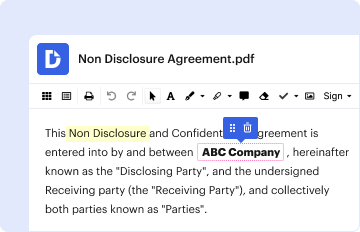
01. Edit your sample printable forms for a incident follow up online
Type text, add images, blackout confidential details, add comments, highlights and more.
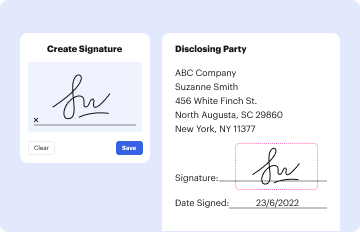
02. Sign it in a few clicks
Draw your signature, type it, upload its image, or use your mobile device as a signature pad.

03. Share your form with others
Send it via email, link, or fax. You can also download it, export it or print it out.
How to use or fill out sample printable forms for an incident follow up

- Click ‘Get Form’ to open it in the editor.
- Begin by entering the 'Agency/Program' and 'Consumer Name' at the top of the form. This identifies the relevant parties involved in the incident.
- Fill in the 'Date of Incident' and 'Incident ID #' fields to provide context for your follow-up.
- Specify the 'Code(s)' and 'Time of Incident' (a.m./p.m.) to detail when the incident occurred.
- In the 'Place of Incident' section, indicate where the incident took place, ensuring clarity for future reference.
- Use the 'Recommendations' section to outline any suggested actions or improvements based on your findings.
- Document any follow-up actions taken in the 'Follow-up on Recommendations' area, providing a clear record of resolutions.
- Finally, ensure all signatures are completed at the bottom of the form, including those from coordinators and case managers, along with their respective dates.
Start using our platform today to streamline your document editing and form completion process for free!
Fill out sample printable forms for a incident follow up online
It's free
It's free
See more sample printable forms for a incident follow up versions
We've got more versions of the sample printable forms for a incident follow up form. Select the right sample printable forms for a incident follow up version from the list and start editing it straight away!
| Versions | Form popularity | Fillable & printable |
|---|---|---|
| 2003 | 4 Satisfied (37 Votes) |
Got questions?
We have answers to the most popular questions from our customers. If you can't find an answer to your question, please contact us.
Contact us
What documentation should be completed after an incident?
You must record all incidents in a register of injuries and investigate why the incident occurred. Document the investigation, the outcome, all work changes or risk controls put in place as a result, and how you have communicated these changes to your workers.
What is an incident documentation form?
An incident report is a formal document that records accidents, injuries, near misses, and other unexpected events in a workplace. It provides a detailed account of the incident or accident, including where and when it happened, who was involved, and any contributing factors.
What should the documentation of an incident include?
While specific requirements may vary, an incident report should be factual and contain these five key elements: Basic information: The where and when, date, time and location of the incident. Be specific when providing this information, for example give details of the precise location where the incident occurred.
What is incident documentation?
Incident reporting is the process of documenting and recording details about unexpected events such as accidents, system failures, or near-misses. It helps organizations identify root causes, take corrective action, and improve safety, compliance, and operational efficiency.
What should you include when completing an incident documentation form?
Filling Out an Effective Incident Report Include the full names of those involved and any witnesses, as well as any information you have about how, or if, they were affected. Add other relevant details, such as your immediate responsecalling for help, for example, and notifying the patients physician.
Security and compliance
At DocHub, your data security is our priority. We follow HIPAA, SOC2, GDPR, and other standards, so you can work on your documents with confidence.
Learn more


People also ask
What is the incident slip form?
An Incident Report form might be completed by the staff involved in the incident that occurred or it might be completed by a safety manager on their behalf. See more on how to write an incident report. Incident reporting is the process of recording worksite events, including near misses, injuries, and accidents.
How do I create an incident report form?
How to write a workplace incident report Gather essential information. Describe the incident. Include injuries and damages. Interview witnesses. Identify contributing factors. Review company policies and procedures. Attach supporting documents. Maintain objectivity.