
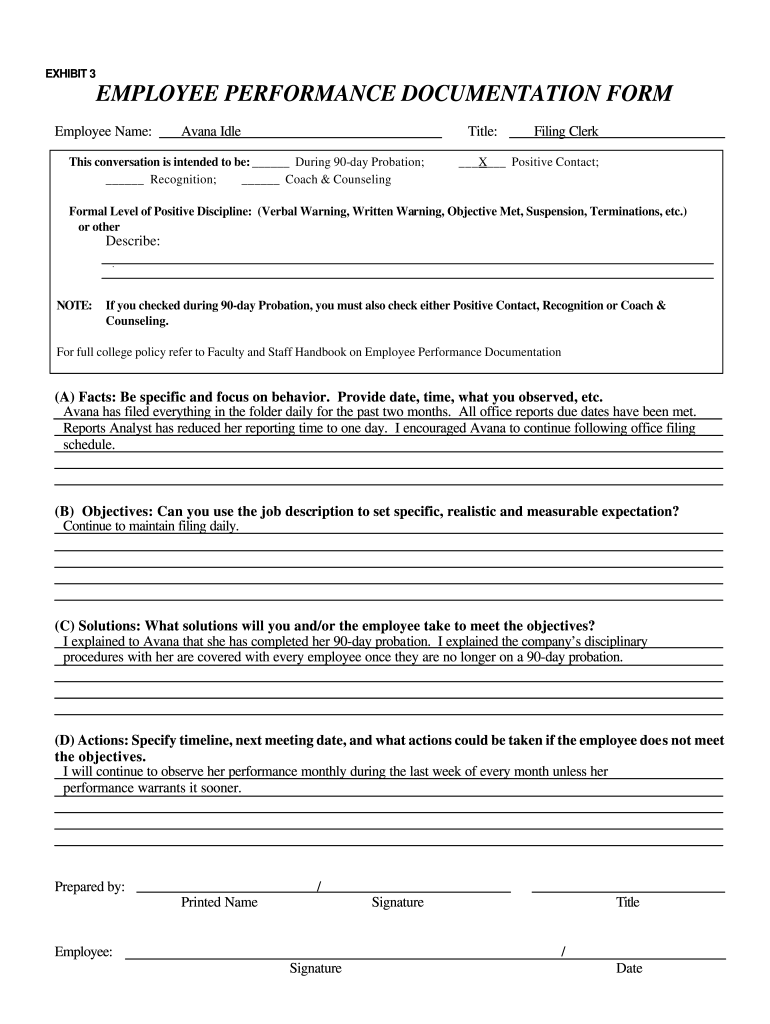







Definition and Importance of Employee Behavior Documentation Template
The employee behavior documentation template serves as a crucial tool for organizations to systematically record and manage employee conduct, performance, and interactions. This template provides a standardized format for detailing specific behaviors, actions taken to address those behaviors, and outcomes of various employee situations.
-
Purpose: The main purpose of utilizing an employee behavior documentation template is to maintain transparency and clarity in documenting employee issues. This documentation can aid in performance reviews, disciplinary actions, and ensure proper processes are followed in human resources management. It establishes a clear record that can protect both the employer and employee's interests.
-
Accountability: By documenting behavior thoroughly, managers can hold employees accountable for their actions. It helps in tracking patterns of behavior over time, which can be useful for addressing recurring issues.
-
Compliance: Many organizations are required to adhere to certain regulations regarding employee treatment and documentation. This template aids compliance with internal policies and external legal standards by ensuring that proper channels are followed when documenting incidents involving employee behavior.
How to Use the Employee Behavior Documentation Template
Using the employee behavior documentation template involves several straightforward steps that ensure effective and thorough documentation.
-
Identify Relevant Incidents: Begin by identifying the specific behavior or incident that needs documentation. This may include instances of misconduct, performance issues, or notable achievements.
-
Fill Out Template Sections: Ensure each section of the template is completed with precise and relevant information. Key areas often include:
- Employee Information: Name, job title, department, and identification number.
- Incident Details: Date, time, location of the incident, and a clear description of the behavior in question.
- Witnesses: List any individuals who witnessed the incident, as their accounts can provide further context.
-
Actions Taken: Document any actions taken in response to the behavior, such as verbal warnings, written reprimands, or training sessions. This section should also outline the rationale for these actions.
-
Follow-Up Plans: Include any strategies for follow-up with the employee to monitor progress or improvements. This demonstrates a commitment to employee development and corrective measures.
-
Sign and Date: Ensure that the documentation is signed and dated by the relevant parties, including the individual documenting the incident and, if appropriate, the employee involved.
Key Elements of the Employee Behavior Documentation Template
An effective employee behavior documentation template should contain several key elements to ensure clarity and utility.
-
Employee Information: Basic details of the employee such as name, job title, department, and employee ID.
-
Behavior Descriptions: Clear, specific descriptions of the behavior observed. Instead of vague terms, use detailed instances that explain the context and impact of the behavior.
-
Date and Time: Accurate records of when the incident occurred are essential for context and follow-ups.
-
Witness Information: Other employees or supervisors who were present during the incident should be documented for reference.
-
Action Taken: This section should detail any disciplinary actions, meetings, or training sessions that occurred as a result of the incident.
-
Future Recommendations: Suggestions for behavioral improvement and steps to rectify the situation are important for guiding the employee moving forward.
Examples of Using the Employee Behavior Documentation Template
Real-world scenarios can illustrate how an employee behavior documentation template might be applied effectively within a business.
-
Performance Improvement: An employee who has consistently missed deadlines can be documented using the template. The manager would outline specific instances, such as dates and types of tasks missed, actions taken to address this behavior (like offering additional training), and expectations moving forward.
-
Conduct Issues: If an employee exhibits disruptive behavior, such as frequent tardiness or inappropriate comments, the manager can document incidents as they occur. The template can be used to detail each incident, note witness reports, and outline the disciplinary actions taken, whether informal warnings or formal performance review discussions.
-
Conflict Resolution: In case of conflicts between employees, the template can be employed to document discussions held, behaviors leading to the conflict, and the resolution steps taken by management. Including follow-up plans is vital for ensuring the resolution is upheld.
Who Typically Uses the Employee Behavior Documentation Template
The employee behavior documentation template is utilized by various roles within an organization to foster improved employee management and ensure proper documentation practices.
-
Human Resources Professionals: HR staff use these templates to maintain detailed and compliant records of employee behavior, ensuring that all procedures follow company policy and legal requirements.
-
Managers and Supervisors: Direct supervisors are often the primary users of this template, as they frequently encounter employee behavior issues that necessitate documentation. They rely on these records during performance reviews and disciplinary actions.
-
Legal and Compliance Officers: In organizations with strict compliance requirements, legal teams may use these templates to ensure that the documentation meets regulatory standards and can withstand scrutiny in the event of disputes.
-
Employee Support Staff: Professional development or employee relations specialists may also use the template to track progress and support interventions aimed at improving employee behavior.


Legal Use of the Employee Behavior Documentation Template
Legally, the employee behavior documentation template plays a critical role in ensuring that an organization adheres to labor laws and regulations while protecting itself from legal repercussions.
-
Documentation as Evidence: In case of disputes such as wrongful termination claims, accurate and thorough documentation can serve as crucial evidence. Courts often require business to demonstrate that appropriate measures were taken concerning employee behavior issues.
-
Anti-Discrimination Compliance: Properly documenting behavioral issues can help organizations demonstrate compliance with anti-discrimination laws. This documentation can show that actions taken were based on behaviors rather than biases or discriminatory motives.
-
Retention Policies: Organizations should have clear policies regarding how long to retain these documents, based on legal requirements. In the United States, some states may have specific retention periods for employee records, including behavioral documentation.
-
Training on Proper Usage: To ensure legal compliance, it is vital that HR personnel and managers receive training on how to document behaviors appropriately, including how to avoid subjective language that could lead to claims of bias or unfair treatment.




