




01. Edit your therapist release of information template online
Type text, add images, blackout confidential details, add comments, highlights and more.

Type text, add images, blackout confidential details, add comments, highlights and more.

Draw your signature, type it, upload its image, or use your mobile device as a signature pad.

Send release of information template word via email, link, or fax. You can also download it, export it or print it out.
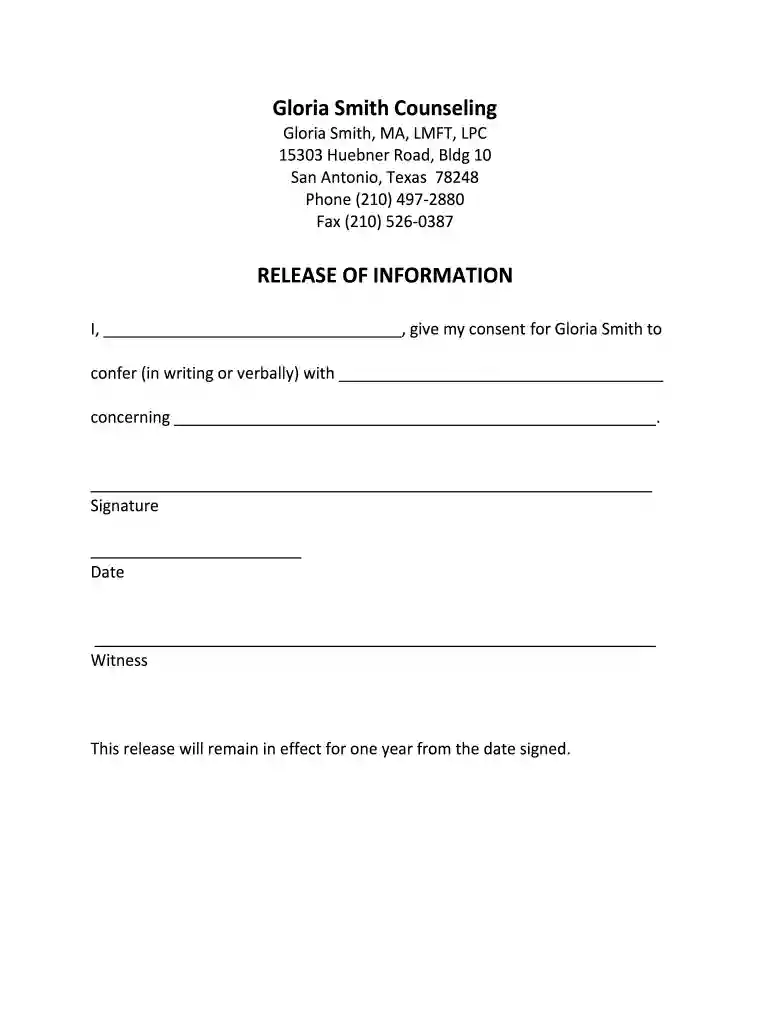
The counseling release of information template is a critical document that enhances communication and collaboration between clients and their counselors or therapists. This form ensures that sensitive information can be shared legally and ethically. By specifying who can access a client's information, the template promotes trust while complying with privacy laws.
A well-crafted counseling release of information template typically includes the following essential elements:
Client Information: This section captures the client's full name, address, date of birth, and contact details, allowing for accurate identification and communication.
Recipient’s Information: Identifying who will receive the information is crucial. The form should include the recipient's name, title, and organization if applicable. This ensures that clients know exactly who will have access to their private information.
Details of Information to be Released: It is important to specify the type of information that can be shared. This could include treatment notes, psychological evaluations, or billing information. Clarity on this ensures clients understand the scope of the release.
Duration of Consent: The form should stipulate how long the consent is valid, commonly ranging from six months to a year. This stipulation offers clients control over their information and reassures them about the temporary nature of the authorization.
Signature and Witness: The client’s signature is paramount, as it confirms their understanding and agreement to the information sharing. A witness signature may also be required for added validity.
Utilizing the counseling release of information template involves several steps:
Completion by the Client: Clients should fill out the template with accurate information regarding themselves and the intended recipient of the information.
Review by the Counselor: Once completed, the counselor should review the document to ensure all required fields are filled correctly and that the client fully understands what they are signing.
Signatures: Both the client and the counselor should sign the document. This step reaffirms mutual agreement regarding the release and safeguards both parties.
Distributing Copies: After signatures have been acquired, the document should be copies distributed to all parties involved. The client retains one copy, the counselor keeps a copy in the client's file, and if necessary, the recipient also receives a copy.
Periodic Review: Counselors should remind clients to periodically review the status of their release, especially if it is approaching expiration. An expired release requires a new form to be signed.
When using a counseling release of information template, it's crucial to understand the legal implications tied to confidentiality and privacy:
HIPAA Compliance: The Health Insurance Portability and Accountability Act (HIPAA) governs the sharing of health information. Counselors must ensure that their release forms align with HIPAA regulations to protect client information.
State Laws Variation: Different states may have specific laws regarding the release of information in counseling contexts. It is necessary to consult local regulations to ensure compliance.
Revocation of Consent: The template should inform clients that they have the right to revoke their consent at any time. Understanding how to do so is vital for ongoing client empowerment and trust.
Counseling release of information templates are commonly used in various scenarios:
Treatment Continuity: When transitioning clients between different health providers, this document facilitates seamless information sharing.
Legal Cases: In legal matters involving mental health, attorneys may request the release of therapy records to assess the client’s mental state.
Insurance Claims: Insurance companies may require access to therapy notes to process claims related to mental health services.
Several formats of counseling release of information templates exist, providing clients and providers with options to meet their specific needs:
PDF Versions: Service providers may offer downloadable PDF templates that clients can fill out and print.
Word Document Templates: Editable Word versions enable practitioners to customize templates according to their practice requirements.
Online Forms: Many platforms offer digital templates that can be filled out electronically, promoting ease of use and instant submission.
Having access to these varied template formats allows counselors to choose the most appropriate method for their client interactions, ensuring efficiency and compliance.
Electronic document approval demands a software solution that complies with data protection and eSignature regulations. DocHub is an excellent tool for that, as it fulfills all the above mentioned requirements. Whatever method you prefer to sign your template for release of information in DocHub, your eSignature will be legally binding and court-admissible.
If you edit your consent for release of information template with DocHub, you merely require a steady web connection and virtually any web browser installed on your device. No need to set up any third-party applications or study tutorials. Just open a tab with DocHub, drag and drop your file, and modify it immediately.
At DocHub, your data security is our priority. We follow HIPAA, SOC2, GDPR, and other standards, so you can work on your documents with confidence.
Release of Information form. This form is used to either release or obtain confidential information about your treatment to individuals/organizations outside ofRead more
Apr 27, 2011 The Paperwork Reduction Act (PRA) of 1995 gives the Office of Management and. Budget (OMB) authority over the collection of certainRead more


