
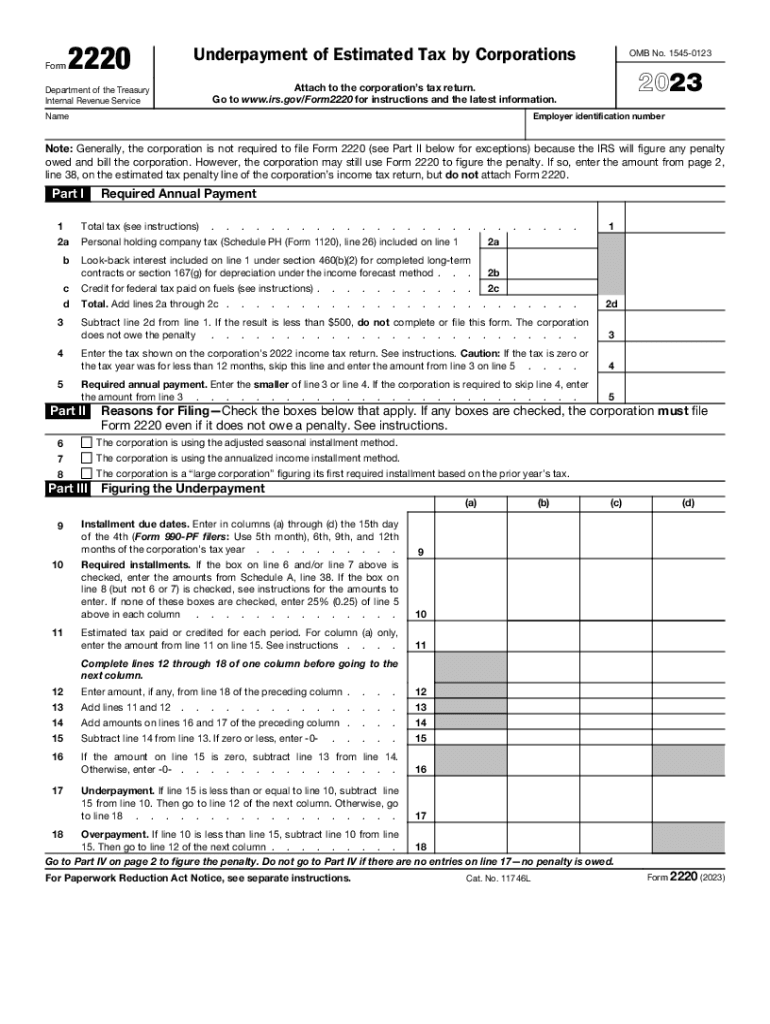







Definition and Purpose of Form 2220
Form 2220, officially known as "Underpayment of Estimated Tax by Corporations," is used by corporations in the United States to report underpayments of estimated tax. This form guides corporations in calculating the required annual payments and determining any penalties owed due to underpayments. It is crucial for maintaining compliance with tax obligations and avoiding interest charges.
The Importance of Compliance
- Avoid Penalties: Filing accurately can prevent costly penalties.
- IRS Requirements: The IRS mandates timely submissions to ensure estimated taxes are paid.
- Cash Flow Management: Helps manage tax liabilities throughout the year.
Who Uses Form 2220
Typically, Form 2220 is used by corporations that expect to owe more than $500 in taxes at the end of the year. These may include C corporations, S corporations, and other business entities with similar reporting obligations.
Business Types and Use Cases
- Corporations: Most common users, mandated to report underpayments.
- Small Businesses: Those structured as corporations to leverage tax planning.
- Large Enterprises: Complex tax situations necessitating detailed reporting.
Essential Steps to Complete Form 2220
Completing Form 2220 requires attention to specific details related to the corporation's tax situation. Here's a breakdown of the steps involved:
- Gather Necessary Documents: Collect previous tax returns, financial statements, and estimated tax payment records.
- Calculate Estimated Tax Payments: Determine the required installments based on the corporation's tax liability.
- Fill Out the Form Sections:
- Enter tax information, including income and deductions.
- Note installment due dates.
- Calculate underpayments and potential penalties.
- Review for Accuracy: Double-check calculations and entries to ensure compliance.
- Submit the Form: Choose the appropriate submission method as specified by the IRS.
Key Elements of Form 2220
Navigating Form 2220 involves understanding its various components, which are vital for accurate reporting:
Major Sections Explained
- Tax Information: Initial section requiring basic corporate identification and tax-related details.
- Installment Due Dates: Input specific dates relevant to the tax period.
- Penalty Calculation: Methods for determining penalties based on underpayment periods are specified.
IRS Guidelines and Instructions
The Internal Revenue Service provides detailed instructions to aid corporations in filling out Form 2220. Compliance with these guidelines is essential for accurate reporting.
Important Considerations
- IRS Publications: Referencing IRS official documents can provide clarity on complex areas.
- Changes in Tax Law: Stay updated with tax code revisions that may impact filings.
- Understanding Penalties: Awareness of how penalties are calculated and applied is necessary.
Filing Deadlines and Important Dates
Meeting deadlines is critical for avoiding penalties. Corporations need to understand the specific timelines involved:
Key Filing Dates
- Quarterly Payments: Payments are typically divided across four equal installments.
- Annual Submission Deadline: Aligns with corporate tax filing dates.
- Penalty Assessments: Issued post-filing if deadlines are missed or underpayments are detected.
Penalties for Non-Compliance
Failing to comply with Form 2220 requirements can result in significant financial consequences. Corporations should be aware of these potential outcomes:
Penalty Breakdown
- Underpayment Penalties: Calculated based on the amount of estimated tax underpaid and the period of underpayment.
- Interest Charges: Accrued from the date of underpayment until resolved.
Examples and Scenarios
Practical examples help elucidate the use of Form 2220 for various types of corporate taxpayers:
Scenario Illustrations
- Startup Corporations: May underestimate taxes due to variable cash flow.
- Established Businesses: More predictable income and expenses often result in accurate estimated payments.
- Seasonal Corporations: Businesses with fluctuating income may benefit from understanding annual liability cycles.
Understanding and correctly managing Form 2220 requires diligence and familiarity with IRS regulations and corporate finance management strategies. This comprehensive guide aims to assist corporations in navigating the intricacies of estimated tax payments and compliance requirements effectively.




