







Definition and Purpose of the Parent Contact Information Sheet
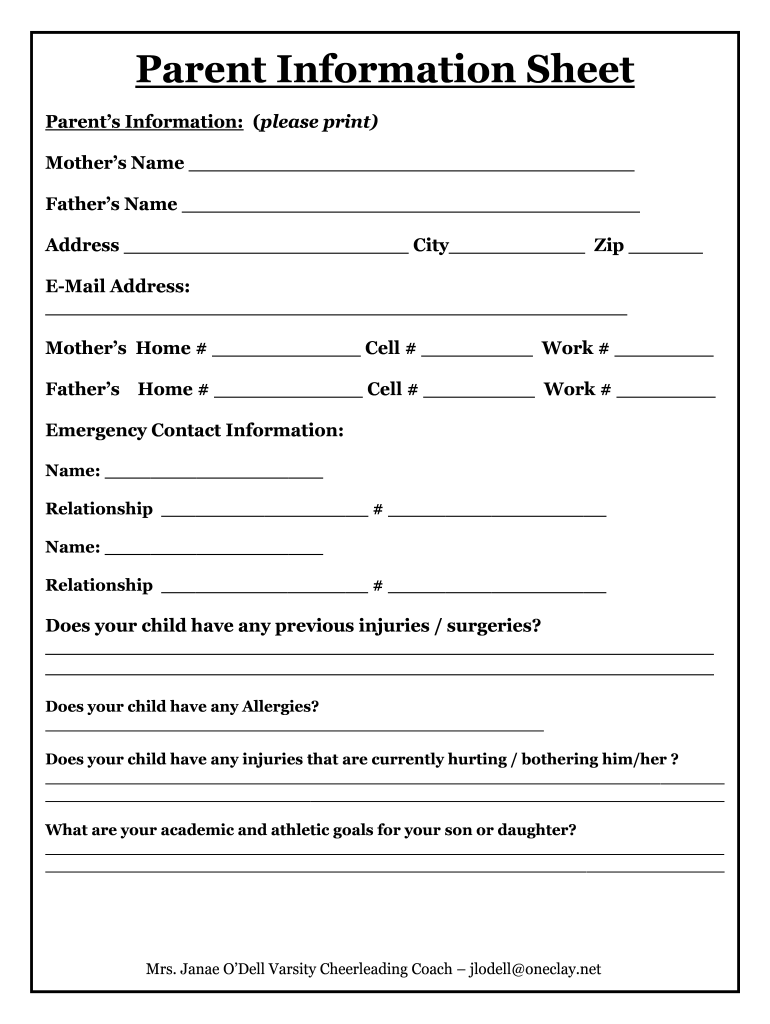
A parent contact information sheet is a critical document used primarily by educational institutions to gather essential details about students and their families. This sheet is designed to ensure that teachers and school administrators have immediate access to relevant contact information, enabling effective communication regarding academic progress, emergencies, and general updates.
The sheet typically includes the following key components:
- Parent/Guardian Information: Names, addresses, phone numbers, and email addresses of the parents or guardians responsible for the student.
- Emergency Contacts: Additional individuals designated to be contacted in case of emergencies when the primary contacts are unavailable.
- Medical Information: Details about any medical conditions or allergies that the school should be aware of, which helps in emergency situations.
- Academic and Extracurricular Interests: A section where parents can discuss their child’s academic goals and interests outside of the classroom, such as sports, clubs, or other activities.
Having this information readily available helps educators foster a collaborative environment between the school and home, thereby facilitating a smooth educational experience for students.
Steps to Complete the Parent Contact Information Sheet
Filling out the parent contact information sheet is a straightforward process that can typically be completed in just a few steps. Follow these guidelines to ensure that all necessary information is accurately recorded.
-
Request the Sheet: Obtain the most recent version of the parent contact information sheet from the school. Many institutions provide this as a downloadable PDF on their website or as a physical form sent home with students.
-
Fill in Parent/Guardian Information: Enter complete names, addresses, phone numbers, and email addresses for each parent or guardian. Ensure that this information is up-to-date to facilitate reliable communications.
-
Designate Emergency Contacts: List at least two emergency contacts other than the parents. Include their names, relationship to the child, and reliable contact information. This is crucial for scenarios where immediate communication is needed.
-
Record Medical Information: If applicable, document any medical conditions, medications, or allergies that the school should know about. This allows for better preparedness in case of a medical emergency.
-
Provide Academic and Extracurricular Details: Share any relevant information regarding the child’s academic goals and interests. This could include subjects they excel in or activities they enjoy, which can help teachers provide tailored support.
-
Review and Submit: Double-check all entries for accuracy and completeness. Submit the filled-out sheet according to the school's instructions, whether by returning it to the school in person, mailing it, or submitting it electronically if such an option is available.
Key Elements to Include in the Parent Contact Information Sheet
To maximize the utility of the parent contact information sheet, it should encompass the following key elements:
-
Basic Contact Information
- Parent/Guardian Names
- Home Address
- Primary and Secondary Phone Numbers
- Email Addresses
-
Emergency Contact Information
- Names and phone numbers of individuals who can be reached if parents cannot be contacted.
-
Medical History
- Information about allergies, chronic illnesses, or any condition that may affect the student’s school experience.
-
Academic and Extracurricular Interests
- Opportunities for teachers to engage with students based on their unique interests and strengths.
-
Consent for Information Sharing
- A section for parents to consent to the sharing of their child's information with school staff, emergency services, or third parties as necessary.
Incorporating these elements enhances the communication between parents and educators, creating a more comprehensive support system for students.
Common Uses of the Parent Contact Information Sheet in Education
The parent contact information sheet serves several important functions within educational settings, fostering better engagement between families and schools. Here are some common uses:
-
Emergency Preparedness: In emergency situations, having up-to-date contact information ensures that schools can quickly reach parents or guardians, allowing for timely communication and actions.
-
Academic Progress Monitoring: Teachers can use the information to reach out to parents regarding their child’s performance, discuss academic goals, and address any concerns.
-
Event Coordination: Schools utilize the contact sheet to inform parents about meetings, school events, and activities, fostering greater family involvement and support for the classroom environment.
-
Collaboration on Student Needs: Parents can communicate specific needs or concerns they have about their child, which helps teachers tailor their approach to meet the individual needs of each student effectively.
-
Building Community: Engaging parents in their child's education through regular updates can create a stronger sense of community within schools, benefiting everyone involved.
Legal Considerations for the Parent Contact Information Sheet
When dealing with a parent contact information sheet, several legal considerations are pertinent to maintain compliance with privacy laws and regulations.
-
Family Educational Rights and Privacy Act (FERPA): Schools must adhere to FERPA, which provides parents certain rights regarding their child's education records, including the right to access information and restrict disclosure under specific conditions.
-
Confidentiality: Schools must ensure that all information collected is treated confidentially and shared only among authorized personnel involved in the educational process.
-
Data Protection: Implementing measures to safeguard the information stored and processed electronically is essential to prevent unauthorized access or breaches.
-
Consent: Schools may require explicit consent from parents regarding how their information will be used and who it will be shared with, particularly for informational purposes beyond the classroom setting.
Adhering to these legal considerations helps protect the privacy of students and their families while allowing schools to utilize the information effectively for educational purposes.




