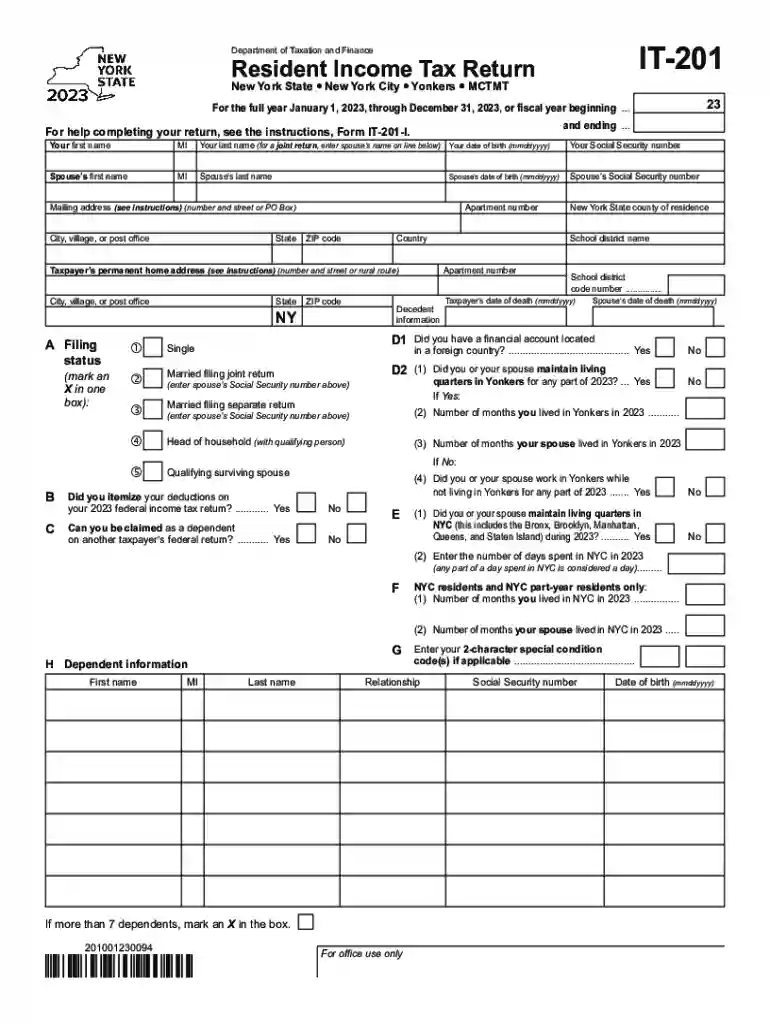
Definition and Overview of Form IT-201 for Tax Year 2023
Form IT-201, also known as the Resident Income Tax Return for New York State, is a critical document for reporting income, calculating state and local taxes, and determining tax liabilities for residents for the tax year 2023. This form is required for individuals who have established residency in New York State and need to report all sources of income, including wages, business income, and investment returns. It serves as a standardized format to ensure that all necessary information is conveyed to the state tax authorities for assessment.
- Filing Requirement: All residents with taxable income need to file Form IT-201. This includes individuals who lived in New York for any part of the year and earned income that meets the state's filing threshold.
- Purpose: The form is designed to assist taxpayers in documenting their income and claiming any applicable deductions and credits, ultimately leading to a calculated tax liability.
- Components: The form includes sections for personal information, filing status, income details, deductions, and credits. Each section facilitates accurate reporting to meet state compliance and tax obligations.
How to Obtain Form IT-201 for Tax Year 2023
Accessing Form IT-201 for the 2023 tax year can be done through several avenues to ensure that taxpayers have the necessary materials to file correctly.
- Official Sources: The New York State Department of Taxation and Finance's website provides downloadable versions of Form IT-201 in PDF format. This document can be printed and filled out manually.
- Online Platforms: Many tax software solutions and services, such as TurboTax and H&R Block, integrate Form IT-201 into their filing processes, allowing users to complete their tax returns electronically.
- Physical Locations: Tax preparation offices and local libraries often have physical copies available for those who prefer to fill out the form by hand.
Steps to Complete Form IT-201 for Tax Year 2023
Completing Form IT-201 requires careful attention to detail and an organized approach to ensure that all necessary information is accurately reported.
- Gather Required Information: Before starting, collect all pertinent documents, including W-2s, 1099s, and any records of other income sources.
- Fill Out Personal Information: Enter your name, address, and Social Security number. Ensure that the name matches the Social Security Administration records to avoid discrepancies.
- Select Filing Status: Choose the appropriate filing status, which affects tax rates and eligibility for certain credits. Options include single, married filing jointly, married filing separately, or head of household.
- Report Income: Detail all sources of income, including wages, self-employment earnings, interest, dividends, and any additional taxable income. Each category has specific lines on the form for clarity.
- Claim Deductions and Credits: Identify eligibility for various deductions and tax credits, such as the standard deduction or specific itemized deductions. Fill this information accurately to reduce tax liability.
- Calculate Total Tax and Refund: After reporting income and deductions, compute the total tax owed and determine any refund to be claimed. Ensure calculations are double-checked for accuracy.
- Sign and Submit: After completing the form, sign and date it. Submit the completed form via mail or electronically if utilizing tax preparation software.
Key Elements of Form IT-201 for Tax Year 2023
Understanding the main elements of Form IT-201 can help taxpayers navigate their filing more effectively.
- Personal Information Section: This part captures the taxpayer's identification details and filing status, which are crucial for tax processing.
- Income Reporting: Multiple lines for detailing various income types make it essential for taxpayers to carefully categorize their earnings. This section ensures that all income is considered in calculating tax due.
- Deductions and Credits Areas: Taxpayers can take advantage of allowable deductions to reduce taxable income, which includes both standard and itemized deductions.
- Tax Calculation Worksheet: This worksheet guides taxpayers through determining their final tax liability after accounting for income, deductions, and applicable tax rates.
- Signature and Submission: The final step includes the taxpayer’s signature, affirming that the information provided is accurate and complete, which is a legal requirement for filing.
Filing Deadlines and Important Dates for Form IT-201 in 2023
Timely filing of Form IT-201 is essential to avoid penalties and ensure compliance with New York State tax regulations. Key dates to keep in mind for the 2023 tax year include:
- Filing Deadline: Usually, the deadline for submitting Form IT-201 is April fifteenth of the following tax year. For the 2023 tax year, this means filing by April 15, 2024.
- Extension Requests: If additional time is required, taxpayers can request an extension using Form IT-370 but must pay any tax due by the original deadline to avoid penalties.
- Estimated Tax Payments: Taxpayers who expect to owe additional taxes may need to make estimated payments throughout the year. These payments are typically due on April fifteenth, June fifteenth, September fifteenth, and January fifteenth of the following year.
Common Penalties for Non-Compliance with Form IT-201
Filing Form IT-201 accurately and on time is vital, as failing to do so can lead to various penalties.
- Late Filing Penalties: If the form is submitted after the deadline without an approved extension, penalties may apply, typically calculated as a percentage of unpaid tax.
- Inaccurate Information: Reporting incorrect income or deductions can trigger audits and result in penalties based on any additional tax owed, as well as interest accrued since the original filing date.
- Failure to Pay Tax Due: Taxpayers who do not pay their tax dues by the filing deadline may incur further penalties and interest charges, compounding the original amount owed.
By understanding these aspects of the Form IT-201 for the 2023 tax year, residents can better navigate their filing responsibilities and ensure compliance with New York State tax laws.