
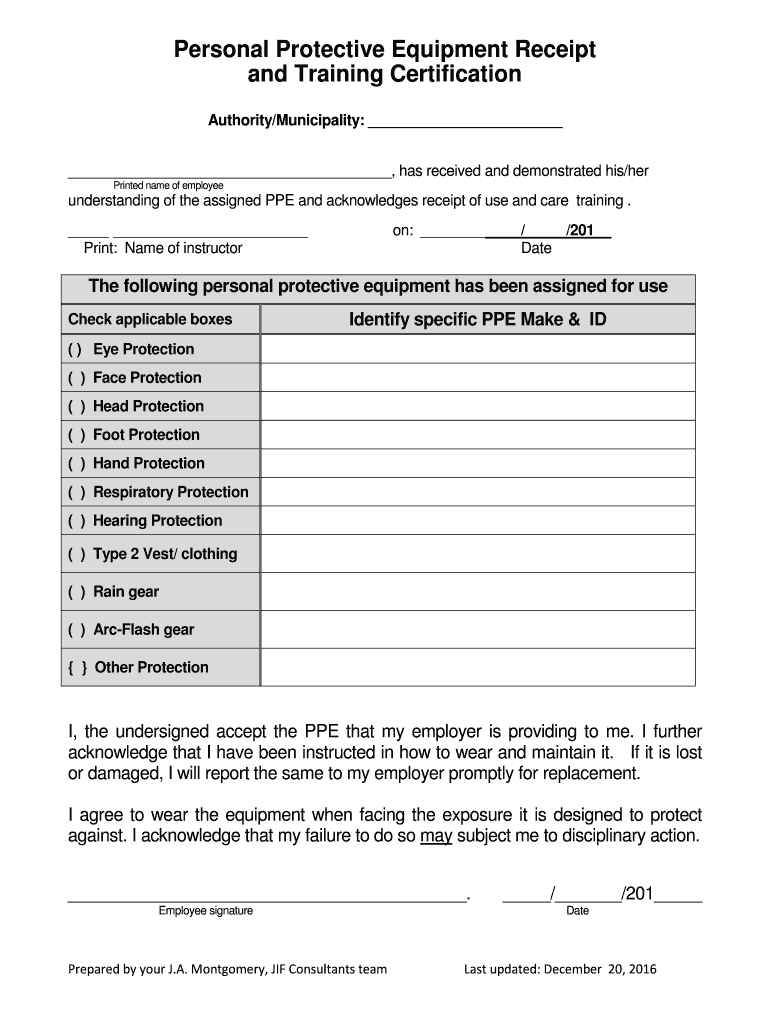







Definition and Meaning of Personal Protective Equipment Receipt
The Personal Protective Equipment (PPE) Receipt is a formal document providing evidence that an employee has received specific personal protective equipment necessary for their job. This receipt confirms that the individual acknowledges understanding the use and care of the equipment, as well as the associated training received from a qualified instructor. The receipt typically includes details about the types of PPE issued, making it a critical element in workplace safety protocols.
By documenting the issuance of PPE, organizations can maintain compliance with safety regulations and ensure that employees are equipped with the necessary tools to perform their job safely. Moreover, the document may serve as legal protection for employers by demonstrating that appropriate equipment has been provided and that employees have engaged in the requisite training.
Key components of the PPE receipt include:
- Statement of receipt confirming delivery of equipment.
- List of PPE items received, detailing specifications.
- Signature sections for both the employee and supervisor.
- Terms outlining the responsibility of the employee to report any loss or damage.
Key Elements of the Personal Protective Equipment Receipt
The Personal Protective Equipment Receipt contains several key elements vital for both employees and employers. Understanding these components aids in ensuring compliance with safety standards and creates clarity about responsibility.
1. Equipment Details
This section includes a comprehensive list of the PPE provided. Common types of equipment might be:
- Hard hats
- Safety goggles
- Gloves
- Respirators
- High-visibility clothing
Each item may also have specific labels or identification numbers.
2. Employee Acknowledgment
This part verifies that the employee has received the indicated PPE. It typically requires the employee's signature alongside the date of receipt, confirming their acknowledgment of responsibility for the equipment.
3. Training Certification
The receipt should note that an educational session regarding the PPE has been provided. This emphasizes the importance of proper usage and care, and it may require signatures from both the trainer and the employee.
4. Reporting Procedures
An important inclusion is stipulating the responsibility of the employee to report any loss or damage to the PPE promptly. This can help in maintaining workplace safety and ensuring accountability.
5. Company Information
Details about the issuing organization, including name, address, and contact information, are also essential. This information aids in maintaining a robust record of the PPE provided and can support audits and inspections.
Steps to Complete the Personal Protective Equipment Receipt
Completing a Personal Protective Equipment Receipt entails several systematic steps to ensure that all necessary information is accurately captured.
Step 1: Identify Required PPE
The first step involves determining the specific PPE necessary for various job roles. This may vary based on job function, industry standards, and specific workplace hazards.
Step 2: Fill Out Employee Information
Include the receiving employee's details such as their name, job title, and department. Accurate documentation ensures that the receipt reflects who is accountable for the equipment.
Step 3: List Issued PPE
Create a thorough inventory of the PPE provided to the employee. This should include each item’s name, type, and any model or serial numbers, particularly for equipment that requires regular inspection or certification.
Step 4: Include Training Session Details
Document the details of the training provided, including the date, duration, and topics covered. It is also beneficial to include the trainer’s credentials to underscore the training's credibility.
Step 5: Signatures
Finally, secure signatures from both the employee and the issuing supervisor. This action binds both parties to the agreements outlined in the receipt and validates the record.
Notes on Completion
- Ensure that all information is legible and free of errors.
- It may be helpful to create a digital version of the form to streamline the process.
- Keep a copy for internal records and provide a copy to the employee for their reference.
Legal Use of the Personal Protective Equipment Receipt
The Personal Protective Equipment Receipt serves a significant legal purpose in the workplace. It is critical to understand its role in compliance with pertinent safety regulations and standards.
Compliance with OSH Act
This document helps employers comply with the Occupational Safety and Health (OSH) Act, which mandates the provision of necessary PPE. By maintaining accurate records of issued equipment, employers can demonstrate due diligence and commitment to employee safety.
Liability Protection
The receipt functions as legal proof that employees have received crucial safety gear and training. In the case of an accident or injury, this documentation can protect the employer from liability by demonstrating that they fulfilled their obligation to provide safe working conditions.
Recordkeeping
Keeping organized records of PPE receipts allows organizations to prepare for regulatory audits and inspections. These records confirm not only the provision of equipment but also that the workers are informed about their responsibilities.
Fostering Accountability
Transitioning responsibilities from the employer to the employee regarding equipment usage reinforces accountability in the workplace. Employees are more likely to maintain and care for the PPE they signed for, knowing that they are responsible for its condition.
Examples of Using the Personal Protective Equipment Receipt
The utilization of the Personal Protective Equipment Receipt is commonplace across various industries. Here are several scenarios illustrating its practical applications.
Scenario 1: Construction Industry
In a construction setting, workers often face hazardous conditions that necessitate protective gear. A site manager issues PPE including hard hats and safety vests to new employees. Each worker signs a PPE receipt to acknowledge receipt and training on the proper use of equipment. This process helps ensure every worker is adequately equipped before entering potentially dangerous zones.
Scenario 2: Manufacturing Facilities
A manufacturing facility may require employees to wear gloves, goggles, and ear protection. The HR department provides a PPE receipt when new equipment is distributed after a safety training session. This documentation maintains a clear record of what each employee has received and helps with inventory management for future supplies.
Scenario 3: Healthcare Sector
Healthcare workers may require diverse PPE such as face masks, gowns, and gloves. When new supplies are delivered, staff members acknowledge receipt with a PPE receipt, ensuring that they are familiar with the correct usage and are equipped to safely perform their duties.
By maintaining thorough and accurate records with the PPE receipt, organizations across these sectors can ensure that safety protocols are adhered to, minimizing the risk of injuries and maintaining compliance with safety regulations.




