
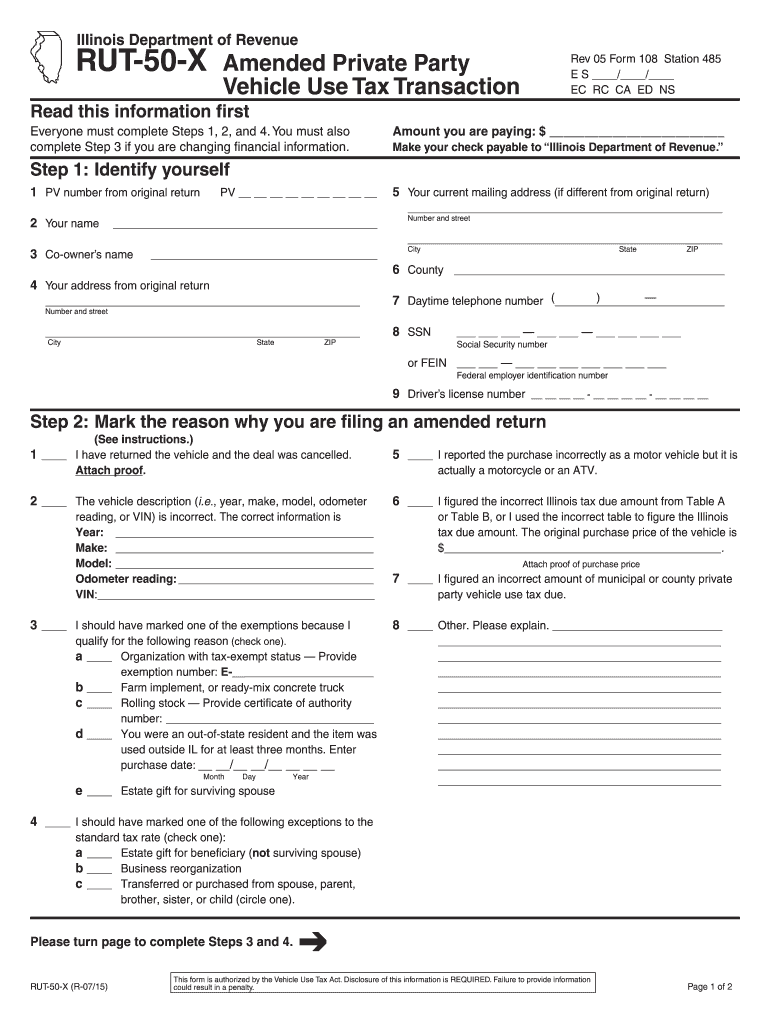







Definition and Overview of Tax Form RUT-50
The tax form RUT-50 is specific to the Illinois Department of Revenue and pertains to the Vehicle Use Tax. This form is utilized primarily for reporting the use of vehicles that have been purchased or used in Illinois and need to be registered. Essentially, it enables individuals and businesses to report their vehicle usage for tax purposes, ensuring compliance with state regulations. The RUT-50 form facilitates the proper taxation of vehicles used in Illinois that may not have been addressed in normal registration processes.
Steps to Complete the RUT-50
Filling out the RUT-50 form correctly is essential to avoid delays and penalties. The following steps provide a straightforward approach:
- Personal Information: Enter your name, address, and any identification numbers as required.
- Vehicle Information: Provide details about the vehicle, including the make, model, and year.
- Usage Type: Indicate whether the vehicle is used for personal, business, or other purposes, as this can affect tax brackets and obligations.
- Tax Calculation: Use the space provided to calculate the tax owed based on the vehicle’s specifications and usage.
- Signature and Date: Don’t forget to sign and date the form to validate it officially.
Completing each section thoroughly and accurately is critical for a smooth filing process.
Key Elements Required on the RUT-50
When preparing to fill out the tax form RUT-50, it's important to have all necessary elements at your fingertips. These include:
- Owner's Details: Name, address, and contact information.
- Vehicle Details: Year, make, model, and Vehicle Identification Number (VIN).
- Tax Calculation: Clear breakdown of tax owed based on vehicle usage and applicable rates.
- Signature Section: Must be signed by the owner or the authorized person.
- Submission Information: Guidelines on where to submit the form, including online, mail, or in-person, depending on the chosen method.
These features collectively ensure the form serves its purpose effectively.
Filing Deadlines and Important Dates
Timeliness is crucial when it comes to submitting the RUT-50 form. The filing deadlines for this form are typically linked to vehicle registration deadlines and can vary based on the specific circumstances of the purchase. It is advisable to file the RUT-50 form as soon as you acquire a vehicle to avoid potential penalties. Some key deadlines to watch for include:
- Initial Vehicle Use Date: Tax must be reported beginning from the first date of vehicle use.
- Tax Payment Due Dates: Payments are usually due within a specific period after filing the RUT-50 form.
Checking the Illinois Department of Revenue’s website for updated deadlines is recommended.
Submission Methods for Form RUT-50
The RUT-50 form can be submitted through various methods, ensuring that taxpayers can choose the option that best suits their needs. The submission methods are as follows:
- Online Submission: A convenient option is to file the form electronically via the Illinois Department of Revenue's e-file system.
- Mail: Print the completed form and send it to the appropriate department address provided in the form instructions.
- In-Person: Visit a local Department of Revenue office to submit the form directly.
Choosing the correct method can help ensure quicker processing and confirmation of your filing.
Penalties for Non-Compliance with the RUT-50
Failing to file the RUT-50 form can lead to significant penalties and fees. Non-compliance could result from not filing the form at all, filing it late, or providing incorrect information. Potential repercussions include:
- Late Fees: A penalty may be assessed if the form is not submitted by the due date.
- Interest Accrual: Additional interest can accumulate on unpaid taxes over time.
- Enforcement Actions: In severe cases, the state may pursue enforcement actions, affecting vehicle registration and personal credit.
Understanding these penalties can motivate timely and accurate submissions.
Examples of Tax Scenarios Related to RUT-50
Adhering to the instructions for the RUT-50 form varies based on different usage scenarios. Here are several practical examples:
- Personal Use Vehicles: Individuals must report personal vehicles used for more than a specific period under Illinois law. This includes specifying mileage and purchasing details.
- Commercial Vehicles: Businesses purchasing vehicles for operational use must accurately report to deduct vehicle-related tax benefits.
- Temporary Use by Non-Residents: Non-residents using a vehicle in Illinois for a short time may also need to file this form to comply with local tax regulations.
These scenarios illustrate the diverse contexts in which the tax form RUT-50 is relevant.
Additional Information on RUT-50 Variants and Compliance
The RUT-50 form may have variants or complementary forms that address specific vehicle use cases. Taxpayers should be aware of:
- Amended Returns: If changes are necessary after the initial submission, an amended version (RUT-50-X) is required.
- Separate Forms for Different Vehicle Types: Certain vehicle classifications may have alternative forms or additional requirements.
Ensuring compliance with all forms and understanding their interrelation can simplify the filing process and maintain regulatory adherence.




