
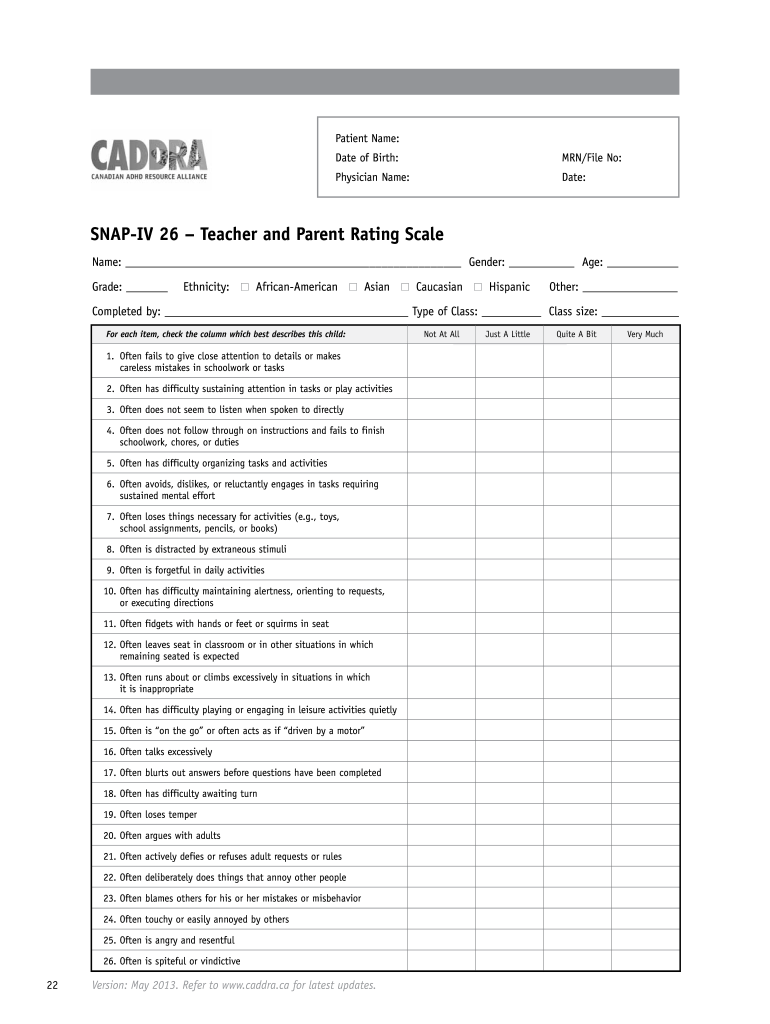







Definition and Purpose of the SNAP 26 Form
The SNAP 26 form is an assessment tool known as the SNAP-IV Teacher and Parent Rating Scale, designed to evaluate behavioral and attention-related challenges in children. This structured questionnaire helps identify symptoms associated with Attention Deficit Hyperactivity Disorder (ADHD) and related conditions. The form consists of statements regarding a child's behavior which respondents, typically parents and teachers, rate based on the frequency of occurrences.
- Purpose: The primary purpose of the SNAP 26 form is to gather insights from adults who interact with the child and observe their behavior in different settings, thus providing a fuller picture for diagnostic evaluation.
- Use in Evaluations: Mental health professionals use the results from this form as part of a comprehensive assessment to aid in diagnosing ADHD and for formulating intervention strategies.
Completing the SNAP 26 Form
Completing the SNAP 26 form involves careful consideration of each question while evaluating the child’s behavior over the past six months.
- Respondent Role: Identify who is filling out the form. It's essential to gather input from both parents and teachers to triangulate the child's behavior across different environments.
- Rating System: Each behavior is rated on a four-point scale:
- 0 = Not at all true
- 1 = Just a little true
- 2 = Pretty much true
- 3 = Very much true
- Frequency of Behavior: Respondents should focus on how often these behaviors occur, considering the context of the child's daily life—home, school, and social settings.
Interpretation of SNAP 26 Scoring
Understanding the results of the SNAP 26 form is crucial for evaluating a child's potential behavioral issues.
- Scoring Interpretation: The responses are scored to generate a quantitative measure of behavior patterns. Higher scores may indicate a greater presence of ADHD symptoms.
- Comparison to Norms: Scores can then be compared against normative data, enabling professionals to see how the child's behaviors align with those typically observed in other children of the same age and gender.
- Detailed Analysis: Professionals can analyze specific symptom clusters, valuable for identifying co-morbid conditions alongside ADHD, such as anxiety or learning disabilities.
Who Uses the SNAP 26 Form
The SNAP 26 form is utilized by various stakeholders in child development and educational psychology.
- Educational Professionals: Teachers often complete the form to provide insights into a child's behavior in school settings, contributing to potential diagnoses and educational interventions.
- Healthcare Providers: Psychologists, psychiatrists, and pediatricians use feedback from the form to inform treatment plans and tailor interventions that address the child's unique behavioral profile.
- Parents: As primary caregivers, parents' insights about their child's behavior at home are essential, ensuring a comprehensive viewpoint.
Legal Considerations for Using the SNAP 26 Form
When utilizing the SNAP 26 form for assessments, several legal considerations must be taken into account.
- Confidentiality: Ensuring that the information gathered is kept confidential and shared only with authorized personnel to protect the privacy rights of the child and family.
- Compliance with Regulations: The administration of the SNAP 26 form must comply with applicable laws, such as the Family Educational Rights and Privacy Act (FERPA) in educational settings.
- Informed Consent: Parental consent is typically required before administering the assessment, particularly when it involves data collection and analysis related to children's behavioral health.
State-Specific Guidelines for the SNAP 26 Form
Different states may have specific guidelines and recommendations regarding the administration of the SNAP 26 form.
- State-Mandated Regulations: Some states may have educational laws that dictate how behavioral assessments should be conducted and utilized in schools.
- Variations in Reporting: Reporting standards and protocols following the completion of the SNAP 26 form may differ, necessitating that educational and health professionals are aware of local policies.
Examples of the SNAP 26 Form in Use
Real-world scenarios demonstrate how the SNAP 26 form can be effectively utilized.
- School Setting: A teacher notices a student struggling with impulsivity and inattentiveness. By utilizing the SNAP 26 form, they can gather structured feedback to address the behaviors with the support of school counseling services.
- Clinical Assessment: A pediatrician conducting a routine check-up on a child exhibiting symptoms of ADHD utilizes the form to gather insights from both parents and a teacher to support a diagnosis.
Advantages of Using the SNAP 26 Form
Utilizing the SNAP 26 form has several advantages in assessing behavioral concerns.
- Comprehensive: It provides a well-rounded assessment by combining inputs from multiple stakeholders.
- Structured Approach: The standardized format facilitates easier comparison across different cases and populations.
- Effective Data Collection: The form is designed to be user-friendly, allowing respondents to provide insights without feeling overwhelmed.
Conclusion on the Utility of the SNAP 26 Form
The SNAP 26 form is a vital resource in the assessment and identification of ADHD-related behaviors in children. Its structured nature allows for effective data collection while ensuring that the perspectives of both parents and teachers are integrated into the evaluation process. Through thorough interpretation and application, the information gathered can significantly contribute to children’s educational and developmental pathways.




