
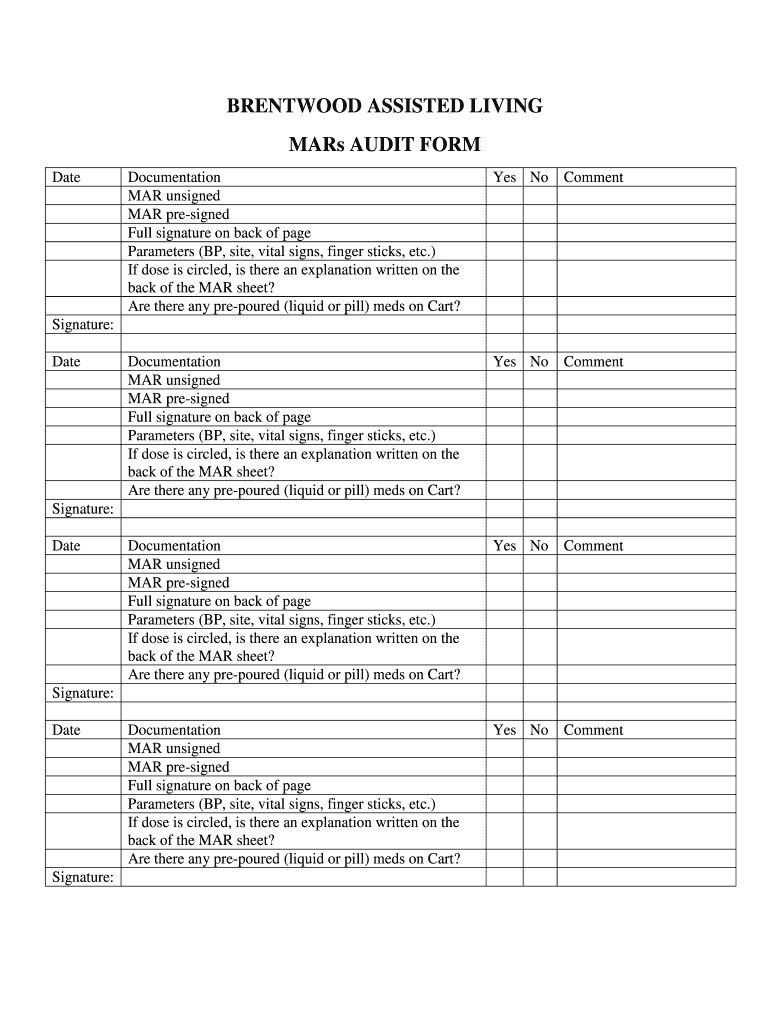







Understanding Med Room Cart Audit Sheets
Med room cart audit sheets are essential tools used in healthcare settings to ensure proper management of medications stored within medication carts. These audit sheets facilitate an organized approach to monitoring and documenting medication administration practices, thereby enhancing patient safety and compliance with regulatory requirements.
Purpose of Med Room Cart Audit Sheets
The primary purpose of a med room cart audit sheet is to ensure the following:
- Inventory Control: They allow staff to maintain accurate records of all medications on hand, ensuring that none are expired, missing, or improperly labeled.
- Regulatory Compliance: These sheets help healthcare organizations comply with state and federal regulations by documenting medication audits regularly.
- Quality Assurance: By systematically checking medications against established guidelines, these sheets help identify discrepancies and provide insights into areas needing improvement in medication handling practices.
Key Components of a Med Cart Audit Sheet
A well-structured med cart audit sheet typically includes the following components:
- Patient Information: Space to record patient names, identification numbers, and medication details.
- Medication Details: Sections for medication names, dosages, and administration routes, facilitating clarity and understanding.
- Signature Verification: Areas for healthcare staff to sign when medications are administered or checked, reinforcing accountability.
By ensuring that all sections are filled out correctly, healthcare providers can minimize medication errors and improve patient care outcomes.
Steps to Complete a Medication Cart Audit
Completing a medication cart audit involves several crucial steps, including:
-
Preparation:
- Gather all necessary audit sheets and relevant patient data.
- Familiarize yourself with the medications included in the audit.
-
Inventory Assessment:
- Check each medication in the cart against the audit sheet.
- Note any discrepancies, including expired medications or incorrect stock levels.
-
Documentation:
- Record findings on the audit sheet, ensuring accurate and concise entries.
- Include any observations about the condition of the medications and any deviations from protocols.
-
Reporting:
- Compile the audit data, highlighting areas that require attention, such as missing signatures or expired medications.
- Discuss findings with the healthcare team during meetings to address potential issues proactively.
Example Scenarios for Using Med Room Cart Audit Sheets
Here are examples illustrating the practical application of med room cart audit sheets:
- Scenario One: During a routine audit, a nurse discovers that three medications are expired. Documentation of this finding on the audit sheet leads to immediate corrective action, ensuring safe medication practices within the facility.
- Scenario Two: A nursing home implements monthly med cart audits using the audit sheets, leading to a 25% reduction in medication errors over six months due to increased accountability among staff.
Importance of Compliance in Med Room Audits
Compliance is vital in healthcare settings, particularly regarding medication management. Regular use of med room cart audit sheets can result in:
- Improved patient safety by ensuring that medications are administered correctly.
- Enhanced adherence to healthcare regulations, reducing the risk of inspections and fines.
- Increased transparency within the organization as staff engages with standardized documentation practices.
Variations in Med Room Cart Audit Practices
Variations in med room cart audit practices may arise depending on the setting, including:
- Long-term Care Facilities: Audits often involve a comprehensive review of all administered medications for each resident, focusing on medication efficacy and adverse effects.
- Emergency Rooms: The audit process may prioritize rapid access to critical medications, requiring different formatting and documentation needs to ensure prompt resolution during audits.
By tailoring the med cart audit sheets to fit specific settings and practices, healthcare providers can maximize their effectiveness and elevate the standard of care.




