



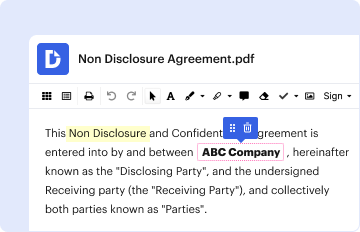
01. Edit your form 4797 instructions 2023 online
Type text, add images, blackout confidential details, add comments, highlights and more.

Type text, add images, blackout confidential details, add comments, highlights and more.
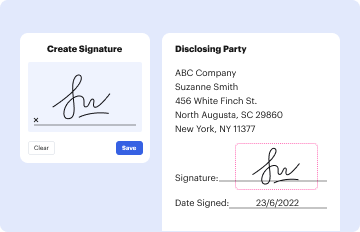
Draw your signature, type it, upload its image, or use your mobile device as a signature pad.

Send 4797 instructions 2023 via email, link, or fax. You can also download it, export it or print it out.
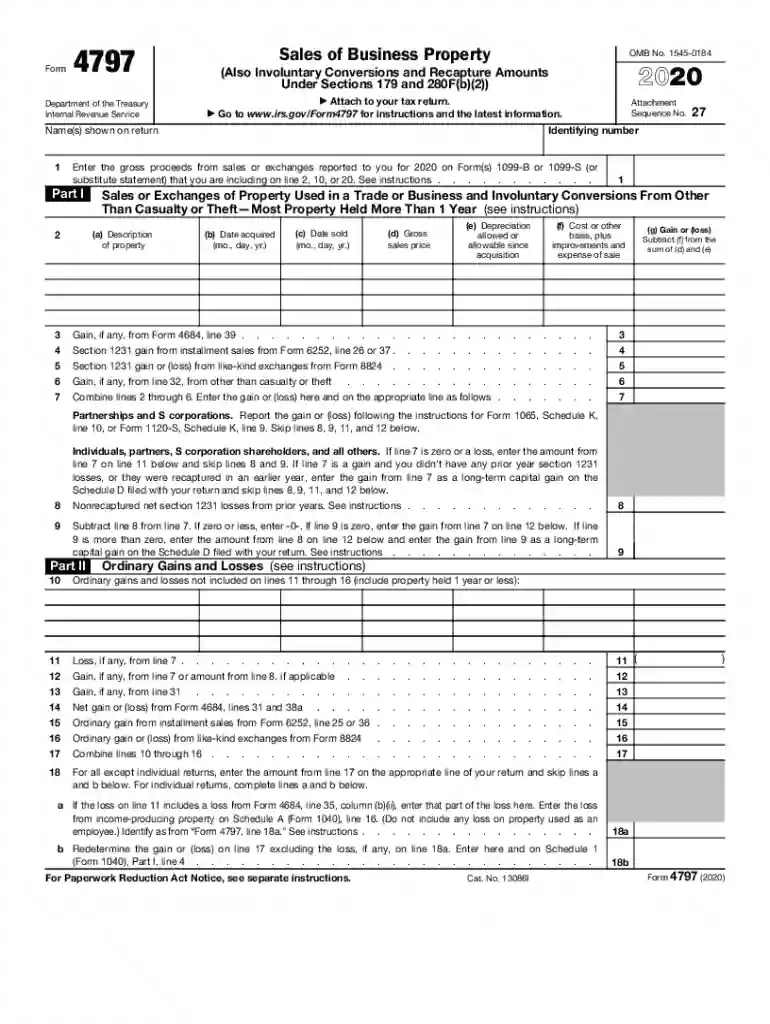
Form 4797, issued by the Internal Revenue Service (IRS), is used to report the sale or exchange of business property. The form encompasses a variety of transaction types including involuntary conversions and recapture amounts applicable under specific IRS tax code sections. It serves as a crucial tool for taxpayers to determine gains or losses from these transactions, ensuring accurate tax reporting. Taxpayers must detail their gross proceeds, calculate the resulting gain or loss, and indicate whether the transaction results in ordinary income or loss, or if it impacts capital gains calculations. This clarity is essential for both individual and corporate taxpayers engaged in business activities involving property sales.
Form 4797 is structured to capture detailed information about property sales. It includes several parts:
Each section is designed to handle specific types of transactions, providing a detailed framework for reporting. However, completing the form correctly requires understanding the various sections and applicable tax codes, underscoring the importance of precise documentation and calculation.
Obtaining Form 4797 is straightforward. Taxpayers can download the form directly from the IRS website. It is also available through tax preparation software like TurboTax and QuickBooks, which often offer guided experiences. For those who prefer physical documentation, the form can be requested by calling the IRS directly, or it can often be found at public libraries or IRS offices. Businesses with complex accounting needs might consider obtaining it through a certified tax professional to ensure comprehensive support throughout the tax filing process.
Completing Form 4797 demands meticulous attention to detail. Follow these steps:
Every entry impacts your financial reporting, so verifying information before submission is vital.
Form 4797 is predominantly used by businesses and individuals involved in regular sales or exchanges of real estate, vehicles, and other business-related assets. Taxpayers engaged in rental activities, including property lessors and lessees, often need this form. Partnerships and S Corporations leveraged through the ownership of depreciable property also maintain keen interest in this reporting tool. Other users include real estate investors selling multiple properties and businesses undergoing asset liquidation, ensuring compliance with federal tax obligations in various real-world scenarios.
Familiarity with key terms is crucial for accurately completing Form 4797:
Understanding these concepts aids in avoiding errors on the form.
The IRS provides comprehensive guidelines to assist taxpayers with Form 4797. These instructions cover how to report transactions involving Section 1231 property, detail intricacies of recapture, and the impact of Section 197 property sales. Taxpayers need to keep current with any new IRS regulations or changes. Paying close attention to IRS guidelines helps preempt issues like incorrect gain calculations or misreported amounts, ensuring streamlined compliance with federal tax laws.
Form 4797 should be filed as part of a taxpayer's regular income tax return, generally coinciding with the April 15th deadline for individual returns. However, deadlines may vary if extensions are granted or in the case of businesses operating on a fiscal year with different closing dates. Awareness of filing deadlines prevents penalties or interest for late submissions. Always check IRS communications for updates, especially in unusual years with altered tax deadlines.
Tax software like TurboTax, QuickBooks, and H&R Block supports Form 4797, providing a simplified interface for entering complex data. These platforms enable online submission, offering automated error checking and compliance with the latest tax rules. Alternatively, taxpayers may choose to manually file the form by mailing a paper version to the IRS. Each method offers benefits, from convenience and speed achieved through software to the traditional reassurance of a paper trail for those who opt for mail submission.
We've got more versions of the form 4797 instructions 2023 form. Select the right form 4797 instructions 2023 version from the list and start editing it straight away!
| Versions | Form popularity | Fillable & printable |
|---|---|---|
| 2025 | 4.1 Satisfied (26 Votes) | |
| 2024 | 4.9 Satisfied (25 Votes) | |
| 2023 | 4.6 Satisfied (38 Votes) | |
| 2022 | 4.7 Satisfied (33 Votes) | |
| 2021 | 4.8 Satisfied (71 Votes) | |
| 2020 | 4.4 Satisfied (199 Votes) | |
| 2019 | 4.4 Satisfied (79 Votes) | |
| 2018 | 4.1 Satisfied (80 Votes) | |
| 2017 | 4.2 Satisfied (65 Votes) | |
| 2016 | 4.3 Satisfied (185 Votes) | |
| 2015 | 4 Satisfied (54 Votes) | |
| 2014 | 4 Satisfied (47 Votes) | |
| 2013 | 4.3 Satisfied (67 Votes) | |
| 2012 | 4.1 Satisfied (26 Votes) | |
| 2011 | 4.1 Satisfied (56 Votes) |
At DocHub, your data security is our priority. We follow HIPAA, SOC2, GDPR, and other standards, so you can work on your documents with confidence.
Aug 26, 2012 Form 4797 is used to report the following activity.1. 1. The sale or exchange of: a. Property used in a trade or business; b. Depreciable andRead more
Jan 30, 2018 you may have to use Form 4797 to report the sale of the business or rental part. See Business or Rental Use of. Home, earlier. DetermineRead more
Use Form 4797 to report: The sale or exchange of property. The involuntary conversion of property and capital assets. The disposition of noncapital assets.Read more


