




01. Edit your form 3520 turbotax online
Type text, add images, blackout confidential details, add comments, highlights and more.

Type text, add images, blackout confidential details, add comments, highlights and more.

Draw your signature, type it, upload its image, or use your mobile device as a signature pad.

Send form 3520 2020 via email, link, or fax. You can also download it, export it or print it out.
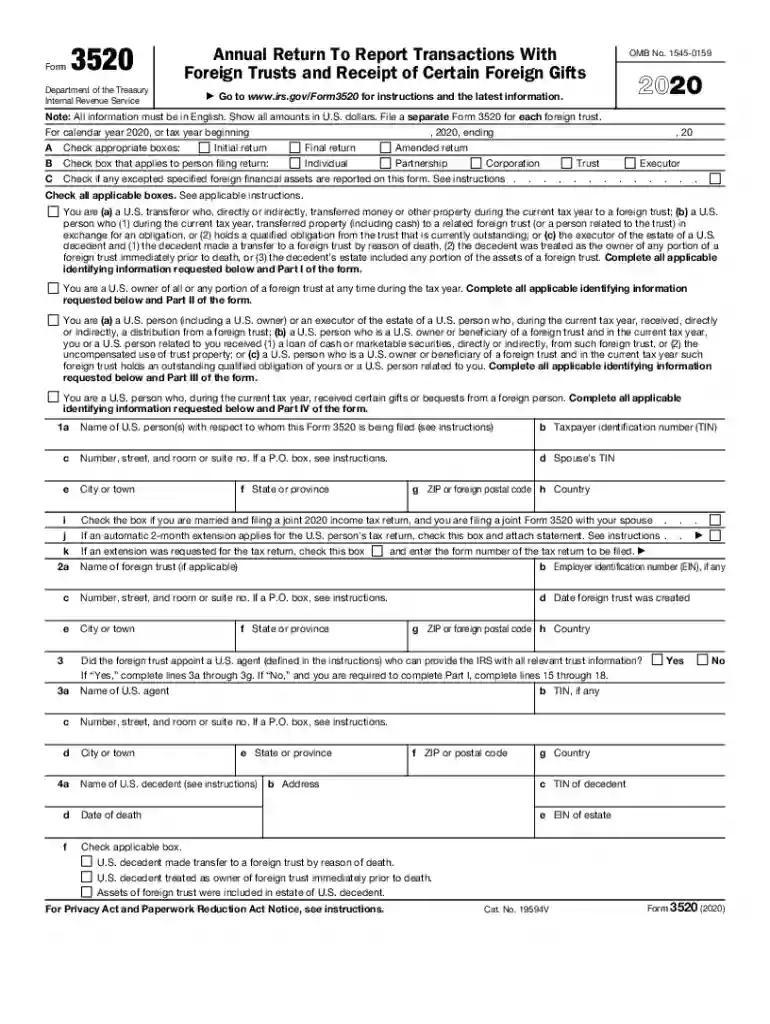
Form 3520 is an informational return mandated by the U.S. Internal Revenue Service (IRS). This form is required for U.S. persons to report certain transactions and interactions with foreign trusts. It also covers the receipt of certain large gifts or bequests from foreign individuals or entities. While it does not directly impact a taxpayer's financial liability, compliance with Form 3520 is crucial to meet the obligations set forth by the U.S. tax authorities in managing international financial transparency.
Completing Form 3520 involves several critical steps that ensure all required information is accurately captured and reported to the IRS. Here is a breakdown of the process:
The IRS provides guidelines to ensure that U.S. persons correctly understand and fulfill their responsibilities when completing Form 3520. Key highlights include:
Understanding the timeline for filing Form 3520 is crucial for maintaining compliance and avoiding penalties.
Non-compliance with Form 3520 requirements results in substantial penalties, underscoring the necessity for accurate and timely filing:
The utilization of Form 3520 is specific to certain taxpayers. Here's who typically needs to file:


To effectively navigate Form 3520, it is essential to understand several important terms associated with its completion:
There are established methods for submitting Form 3520 to the IRS, ensuring flexibility for taxpayers:
Understanding these directives provides comprehensive coverage of the critical aspects and considerations surrounding Form 3520 to ensure compliance and avoid potential pitfalls for U.S. taxpayers engaging in foreign financial activities.
We've got more versions of the form 3520 turbotax form. Select the right form 3520 turbotax version from the list and start editing it straight away!
| Versions | Form popularity | Fillable & printable |
|---|---|---|
| 2023 | 4.9 Satisfied (32 Votes) | |
| 2022 | 4.5 Satisfied (49 Votes) | |
| 2021 | 4.8 Satisfied (105 Votes) | |
| 2020 | 4.3 Satisfied (48 Votes) | |
| 2019 | 4.3 Satisfied (101 Votes) | |
| 2018 | 4.3 Satisfied (103 Votes) | |
| 2017 | 4.2 Satisfied (63 Votes) | |
| 2016 | 4.4 Satisfied (595 Votes) | |
| 2015 | 4.1 Satisfied (31 Votes) | |
| 2014 | 4 Satisfied (28 Votes) | |
| 2013 | 4 Satisfied (27 Votes) | |
| 2012 | 3.8 Satisfied (41 Votes) | |
| 2010 | 4 Satisfied (39 Votes) |
At DocHub, your data security is our priority. We follow HIPAA, SOC2, GDPR, and other standards, so you can work on your documents with confidence.
Form FTB 3520 is suitable for individuals, fiduciary, and business entities. The form has 9 sections and your inputs in all sections are necessary. OFFICIALRead more
U.S. persons (and executors of estates of U.S. decedents) file Form 3520 to report: Certain transactions with foreign trusts. Ownership of foreign trustsRead more
Form 3520-A, annual information return of foreign trust with a U.S. owner under section 6048(b). Journal/Periodical volumes : digital, PDF file. See


