





Definition and Meaning of Dispatcher Contract Template
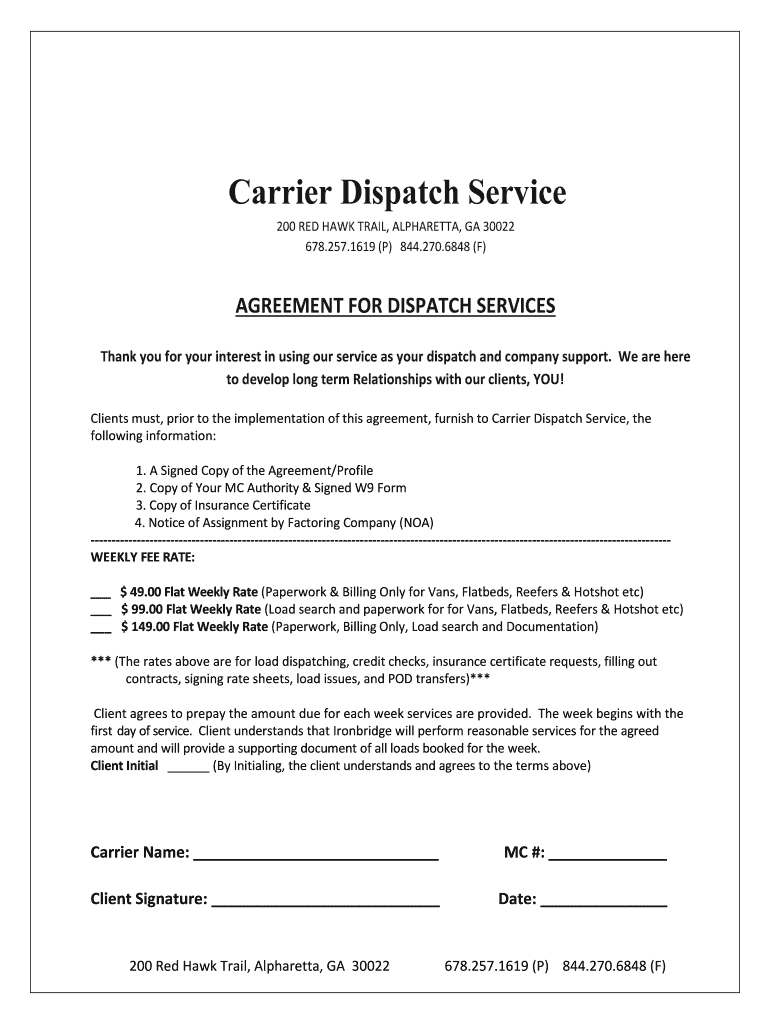
A dispatcher contract template is a structured document that outlines the terms and conditions for services provided by a dispatcher to a client, typically in the logistics and transportation sector. This agreement establishes the framework for the relationship between the dispatcher and the client, detailing the scope of services, responsibilities, and expectations of both parties. It serves as a critical tool for clarifying roles and protecting the rights of all involved. In essence, this template functions as a standardized contract that can be tailored to meet the unique needs of each situation, providing clarity and reducing potential disputes.
Important components of a dispatcher contract template typically include:
- Scope of Services: Specifies the dispatch services rendered, including types of loads, geographical areas covered, and operational hours.
- Compensation Structure: Outlines how the dispatcher will be compensated, whether through flat fees, percentage of revenue, or mileage-based rates.
- Duration of Agreement: Defines the length of time the contract is valid and conditions for renewal or termination.
- Client Responsibilities: Details what is expected from the client, including timely documentation submission, payment schedules, and communication protocols.
- Liability and Indemnification: Addresses the responsibilities of both parties concerning legal claims, damages, and liabilities arising from the dispatch services.
Understanding the importance of a dispatcher contract template is vital for ensuring a clear, mutual understanding of the obligations and protections available to both parties.
How to Use the Dispatcher Contract Template
Using a dispatcher contract template effectively involves several steps to ensure that all relevant aspects of an agreement are covered and tailored to the specific situation. Here’s how to navigate this process:
-
Select the Appropriate Template: Choose a dispatcher contract template suitable for your specific needs. Consider the type of service you are offering or receiving and ensure the template includes provisions relevant to your operational requirements.
-
Customize the Template: Fill in the details specific to your circumstance. Include important information such as names of the parties involved, specific services to be provided, compensation structure, and any state-specific legal requirements.
-
Review the Document for Clarity: Ensure that all sections are clear and concise. Avoid vague language that could lead to misunderstandings. Each party should be able to comprehend their responsibilities and rights as laid out in the agreement.
-
Negotiate Terms as Needed: Prior to finalizing the agreement, discuss and negotiate any terms with the other party. This may include compensation rates or specific service commitments to ensure that both sides are satisfied.
-
Sign and Implement the Agreement: Once both parties agree to the terms, sign the document and retain copies for future reference. Implement the processes outlined in the contract promptly to foster a good working relationship.
-
Maintain Open Communication: After the agreement is in place, keep an ongoing dialogue to address any performance issues or concerns that may arise. This proactive approach can help mitigate conflicts early.
Following these steps ensures that the dispatcher contract template is used efficiently and effectively, setting a solid foundation for successful collaboration.
Key Elements of the Dispatcher Contract Template
The dispatcher contract template includes several key elements that are essential for a comprehensive agreement. Each component serves a specific purpose in defining the expectations and obligations of both parties. Here are the crucial elements to include:
-
Parties to the Contract: Clearly identify the dispatcher and the client, including their legal business names and contact information.
-
Definitions and Terms: Establish definitions for key terms used throughout the contract. This includes terms like "dispatcher," "carrier," and "load," providing clarity for all readers.
-
Scope of Services: Describe the specific dispatch services provided, such as load booking, communication with drivers, and tracking shipments. This section should detail what is included and any limitations.
-
Compensation and Payment Terms: Outline the payment structure, including rates, billing frequency, and payment methods. This section should also include any additional costs that may be incurred.
-
Duration and Termination Clause: Specify the term length of the contract and the conditions under which either party may terminate the agreement. This ensures both parties are aware of their rights regarding the contract duration.
-
Liability and Insurance Requirements: Define responsibilities regarding liability for damages or loss during transportation and any required insurance coverage, which protects both parties.
-
Dispute Resolution: Detail the procedure to follow in case of disagreements, including mediation or arbitration steps. This section helps set a protocol for handling conflicts that may arise.
-
Governing Law: Specify the jurisdiction whose laws will govern the contract. This is particularly important if the parties are located in different states.
Including these elements in a dispatcher contract template not only provides clarity but also fosters a transparent and professional relationship between the dispatcher and the client.
Examples of Using the Dispatcher Contract Template
Implementing a dispatcher contract template can significantly streamline operations in various logistical scenarios. Here are practical examples demonstrating its application:
-
Freight Brokerage: A freight broker uses a dispatcher contract template to formalize their agreement with carriers. The template outlines the broker's responsibilities for finding loads and arranging transportation while detailing payment terms and load tracking requirements.
-
Courier Services: A local courier service may create a dispatcher contract with clients outlining the types of deliveries covered, service areas, and rates. This ensures clients understand what to expect, enabling better service planning and execution.
-
Long-Distance Transport: For long-haul trucking firms, a dispatcher contract template establishes necessary terms with clients requiring cross-state shipments. The contract will detail routes, estimated delivery times, and responsibilities of each party to mitigate liability issues along the way.
-
Specialized Freight Handling: A company specializing in hazardous materials logistics uses the template to ensure compliance with legal regulations governing the transport of such goods. The contract covers additional liabilities and necessary certifications required for safe handling.
-
Event Logistics: An event management company uses a dispatcher contract template to arrange transportation for event materials. The agreement includes criteria for timing, load sizes, and communication protocols before and during the event.
These examples illustrate the versatility of dispatcher contract templates and their vital role in formalizing agreements across diverse transport and logistics operations.
State-Specific Rules for the Dispatcher Contract Template
Understanding state-specific regulations is crucial when using a dispatcher contract template, as requirements can vary significantly across different jurisdictions. Here are key considerations for compliance:
-
Licensing Requirements: Some states may require dispatchers to hold specific licenses or permits to operate legally. It's essential to research state regulations and incorporate these requirements into the contract.
-
Insurance Regulations: Varying insurance requirements are enforced at the state level. Some states mandate specific coverage amounts for logistics and transportation businesses, which should be clearly outlined in the dispatcher contract.
-
Labor Laws: States can have distinct labor laws that affect how compensation and working conditions for contracted workers are structured. Include any state-defined standards in your compensation clauses.
-
Dispute Resolution Procedures: Some jurisdictions may have preferred methods or forums for dispute resolution. Check local regulations to establish conforming procedures in your contract.
-
Terms of Termination: State laws can dictate permissible grounds for contract termination. Ensure compliance by using language that adheres to local legal requirements.
Adjusting the dispatcher contract template to meet these state-specific mandates ensures that the contract stands up in legal challenges and supports operational integrity within that jurisdiction.