






Definition and Purpose of Form 990
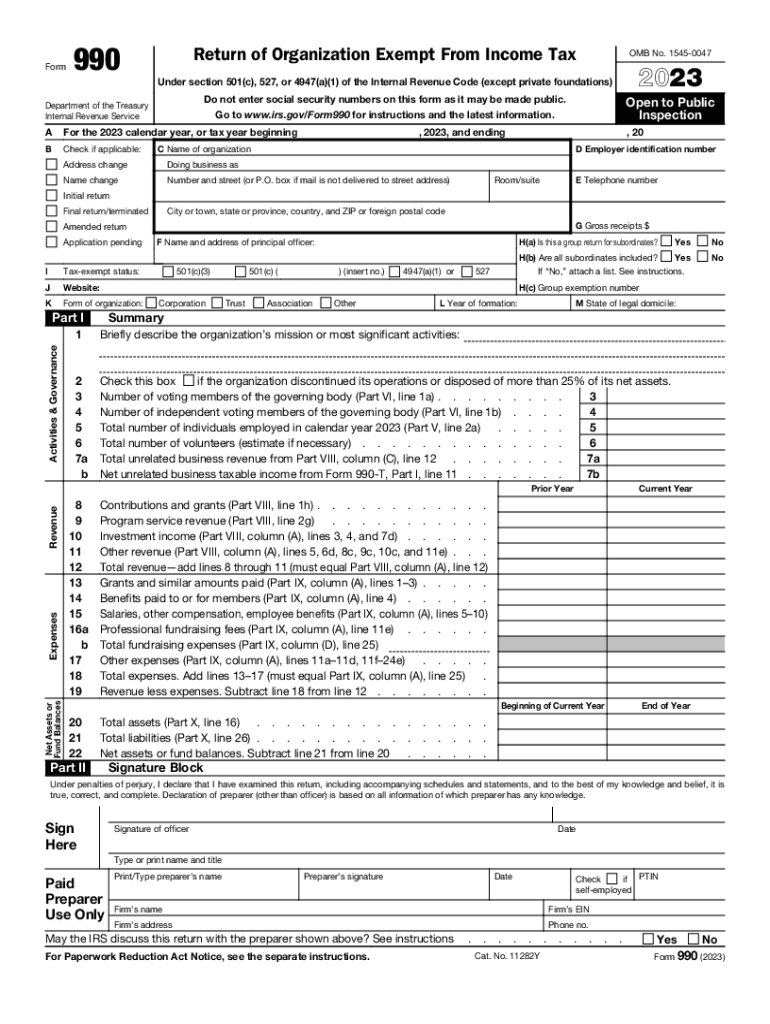
The 2023 Form 990, officially titled the "Return of Organization Exempt From Income Tax," is a crucial document used by tax-exempt organizations in the United States, including those described under sections 501(c), 527, or 4947(a)(1) of the Internal Revenue Code. This form is instrumental in providing the Internal Revenue Service (IRS) with a comprehensive overview of an organization's mission, financial activities, and compliance with tax regulations.
- Purpose and Use: The main aim of the Form 990 is to ensure transparency in the financial activities of tax-exempt organizations. It helps the IRS and the public evaluate how these organizations utilize their financial resources, enhancing organizational accountability. The information disclosed covers revenue, expenses, net assets, and compensation of key personnel.
Key Elements to Complete Form 990
Completing the Form 990 involves detailing various components that reflect the operational and financial status of an organization.
- Revenue and Expenses: Organizations must provide detailed accounts of their income sources and financial outlays, illustrating their economic activities for the relevant tax year.
- Governance and Policies: The form requires explanations of governance structures, policies in place, and compliance measures undertaken by the organization to ensure transparency and accountability.
- Assets and Liabilities: Reporting all assets, liabilities, and net assets is crucial, offering a snapshot of the organization's financial health.
- Compensation of Officers: A significant feature is disclosing salaries and additional compensation of top officials and other key personnel to ensure fair practice.
Steps to Obtain and Complete the Form 990
- Accessing the Form: Organizations can access the 2023 Form 990 through the IRS website or certified software providers.
- Collating Required Documents: Gather all financial records, governance policies, prior year returns, and other pertinent documentation necessary for accurate reporting.
- Filling Out the Form: Carefully input all relevant information into the form, ensuring accuracy and completeness in every section.
- Review: Conduct a thorough review to ascertain each detail is correct to avoid errors that could lead to penalties.
- Submission: Submit the completed form via electronic filing systems available on the IRS platform or through other certified methods.
Eligibility Criteria for Filing Form 990
Organizations that fall under specific sections of the Internal Revenue Code are required to file Form 990.
- Section 501(c) Organizations: Includes charities, social welfare groups, and other nonprofit entities.
- Political Organizations: Classified under section 527.
- Certain Trusts: Trusts that are not strictly private foundations and meet the conditions set under section 4947(a)(1).


Filing Deadlines and Important Dates
Filing Form 990 is subject to strict deadlines to prevent late filing penalties.
- Due Date: Typically, the form is due on the 15th day of the fifth month after the end of the fiscal year. For calendar year filers, this is usually May 15.
- Extension Requests: Organizations unable to meet the initial deadline can request an automatic six-month extension using Form 8868.
Penalties for Non-Compliance
Failing to comply with Form 990 filing requirements can result in severe penalties.
- Daily Penalties: A fine starting at $20 per day can accrue, potentially increasing with the size of the organization, for each day the form is late.
- Revocation of Tax-Exempt Status: Persistent non-compliance, especially consecutive years of failing to file, can result in loss of tax-exempt status.
Digital vs. Paper Version
- Electronic Filing: The IRS mandates larger organizations to file Form 990 electronically, which assures faster processing and reduces errors.
- Paper Filing: Smaller organizations may still use traditional paper filing methods, although electronic submission is encouraged for efficiency.
Importance of IRS Guidelines
Adhering to IRS guidelines while preparing Form 990 is non-negotiable.
- Comprehensive Instructions: The IRS provides detailed instructions to aid organizations in understanding each element of the form thoroughly.
- Updates and Changes: Guidelines often include updates or changes in filing requirements that organizations must follow to stay compliant.
Practical Scenarios and Examples of Form Use
Examples of Form 990 applications span various organizational actions.
- Charitable Contributions: Illustrate how donations are utilized in line with the organizational mission.
- Public Disclosure: Showcase examples where detailed disclosures have enhanced donor trust and public confidence.
Conclusion on Form 990's Relevance
The comprehensive coverage provided by the Form 990 underscores its significance for tax-exempt organizations. It not only fulfills legal compliance requirements but also demonstrates transparency and accountability to stakeholders, reinforcing trust and financial stewardship. This form exemplifies the balance between regulatory obligations and organizational integrity.