




01. Edit your form 8453 online
Type text, add images, blackout confidential details, add comments, highlights and more.

Type text, add images, blackout confidential details, add comments, highlights and more.

Draw your signature, type it, upload its image, or use your mobile device as a signature pad.

Send 8453 fe via email, link, or fax. You can also download it, export it or print it out.
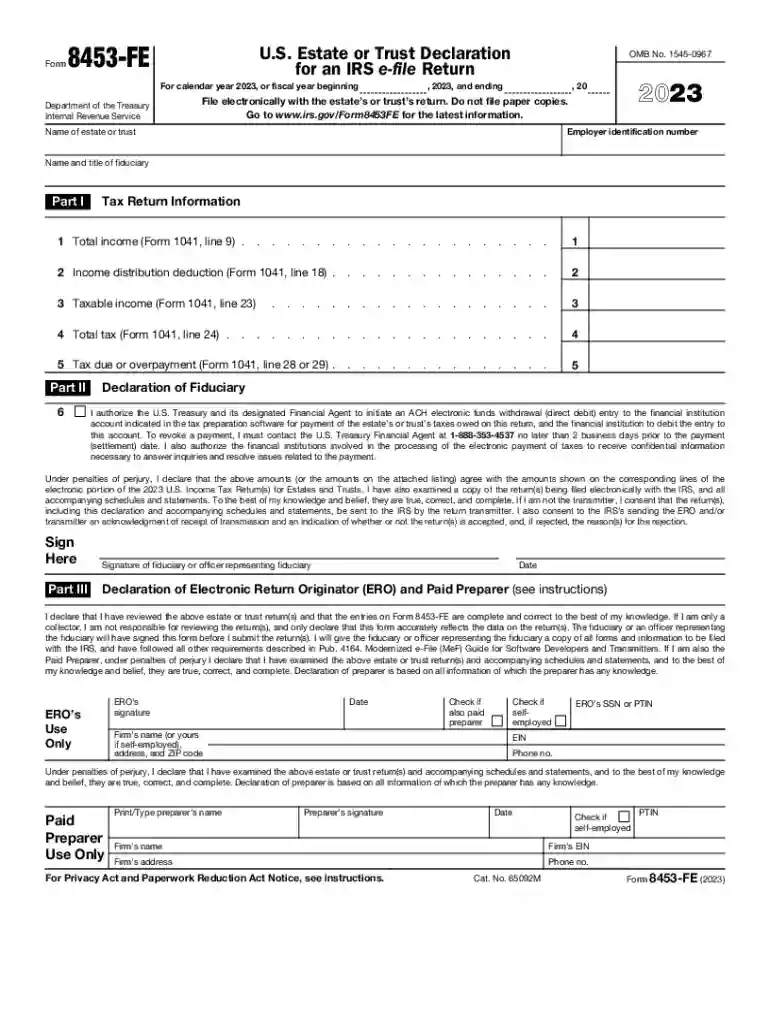
The 2023 Form 8453-FE U.S. Estate or Trust Declaration for an IRS e-file Return is an official form used for the electronic filing of the United States Income Tax Return for Estates and Trusts, commonly referred to as Form 1041. This document serves multiple purposes, including the authentication of the electronic return, the authorization for a third-party transmitter, and the approval of electronic funds withdrawal for tax payments. The form ensures that the fiduciary responsible for the estate or trust confirms the accuracy and integrity of the submitted tax information.
Gather Necessary Documentation
Complete the Sections
Review and Sign
Submit through Listed Methods
This form is typically utilized by:


The form is legally binding within the guidelines of the IRS, designed to ensure transparency and accountability during electronic filing. Various sections of the form hold legal significance, such as taxpayer IDs and signatures, serving as proof of filing and consent for electronic transactions.
Essential documents to prepare include:
Failing to file or providing incorrect information can result in penalties, including:
Various scenarios necessitate the use of Form 8453-FE:

We've got more versions of the form 8453 form. Select the right form 8453 version from the list and start editing it straight away!
At DocHub, your data security is our priority. We follow HIPAA, SOC2, GDPR, and other standards, so you can work on your documents with confidence.
Based on the information provided with this return, the following are possible carryover amounts to next year. Name. Employer Identification Number. CARRYOVERRead more
Use this form to: Authenticate the electronic Form 1041, U.S. Income Tax Return for Estates and Trusts;; Authorize the electronic filer to transmit via aRead more


