







Definition and Meaning of Influenza Information and Consent 2
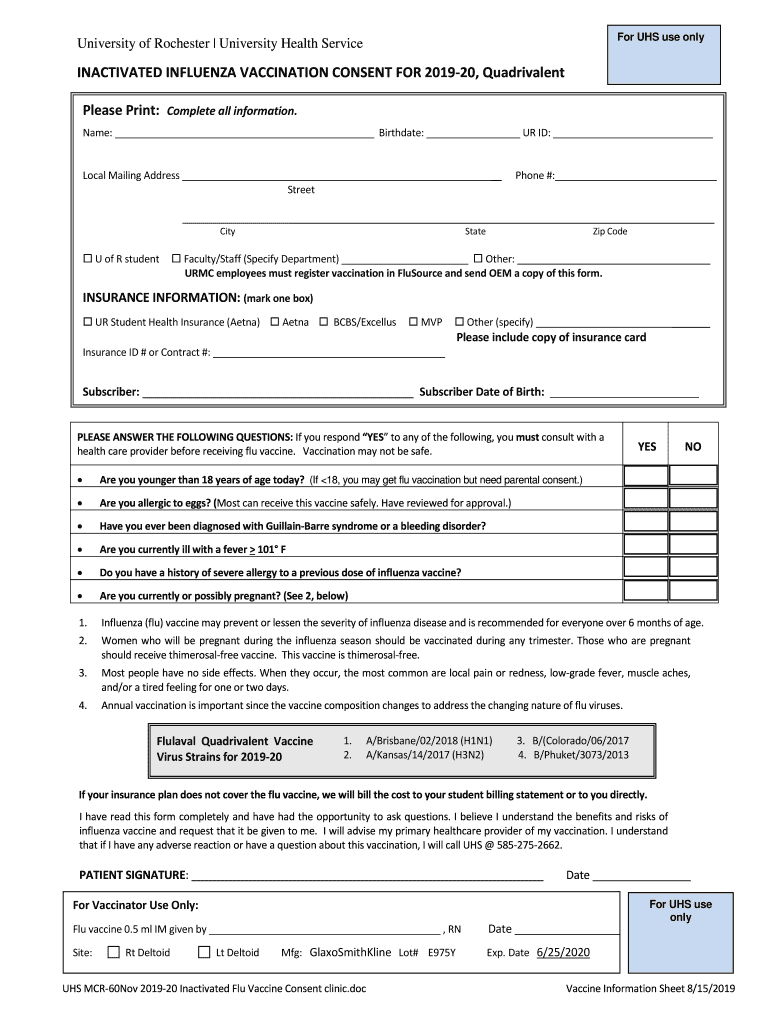
The influenza information and consent form for the 2 season is a critical document designed to inform individuals about the influenza vaccine, its benefits, and potential risks, while also obtaining permission to administer the vaccine. This form is commonly utilized in healthcare settings such as universities, clinics, and hospitals. It provides crucial information that ensures patients are aware of what the vaccine entails and what to expect post-vaccination.
Key elements included in the form typically cover:
- Vaccine Details: Information about the type of influenza vaccine, its efficacy, and how it works.
- Health Considerations: A section outlining possible side effects and contraindications for those who may have allergies or other health issues.
- Consent Statement: A declaration where individuals acknowledge understanding the provided information and consent to proceed with vaccination.
Understanding this form is essential for individuals who aim to safeguard their health during flu season and ensure compliance with medical requirements.
Important Terms Related to Influenza Information and Consent 2
Familiarity with specific terminology regarding the influenza information and consent form is crucial for users. These terms help clarify the process and implications of vaccination:
- Inactivated Vaccine: A vaccine composed of viruses that have been killed but can still provoke an immune response.
- Live Attenuated Vaccine: A vaccine that uses a weakened form of the virus to elicit a stronger immune response.
- Adverse Reactions: Unintended side effects that occur following vaccination, ranging from mild (like soreness at the injection site) to severe (such as an allergic reaction).
- Consent: Legal permission granted by an individual, allowing a healthcare provider to perform a medical procedure.
- Eligibility Criteria: Specific conditions under which an individual may or may not receive the vaccine, which could be due to age, medical history, or allergies.
These definitions provide clarity and are integral for comprehension and informed decision-making regarding vaccination.
Steps to Complete the Influenza Information and Consent 2
Completing the influenza information and consent form involves several methodical steps to ensure all pertinent information is gathered. Here is a structured breakdown:
-
Personal Information Collection: Fill in personal details such as full name, date of birth, and contact information.
-
Insurance Information: Include relevant health insurance details, which may cover the cost of the vaccination.
-
Health History Questionnaire: Answer questions regarding medical history, which may include previous reactions to vaccines, current medications, and any existing health conditions.
-
Acknowledgment of Information: Review and acknowledge the information presented about the vaccine, including its benefits and potential side effects.
-
Consent Signature: Sign the form to provide informed consent for the administration of the influenza vaccine.
-
Submission: Submit the completed form to the healthcare provider, typically through electronic methods or in paper format at a designated facility.
This systematic approach ensures that all necessary data is collected and that individuals fully understand what their consent entails.
Who Typically Uses the Influenza Information and Consent 2
Various groups utilize the influenza information and consent form, reflecting a broad spectrum of individuals and organizations:
- Healthcare Providers: Hospitals, clinics, and public health departments often require this form to ensure informed consent is obtained before vaccination.
- Educational Institutions: Universities and schools may use this form for their students and staff, facilitating immunization campaigns to protect against flu outbreaks.
- Government Health Initiatives: Public health campaigns aimed at increasing vaccination rates among specific populations often incorporate this form as part of their outreach efforts.
- Employers: Some companies may implement vaccination programs for employees and utilize this form to secure consent while fostering a healthy workplace.
Understanding the diverse use of this form highlights its importance in public health strategies and individual patient care.


Legal Use of the Influenza Information and Consent 2
The legal framework surrounding the influenza information and consent form ensures that both the healthcare provider and the patient are protected. Key legal aspects include:
- Informed Consent Requirement: Legally, healthcare providers must obtain informed consent, which involves adequately informing the patient about the vaccine's nature, benefits, risks, and alternatives before administration.
- Confidentiality Protections: Personal information collected on the form is protected under HIPAA regulations, ensuring confidentiality and security of health data.
- Compliance with State Laws: Certain states may have specific requirements regarding vaccination consent forms, including age consent laws or parental consent for minors.
These legal elements are essential for maintaining ethical practices in healthcare while safeguarding patient rights.
Key Elements of the Influenza Information and Consent 2
The influenza information and consent form incorporates several key elements that contribute to its effectiveness and utility:
- Patient Information Section: Essential demographics and contact details to identify and communicate about the patient.
- Vaccine Information: Comprehensive details regarding the type of vaccine being administered, including a description and intended effects.
- Health Screening Questions: Questions that assess any pre-existing conditions, allergies, or previous adverse reactions to vaccines.
- Risks and Benefits Statement: A detailed explanation of the potential advantages of receiving the vaccine and the possible risks involved.
- Consent Declaration: A clear statement where patients can acknowledge understanding of the information and voluntarily provide consent.
Each of these elements plays a vital role in ensuring the informed consent process is clear, thorough, and compliant with medical standards.
These sections collectively provide a comprehensive overview of the influenza information and consent form for the 2 season, ensuring that users have the necessary knowledge and clarity to navigate the vaccination process.


