
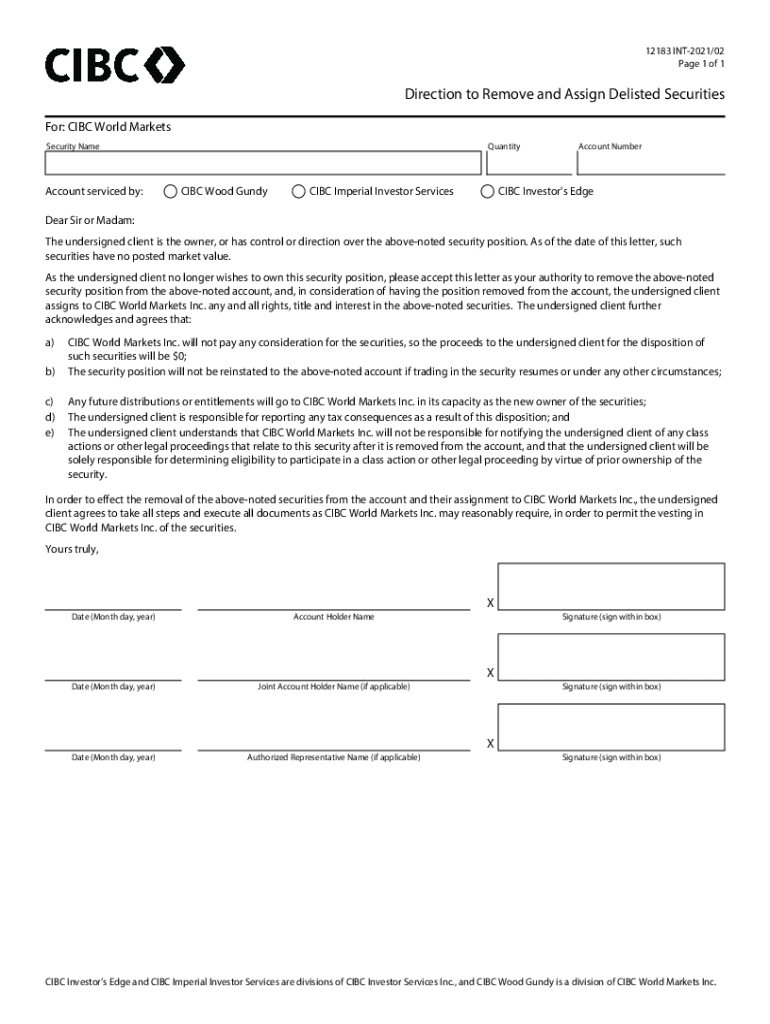







Definition and Meaning of the CIBC Letter of Direction
The CIBC Letter of Direction is a formal document that instructs CIBC World Markets to manage specific securities or funds within a client's account. This letter typically indicates changes to the client's investment portfolio, such as transferring or liquidating delisted securities. The document serves as a directive from the client to the institution, clearly stating their intentions regarding their account management.
The primary purpose of this letter is to provide explicit instructions to the bank concerning the handling of securities that may no longer have market value. It may also pertain to any transfers of ownership. As such, it is crucial for clients to ensure that the content of the letter accurately reflects their intentions, as this document will govern the actions taken by CIBC on their behalf.
Key Elements of the CIBC Letter of Direction
When drafting a CIBC Letter of Direction, certain key elements must be included to ensure that the document is clear and legally sound. These elements typically encompass:
- Client Information: The letter should clearly list the client's full name, address, contact information, and account number with CIBC.
- Specific Instructions: Clients must outline the explicit actions they want CIBC to take. This may include directions for security transfers, liquidations, or assignments.
- Acknowledgments: Clients should acknowledge that they understand the implications of their instructions, including any potential tax responsibilities and the lack of compensation for delisted securities.
- Signature: The letter must be signed by the client to validate its authenticity and effectiveness.
The inclusion of these key elements ensures that the CIBC Letter of Direction is both complete and effective in communicating the client’s needs.
Steps to Complete the CIBC Letter of Direction
Creating and submitting a CIBC Letter of Direction involves several important steps:
-
Gather Required Information: Collect all necessary account and security details. This includes your CIBC account number, the securities involved, and the specific actions you wish to pursue.
-
Draft the Letter: Begin drafting the letter. Clearly state your full name, contact information, and account number at the top. Follow this by detailing the specific instructions regarding the securities in question.
-
Acknowledge Terms: Include a section that acknowledges your understanding of any consequences tied to the instructions you are providing. This may involve ramifications related to tax or ownership rights.
-
Review the Document: Carefully review the letter for accuracy and completeness. Ensure that all sections are filled out correctly to avoid processing delays.
-
Sign the Letter: Sign the document to confirm your intent and authority regarding the instructions given.
-
Submit the Letter: Send the letter to CIBC. This can typically be done either via mail or electronically, depending on the bank’s guidelines.
Following these steps helps ensure that your CIBC Letter of Direction is correctly prepared and submitted for processing.
Legal Use of the CIBC Letter of Direction
The CIBC Letter of Direction serves a legal purpose within the framework of investment management and financial directives. Legally, it acts as a binding instruction from the client to the financial institution, which must comply with the requests made within the document, provided they fall within regulatory guidelines.
-
Investor Authority: Clients must have the legal authority to instruct their financial institution regarding the management of their securities. This authority is typically verified through identity and account verification processes by CIBC.
-
Documentation: The contents of the letter may be referred to in any legal disputes or questions regarding the management of the aforementioned securities. As such, it is important for clients to keep copies of this document for their records.
-
Regulatory Compliance: CIBC is obliged to follow the directives of the client as laid out in the letter, subject to compliance with applicable financial regulations and laws, including those related to securities and taxation.
Understanding the legal implications of the CIBC Letter of Direction is critical for clients to ensure that their financial directives are honored and appropriately managed by the institution.
Examples of Using the CIBC Letter of Direction
The CIBC Letter of Direction can be utilized in various scenarios, particularly when there are changes in the client's investment strategy or circumstances. Below are practical examples:
-
Transfer of Delisted Securities: A client with securities that have been delisted may use the letter to instruct CIBC to transfer those securities, acknowledging they hold no market value.
-
Account Reallocation: If a client wishes to adjust the allocation of their portfolio, they can outline specific securities to be sold or exchanged within the letter.
-
Establishing New Beneficiaries: The letter can also be used to designate new beneficiaries or guardians for accounts, ensuring proper management of the investment in the event of the principal account holder’s incapacity or passing.
-
Liquidation for Cash Needs: A client may need liquidity for unexpected expenses and can use the letter to instruct CIBC to liquidate specific investments as directed.
These examples illustrate the CIBC Letter of Direction's flexibility and its practical application in various investment management contexts.




