Type text, add images, blackout confidential details, add comments, highlights and more.
02. Sign it in a few clicks
Draw your signature, type it, upload its image, or use your mobile device as a signature pad.
03. Share your form with others
Send it via email, link, or fax. You can also download it, export it or print it out.
How to use or fill out IRS AUDIT WORKPAPER with our platform
Ease of Setup
DocHub User Ratings on G2
Ease of Use
DocHub User Ratings on G2
Click ‘Get Form’ to open the IRS AUDIT WORKPAPER in the editor.
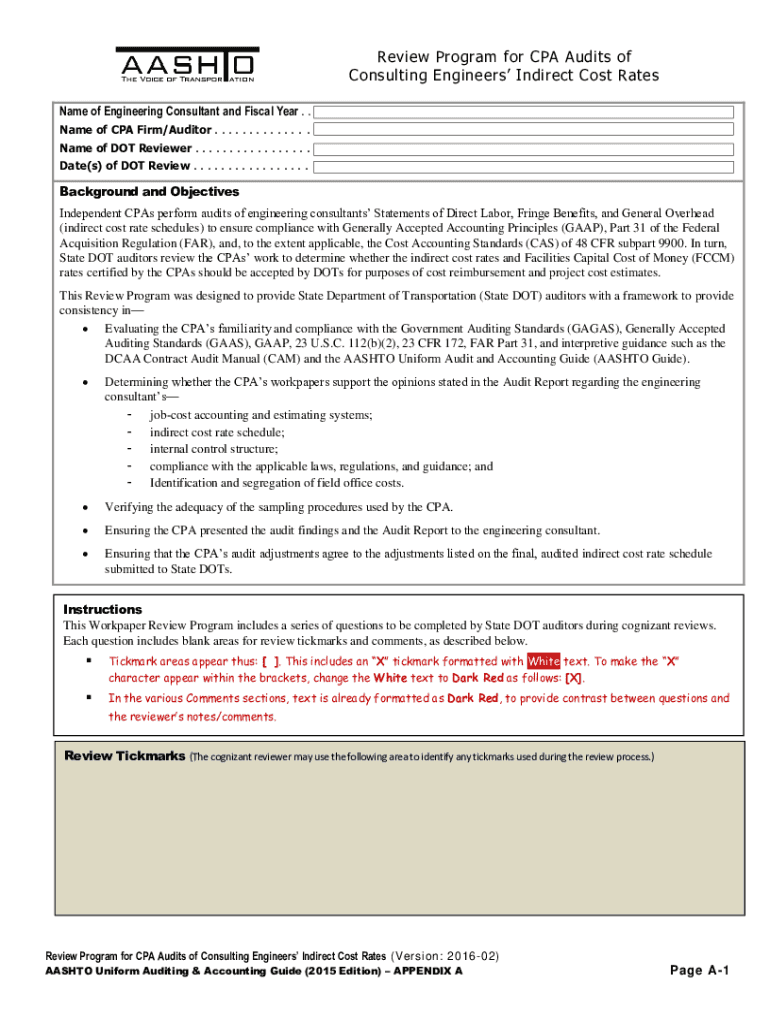
Begin by entering the 'Name of Engineering Consultant' and 'Fiscal Year' at the top of the form. Ensure accuracy as this information is crucial for identification.
Fill in the 'Name of CPA Firm/Auditor' and 'Name of DOT Reviewer'. This section establishes accountability for the audit process.
In the 'Date(s) of DOT Review', input the relevant dates. This helps track when reviews were conducted, which is essential for compliance.
Proceed to complete each section methodically, using tickmarks [X] where required. Change text color from white to dark red to make your selections visible.
Utilize comment sections effectively to provide insights or notes related to each question, ensuring clarity in your review process.
Start editing your IRS AUDIT WORKPAPER online for free today!
We've got more versions of the IRS AUDIT WORKPAPER form. Select the right IRS AUDIT WORKPAPER version from the list and start editing it straight away!
Irs audit workpaper pdfIRS audit checklistWho gets audited by IRS the mostIrs audit workpaper 2022IRS audit statusWhat happens if you get audited and don t have receiptsHow long does an IRS audit takeIRS audit refund check status
Security and compliance
At DocHub, your data security is our priority. We follow HIPAA, SOC2, GDPR, and other standards, so you can work on your documents with confidence.
by JG Carter 1982 Cited by 3 Working papers, accordingly, may include work programs, analyses, memoranda, letters of confirmation and representation, abstracts of company documents, and.Read more
Cookie consent notice
This site uses cookies to enhance site navigation and personalize your experience.
By using this site you agree to our use of cookies as described in our Privacy Notice.
You can modify your selections by visiting our Cookie and Advertising Notice.