Definition and Meaning of a CPA Letter
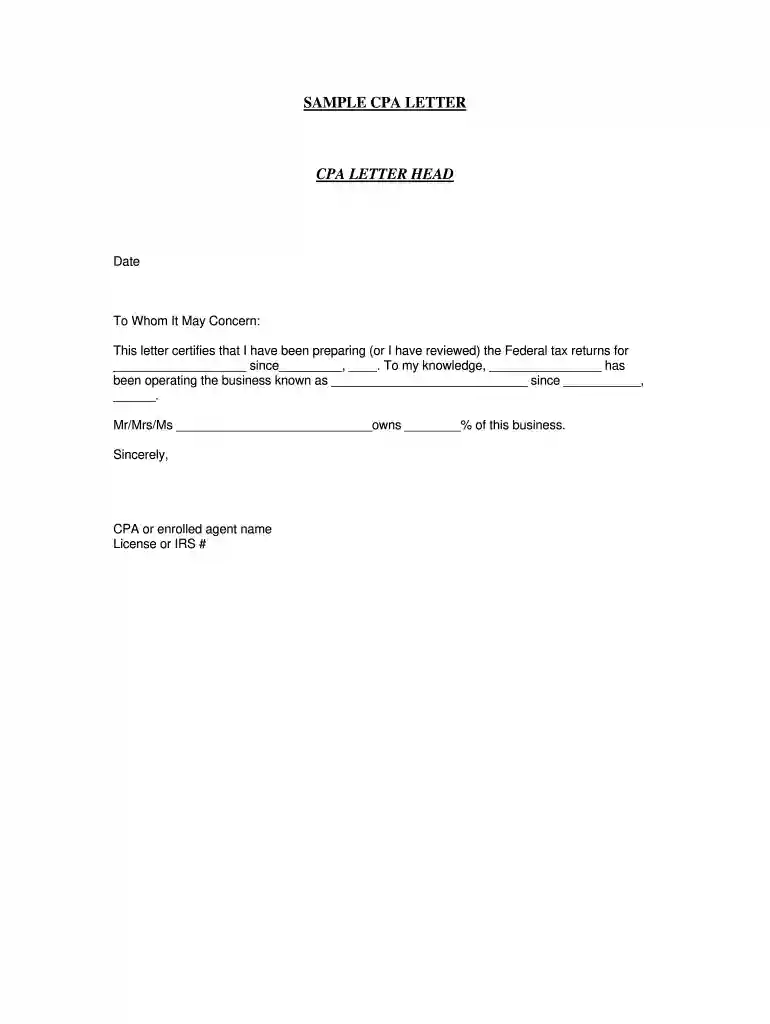
A CPA letter, or Certified Public Accountant letter, is a formal document prepared by a CPA that certifies the accuracy and legitimacy of financial statements, tax returns, or income for individuals or businesses. This letter acts as an official verification and is often required in various financial transactions, including loan applications, real estate transactions, and other instances where proof of income or financial stability is necessary. Commonly used by self-employed individuals, businesses, and institutions, a CPA letter serves as an assurance to lenders or third parties regarding the financial claims made by the entity or individual in question.
Types of CPA Letters
- Income Verification Letter: Specifically used to verify the income of self-employed individuals for lenders or other financial institutions.
- Engagement Letter: Outlines the scope and nature of the CPA’s services with a client, establishing terms for the relationship.
- Comfort Letter: Provides assurance regarding certain aspects of financial statements or compliance with regulations.
How to Obtain a CPA Letter
To obtain a CPA letter, an individual or business typically needs to engage with a licensed CPA who can provide the necessary documentation. The process usually involves several key steps:
- Identify a CPA: Seek a licensed CPA who can meet your specific needs, particularly those experienced in self-employment verification if applicable.
- Gather Required Documentation: Prepare financial documents including tax returns, profit and loss statements, and other relevant documents that provide an overview of your financial status.
- Schedule a Consultation: Meet with the CPA to discuss the purpose of the letter and the specific requirements needed.
- Written Request: Formally request the CPA letter, specifying details such as the intended use and any required information.
- Review and Delivery: The CPA will draft the letter, and you may need to review it to ensure all information accurately reflects your situation before it is finalized.
Key Elements of a CPA Letter
A comprehensive CPA letter includes several critical components to ensure its validity and effectiveness:
- Date of Issue: The date the letter is prepared or signed by the CPA.
- CPA’s Contact Information: Includes the name, address, phone number, and email of the CPA firm, establishing a point of contact for verification.
- Client Information: Details about the individual or company receiving the letter, including their name and relevant financial information.
- Purpose Statement: A clear indication of why the letter is being issued, such as income verification for loan applications or business funding.
- Financial Overview: A summary of pertinent financial data, including income figures, tax returns, and any other relevant details.
- CPA’s Signature and Credentials: The letter must be signed by the CPA, along with their certification number, confirming their licensed status.
Who Typically Uses the CPA Letter
Various individuals and entities utilize CPA letters for different purposes, primarily including:
- Self-Employed Individuals: Often require CPA letters for income verification to secure loans, mortgages, or rental agreements.
- Businesses Seeking Funding: Small businesses may need CPA letters to demonstrate financial stability when applying for loans or investment capital.
- Real Estate Transactions: Buyers may need a CPA letter to validate their income and ability to meet financial obligations related to property purchases.
- Financial Institutions: Lenders frequently request CPA letters as part of their due diligence process to ensure borrowers are credible.
Understanding the audience for which the CPA letter is intended can help streamline its preparation and enhance its effectiveness for its intended purpose.

Important Terms Related to CPA Letter
Familiarity with specific terminology surrounding CPA letters can aid in grasping their significance and application:
- Verification: The process of confirming the authenticity of financial information presented by a CPA.
- Attribution: The designation of the CPA who prepares the letter, which adds credibility to the document.
- Engagement: Refers to the professional relationship between the CPA and the client, forming the basis for the CPA's responsibilities.
- Compliance: Adhering to regulatory standards and guidelines related to the preparation and issuance of CPA letters.
By understanding these terms, users can better navigate CPA procedures and formulate requests effectively.
IRS Guidelines for CPA Letters
The Internal Revenue Service (IRS) does not mandate a specific format for CPA letters; however, it stipulates that any documentation provided for tax purposes must be accurate and free from misrepresentation. Key guidelines include:
- Accuracy: Financial representations in the CPA letter must reflect true and complete financial information.
- Documentation: Supporting documents should be maintained in case the IRS requires verification or audits the claim being made via the CPA letter.
- Timeliness: The CPA letter should be current and issued in line with the year for which it provides income or financial verification, ensuring it's relevant to the transaction or request at hand.
Adhering to these guidelines helps maintain compliance with IRS standards while ensuring credibility with third parties using the CPA letter for financial assessments.
Examples of Using the CPA Letter
Several practical scenarios illustrate the application of CPA letters in common situations:
- Mortgage Applications: A self-employed individual seeking a mortgage may provide the CPA letter to demonstrate their income stability, which can be critical for lenders who want confirmation beyond a simple pay stub.
- Loan Requests from Financial Institutions: Small business owners may need a CPA letter to validate their income when applying for an SBA loan, allowing the lender to assess their financial health.
- Lease Agreements: A potential tenant may present a CPA letter to a landlord confirming their self-employment income to secure a rental property, showcasing their ability to pay rent consistently.
These examples highlight the varied contexts in which CPA letters can be pivotal for financial transactions, emphasizing their role in establishing legitimacy and trust between parties.