
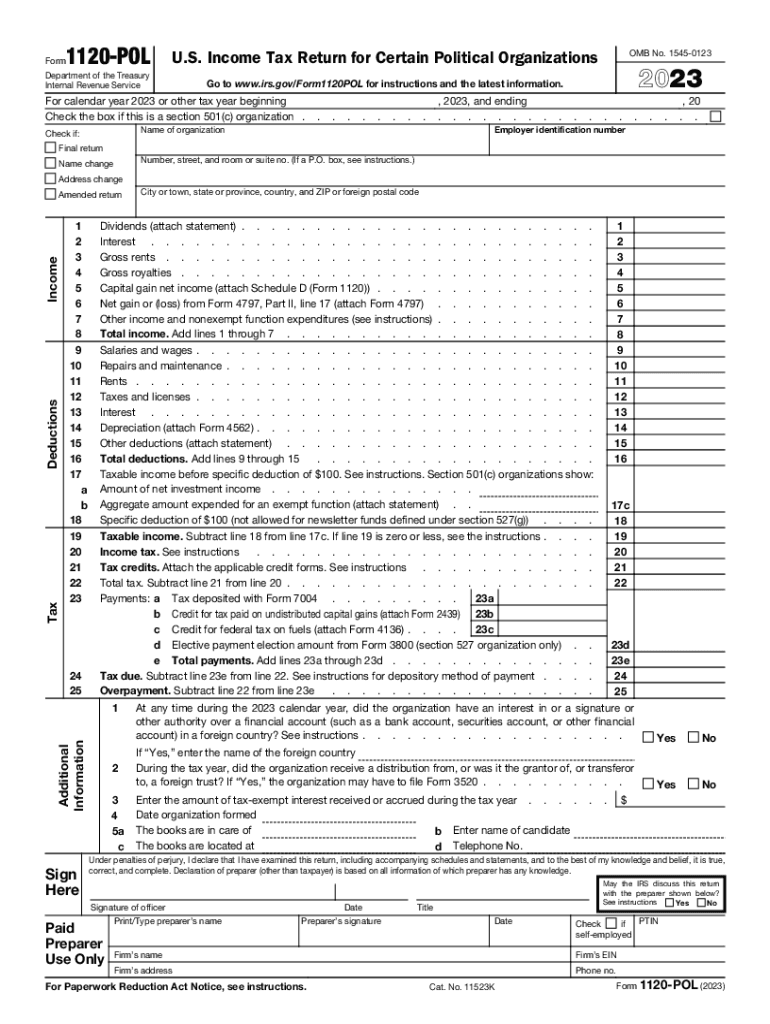







Definition & Meaning
The Annual Income Tax Returns (Form 1120-POL) is a specialized tax document used by certain political organizations in the United States to report their income and tax liabilities. Political organizations, which are classified under section 501(c) of the Internal Revenue Code, are required to file this form to ensure transparency and compliance with federal tax regulations. The form captures a range of financial details, including income sources, deductible expenses, and tax calculations, making it a critical document for maintaining lawful operations within the political landscape.
Who Typically Uses the Annual Income Tax Returns (Form 1120-POL)
Political organizations such as political parties, committees directly involved in political campaigns, and other entities organized for the purpose of influencing elections typically use Form 1120-POL. These groups might range from large national parties to small, local political action committees. Understanding who uses this form is essential for compliance purposes since failure to file or incorrect filing can lead to penalties. Organizations must assess their financial activities and confirm whether their operations necessitate the filing of Form 1120-POL.


Steps to Complete the Annual Income Tax Returns (Form 1120-POL)
-
Gather Necessary Information: Collect all relevant financial documents, including income statements, expense records, and any previous tax filings. This will ensure that you have accurate data to report.
-
Identify Income Sources: List all types of political and non-political income received during the tax year. This is crucial for calculating the correct tax liability.
-
Report Deductions: Document all allowable deductions. Common deductions include administrative expenses and salaries but must be specific to political activities.
-
Calculate Tax Liability: Use the relevant tax rates applicable to political organizations to compute the total tax payable. Pay close attention to potential tax credits or exemptions specific to political entities.
-
Complete the Form: Fill out each section accurately, ensuring all information matches your supporting documents.
-
Review and File: Double-check the form for any errors or omissions. Once satisfied, file the form using the preferred method, whether electronically or via mail.
Filing Deadlines and Important Dates
The Annual Income Tax Returns (Form 1120-POL) must generally be filed by the 15th day of the fourth month after the end of the taxable year. For organizations operating on a calendar year basis, this usually means an April 15 deadline. It's crucial for political organizations to meet these deadlines to avoid penalties. Late filings might incur fines, and organizations are encouraged to track these dates closely and plan their accounting processes accordingly. Extensions may be available but must be properly requested.
Required Documents
To accurately complete Form 1120-POL, organizations must have several key documents:
- Financial statements for the reporting year.
- Records of all political and non-political income.
- Detailed expense reports, including receipts related to political activities.
- Any previous IRS correspondence or documentation that might affect the current filing.
Having these documents readily available ensures accuracy in reporting and reduces the risk of mistakes, which could trigger audits or penalties.
Legal Use of the Annual Income Tax Returns (Form 1120-POL)
Form 1120-POL is legally mandated for political organizations with taxable income. The form ensures these entities disclose their financial activities transparently, maintaining compliance with federal laws. It serves as a tool for the IRS to monitor political financial practices and ensure that tax obligations are met. Incorrect or misleading information can result in severe legal repercussions, including fines and the potential stripping of tax-exempt status.
Penalties for Non-Compliance
Failing to comply with the requirements of Form 1120-POL can result in significant penalties. Organizations that do not file on time or provide inaccurate information may face monetary fines. The IRS imposes penalties to encourage timely and accurate reporting and to ensure that political organizations fulfill their legal obligations under U.S. tax laws. It is critical for these organizations to stay informed about their filing responsibilities and maintain precise financial records to avoid punitive actions.
IRS Guidelines
The IRS provides comprehensive guidelines for completing Form 1120-POL, which outline the requirements for income reporting, eligible deductions, and tax calculations specific to political organizations. The guidance ensures that these entities understand their responsibilities and comply with federal tax obligations. Political organizations should consult the IRS's instructions regularly to stay informed of any updates or changes to filing requirements, ensuring they meet legal standards and avoid potential disputes with tax authorities.
Key Elements of the Annual Income Tax Returns (Form 1120-POL)
- Income Sources: Detailed reporting of both political and non-political income is essential.
- Deductions: Political organizations can claim certain deductions relevant to their activities, which must be documented meticulously.
- Tax Computation: Understanding how to calculate the tax owed is a fundamental part of the form.
- Filing Information: The form requires accurate identification of the organization, including its EIN and tax year.
- Disclosure Requirements: Full disclosure of financial activities ensures compliance with IRS regulations and prevents audit triggers.




