




01. Edit your plumbing inspection checklist pdf online
Type text, add images, blackout confidential details, add comments, highlights and more.

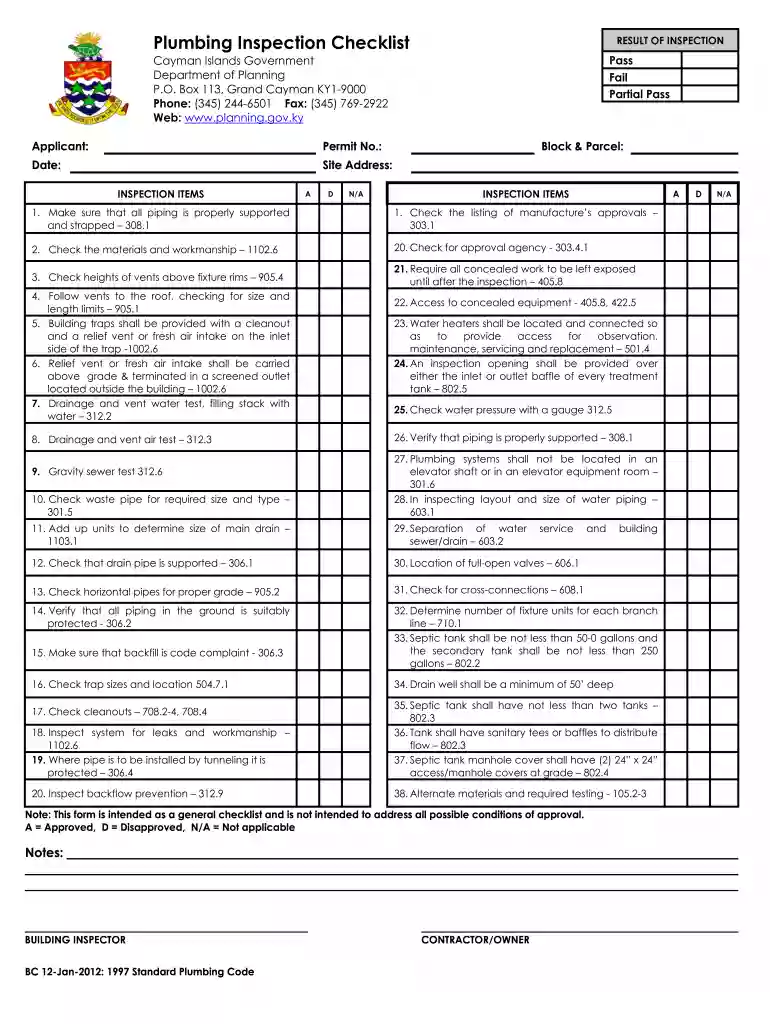
Type text, add images, blackout confidential details, add comments, highlights and more.

Draw your signature, type it, upload its image, or use your mobile device as a signature pad.

Send plumbing checklist pdf via email, link, or fax. You can also download it, export it or print it out.
The plumbing inspection form is a crucial document designed to assess compliance with plumbing codes and standards. This form serves as a formal record of inspections conducted to ensure that plumbing systems meet safety and functional requirements. Often utilized by licensed plumbers, inspectors, and building officials, the document enables systematic evaluations of plumbing installations in residential, commercial, and industrial settings.
It typically includes sections for various inspection criteria, such as the condition of pipes, fixture installations, and drainage systems. By defining clear standards and pass/fail criteria, the plumbing inspection form helps prevent plumbing failures and promotes safe practices.
Using the plumbing inspection form effectively involves several key steps.
Preparation: Gather all necessary materials and documents related to the inspection, including previous reports, building plans, and relevant plumbing codes.
Complete the Form: Fill out the form with the required information, including the property address, the date of inspection, and details about the plumbing systems in place.
Conduct the Inspection: Follow the checklist items methodically, inspecting each component of the plumbing system. Common elements to check include:
Document Findings: Record observations for each inspection item. Results should indicate whether each section has passed, failed, or partially passed. Take photographic evidence where applicable.
Review and Submit: Once completed, review the entire form for accuracy and completeness before submitting it to the relevant authority or retaining it for records.
Acquiring the plumbing inspection form can vary by locality, but generally involves the following avenues:
Online Resources: Many government and building department websites offer downloadable versions of the plumbing inspection form. This option allows for easy access and rapid completion.
Local Building Departments: Visiting or contacting your local building department can provide physical copies of the form and additional guidance on its use.
Plumbing Associations: Industry associations often provide resources and templates that can be used in various states.
By confirming the source of the form aligns with local codes, users ensure compliance with jurisdictional requirements and standards.
The plumbing inspection form typically consists of several critical components designed to facilitate thorough inspections. Key elements include:
Property Information: Details such as location, permit numbers, and owner contacts establish the investigation's context.
Inspection Items: A checklist detailing specific plumbing components like:
Conditions and Notes Section: Space for additional comments or observations made by the inspector regarding the plumbing system's state or any safety concerns.
Signatures and Acknowledgements: Space for the inspector's signature, as well as potentially the property owner's acknowledgment, asserting the findings.
These elements create a standardized approach to plumbing inspections, ensuring that critical factors are consistently evaluated and documented.
Practical applications of the plumbing inspection form span various scenarios in both residential and commercial contexts.
Residential Home Inspections: Prior to selling a home, sellers often request a plumbing inspection to validate the condition of the plumbing systems. A completed form can help negotiate repairs or price adjustments.
New Construction Projects: For contractors and builders, completing the plumbing inspection form ensures that installations comply with both local plumbing codes and best practices. This documentation is vital for securing occupancy permits.
Renovations: Homeowners renovating kitchens or bathrooms may require an inspection form to ensure modified systems meet regulatory standards, thus protecting against future plumbing issues.
Each situation underscores the plumbing inspection form's role as a foundational document in upholding safety and compliance in plumbing installations.
Each state in the U.S. often has unique regulations that affect how plumbing inspections are conducted. These variations may involve:
Certification Requirements: Some states mandate specific licensure for inspectors, which can influence how forms are completed and submitted.
Additional Documentation: Certain jurisdictions may require supplemental documents alongside the plumbing inspection form, which ensures thorough compliance with local codes.
Inspection Frequencies: Various states may dictate the frequency of inspections based on the type of building or system, leading to differences in the expectations set forth by the inspection form.
Understanding these state-specific rules is essential for inspectors and property owners to ensure that their plumbing inspection forms align with legal and regulatory standards.
The plumbing inspection form plays a vital role in enforcing safety standards by documenting compliance with plumbing codes.
Promoting Safety: By ensuring all plumbing systems meet established standards, the form helps prevent hazards such as water leaks, sewage backups, or system failures that can affect public health.
Legal Protection: A properly completed form can serve as legal documentation in disputes regarding plumbing issues, providing a defense against liability claims.
Insurance Benefits: Insurers may require proof of inspections before authorizing coverage or claims related to plumbing issues, highlighting the form's role in risk management.
The significance of the plumbing inspection form cannot be overstated as it underpins the integrity and safety of plumbing systems across various environments.
We've got more versions of the plumbing inspection checklist pdf form. Select the right plumbing inspection checklist pdf version from the list and start editing it straight away!
| Versions | Form popularity | Fillable & printable |
|---|---|---|
| 2012 | 4.8 Satisfied (251 Votes) |
At DocHub, your data security is our priority. We follow HIPAA, SOC2, GDPR, and other standards, so you can work on your documents with confidence.
The intended use of this checklist is for preparation of an inspection. This is only a general list and is not intended to address all circumstances. PleaseRead more
If your roof has one or more interior drains, inspect the drains to make sure they flow freely and are not clogged with debris. Roof Flashing. Flashing is theRead more
The purpose of the inspection is to report the general condition of the home and identify and disclose major defects and deficiencies of the inspected systemsRead more


