




01. Edit your 2016 colorado income tax online
Type text, add images, blackout confidential details, add comments, highlights and more.

Type text, add images, blackout confidential details, add comments, highlights and more.

Draw your signature, type it, upload its image, or use your mobile device as a signature pad.

Send 2016 colorado state tax form via email, link, or fax. You can also download it, export it or print it out.
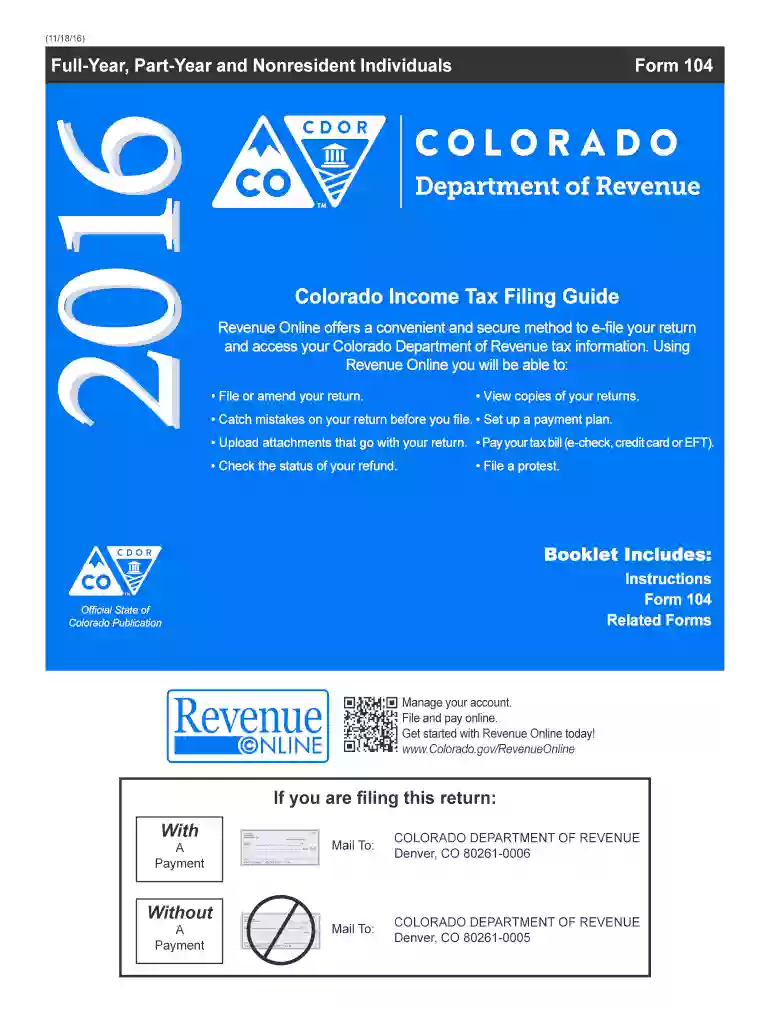
The Colorado Tax Form 2016 refers to the documentation required for taxpayers to report their income and calculate their owed taxes for the 2016 tax year in Colorado. Specifically, it often includes Form 104, which is used by full-year residents, part-year residents, and nonresidents to file their individual state income taxes. This form is essential for ensuring that taxpayers comply with state tax regulations, accurately report their income, and account for any tax liabilities or refunds due.
Obtaining the Colorado Tax Form 2016 is straightforward. Taxpayers can download the form from the official Colorado Department of Revenue website. Alternatively, forms may be available at local libraries, post offices, or through tax professionals who can provide guidance and physical copies. It is crucial to ensure that any downloaded or received forms are specifically for the 2016 tax year, as tax laws and forms can change annually.
Gather Necessary Documents: Before filling out the form, collect all relevant financial documents, such as W-2s, 1099s, and records of deductions and credits.
Fill Out Personal Information: Complete sections with your name, address, Social Security number, and filing status.
Report Income: Enter all forms of income, including wages, investments, and other earnings as reported on your federal tax return.
Calculate Deductions and Credits: Identify applicable deductions and credits, such as those for dependents, charitable contributions, and education expenses.
Determine Tax Liability or Refund: Use the form's guidelines to determine how much tax you owe or the refund you should receive.
Review and Sign: Double-check all entered information for accuracy before signing and dating the form.
Submit the Form: Mail the completed form to the address provided in the instructions or e-file through the Revenue Online system.
For the 2016 tax year, the deadline to submit the Colorado Tax Form 2016 was April 18, 2017. If needing an extension, taxpayers should have filed for it by the original due date. Extensions did not relieve taxpayers of paying any taxes owed by the deadline; penalties and interest accrue on unpaid taxes after this date.
To accurately complete the Colorado Tax Form 2016, you would need various documents, including:
The Colorado Tax Form 2016 can be submitted through several methods:
Failing to file the Colorado Tax Form 2016 or paying owed taxes by the deadline can result in various penalties. These include:
Addressing any missed deadlines promptly can often reduce penalties and interest accumulation, so contacting the Department of Revenue if experiencing difficulties is advised.
Both digital and paper versions of the Colorado Tax Form 2016 have their benefits. The digital version offers conveniences such as autofill features, error checks, and quicker processing. Paper filing may appeal to those less comfortable with digital platforms or those preferring physical documentation. Regardless of format, ensuring accuracy and timely submission is paramount to compliance.
We've got more versions of the 2016 colorado income tax form. Select the right 2016 colorado income tax version from the list and start editing it straight away!
At DocHub, your data security is our priority. We follow HIPAA, SOC2, GDPR, and other standards, so you can work on your documents with confidence.
A taxpayer who is required to disclose to the department a Federal Transaction shall file with the Department a copy of the entire IRS form 8886, or anyRead more
Feb 2, 2021 Income before income taxes increased 10% primarily as the result of higher revenues and improved gross margins across the majority of markets.Read more


