




01. Edit your form online
Type text, add images, blackout confidential details, add comments, highlights and more.

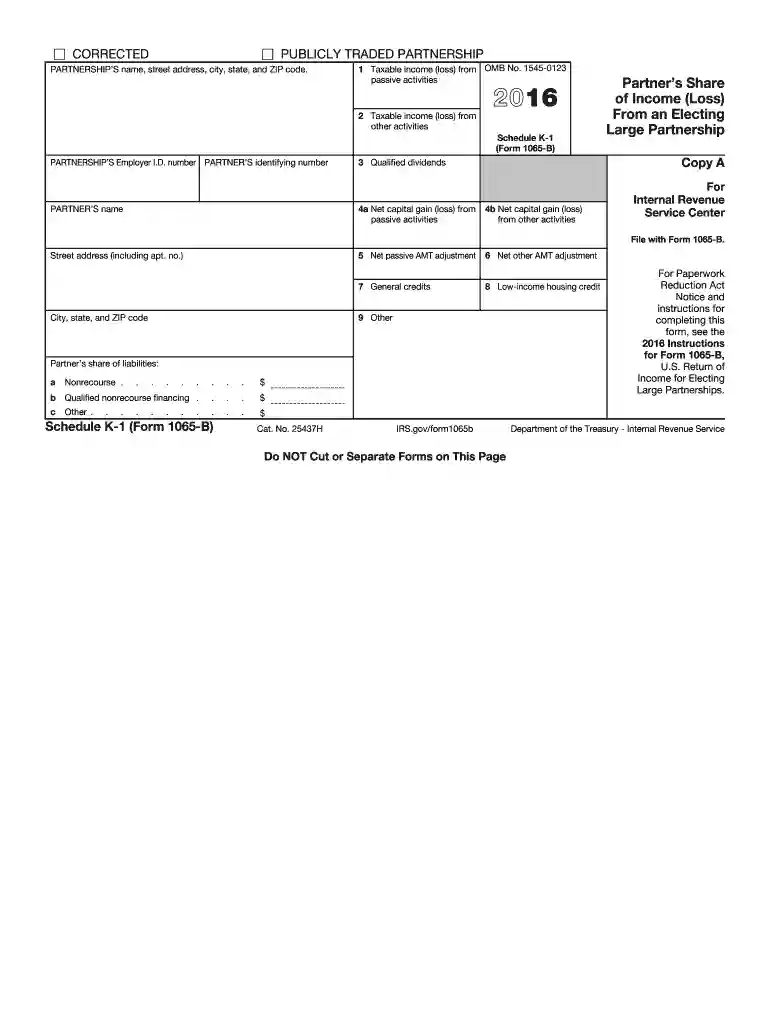
Type text, add images, blackout confidential details, add comments, highlights and more.

Draw your signature, type it, upload its image, or use your mobile device as a signature pad.

Send it via email, link, or fax. You can also download it, export it or print it out.
The 2016 IRS K-1 Form, officially titled "Schedule K-1", is an important document used by partnerships, S corporations, estates, and trusts to report the share of income, deductions, credits, and other tax-related items attributed to each partner, shareholder, or beneficiary. This form plays a critical role for individuals involved in partnerships or owning shares in S corporations, as it informs them of their share of the entity's financial gains or losses, which must be reported on their personal tax returns. The 2016 version applies specifically to tax declarations for that particular year.
The K-1 form includes several important sections:
These sections ensure clear communication of how each partner or shareholder's tax obligations tie into the overall financial activities of the entity.
Obtaining the 2016 IRS K-1 Form typically involves the following steps:
Ensuring receipt of the form is crucial for accurate income reporting during tax filing.
Completing the form requires careful attention to detail:
Thorough completion reduces the risk of errors, ensuring compliance with the IRS's guidelines.
This form is indispensable for several types of taxpayers:
These categories ensure that income is taxed appropriately at the individual level, whether it arises from passive investments or active partnership involvements.


The legal utilization of the form involves strict adherence to regulations:
These practices align with the IRS's requirements to ensure that income and tax reporting are transparent and honest.
Failing to comply with K-1 reporting can lead to repercussions:
Understanding and responding to K-1 requirements in a timely manner helps avoid these potential penalties.
Critical deadlines must be observed:
Sticking to these timelines ensures compliance and avoids unwanted delays or fines with federal and state tax submissions.
We've got more versions of the 2016 irs k 1 form form. Select the right 2016 irs k 1 form version from the list and start editing it straight away!
At DocHub, your data security is our priority. We follow HIPAA, SOC2, GDPR, and other standards, so you can work on your documents with confidence.
This list identifies the codes used on Schedule K-1 for all partners and provides summarized reporting information for partners who file Form 1040. For detailedRead more
Jan 2, 2018 If you are a U.S. citizen or resident alien, whether you must file a federal income tax re- turn depends on your gross income, your filing.Read more


