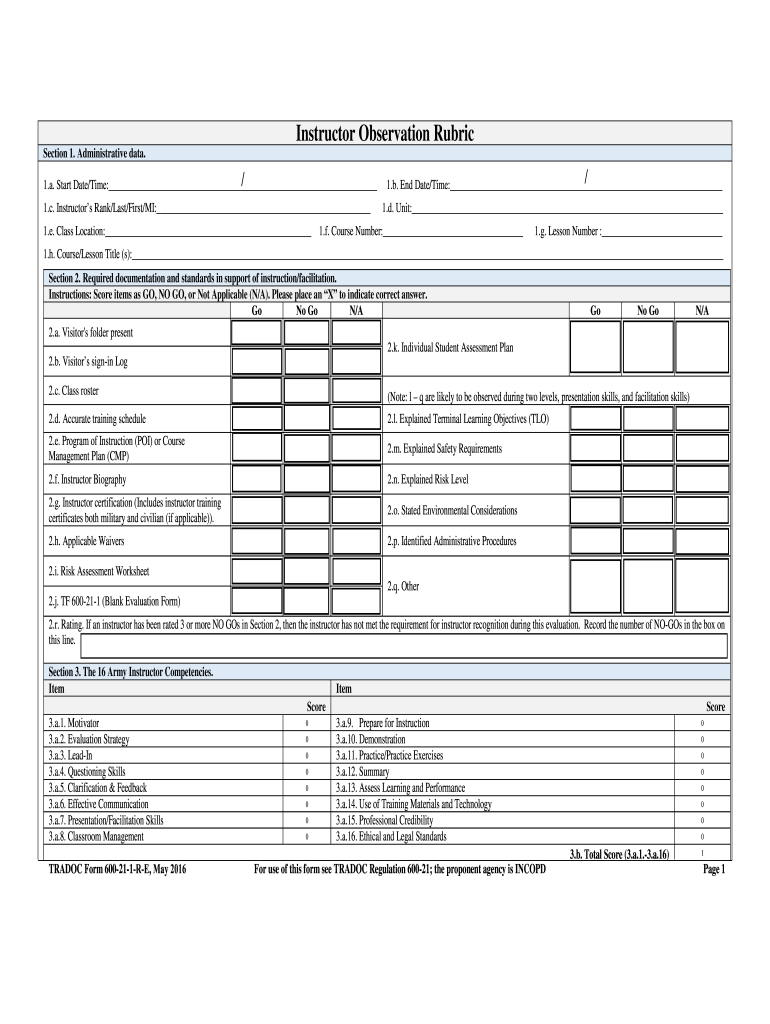







Definition and Purpose of TF 600-21-1
The TF 600-21-1 form, also known as the TRADOC Form 600-21-1, serves as a key document within military training environments, specifically managed by the U.S. Army Training and Doctrine Command (TRADOC). Its main purpose is to evaluate the performance and competencies of instructors within the Army framework. By establishing a standardized procedure for assessment, this form ensures that instructors meet predefined standards of effectiveness in teaching and facilitating training programs.
The TF 600-21-1 form is organized into several sections that detail the evaluation criteria, including both qualitative and quantitative measures based on specific instructor competencies. It promotes accountability and a culture of continuous improvement within educational settings by providing an objective means of performance measurement.
How to Use the TF 600-21-1 Form Effectively
Using the TF 600-21-1 form involves a systematic approach to accurately assess an instructor's performance. The evaluation typically follows these steps:
-
Preparation: Gather all relevant materials, including course outlines, lesson plans, and previous evaluations. Familiarize yourself with the criteria listed in the TF 600-21-1.
-
Observation: Attend the instructional sessions to observe the instructor's teaching methodologies, engagement with students, and overall effectiveness.
-
Scoring: Utilize the standardized scoring system, which ranges from 'Exemplary' to 'Unacceptable.' Each criterion will have specific benchmarks to guide the evaluation.
-
Documentation: After the observation, fill out the form in a precise manner, providing detailed comments and justifications for each rating. This documentation is vital for future reference.
-
Feedback: Share the completed evaluation with the instructor, allowing for constructive feedback and discussion on areas for improvement.
-
Follow-up: Schedule follow-up observations to track progress in areas needing development.
This structured process not only assists in providing a fair assessment but also fosters an environment of growth and continuous learning.
Steps to Complete the TF 600-21-1 Form
Completing the TF 600-21-1 form can be broken down into specific actionable steps to ensure accuracy and compliance:
-
Review the Instructor Competencies: Start by reviewing the 16 competencies listed in the form. This will set clear expectations.
-
Conduct the Observation: Attend the instructional session and take detailed notes regarding the instructor's methods and student interaction.
-
Score Each Competency: Use the scoring criteria on the form to assess each competency. Be honest and fair in your evaluation, based on your observations.
-
Provide Comments: For each rated competency, write clear, constructive comments that explain your score. Highlight strengths and pinpoint areas needing improvement.
-
Sign and Date the Form: After completing the evaluation, sign and date the form to validate the assessment.
-
Submit to Appropriate Authority: Deliver the completed TF 600-21-1 to the respective supervisor or administrative office as per organizational protocols.
By following these steps, evaluators can ensure a thorough and clear assessment of instructor performance.
Key Elements of the TF 600-21-1 Form
The TF 600-21-1 form incorporates several critical components that enhance its assessment capability:
-
Administrative Data: Basic information about the instructor, course, and observing official.
-
Competency Scoring: The heart of the form consists of 16 competencies, each accompanied by specific evaluation criteria rated on a scale.
-
Commentary Section: A dedicated space for evaluators to provide feedback related to each competency. This offers context to the scores given.
-
Signatures: Sections for both the evaluator and the instructor to sign, ensuring mutual acknowledgment of the evaluation process.
-
Date of Evaluation: Important for tracking performance over time and ensuring compliance with review timelines.
These elements work together to create a comprehensive tool for measuring teaching performance and facilitating professional development.
Important Terms Related to TF 600-21-1
Understanding specific terminology associated with the TF 600-21-1 form is essential. Here are some key terms:
-
Competencies: The skills and abilities assessed on the form, crucial for effective instruction within military training.
-
Performance Evaluation: The process of reviewing an instructor's effectiveness based on predetermined standards.
-
TRADOC: The U.S. Army Training and Doctrine Command, responsible for managing the training and evaluation framework.
-
Continuous Improvement: The ongoing effort to enhance instructor performance through structured feedback and assessments.
-
Instructor Development: The process a military training instructor undergoes to improve their skills based on evaluations and feedback.
Familiarity with these terms will enhance the clarity and usefulness of the TF 600-21-1.
Who Typically Uses the TF 600-21-1 Form?
The TF 600-21-1 form is primarily utilized by various stakeholders within the military training environment. The main users include:
-
Evaluators: Supervisors or senior personnel responsible for assessing instructor performance.
-
Instructors: Individuals being evaluated, who can use the form as a benchmark for their development.
-
Training Coordinators: Personnel overseeing training programs who may use aggregated data for program adjustments and improvements.
-
Administrative Staff: Those responsible for maintaining documentation and compliance with training standards.
Each of these roles contributes to a comprehensive approach to instructor evaluation and development within military education sectors.