
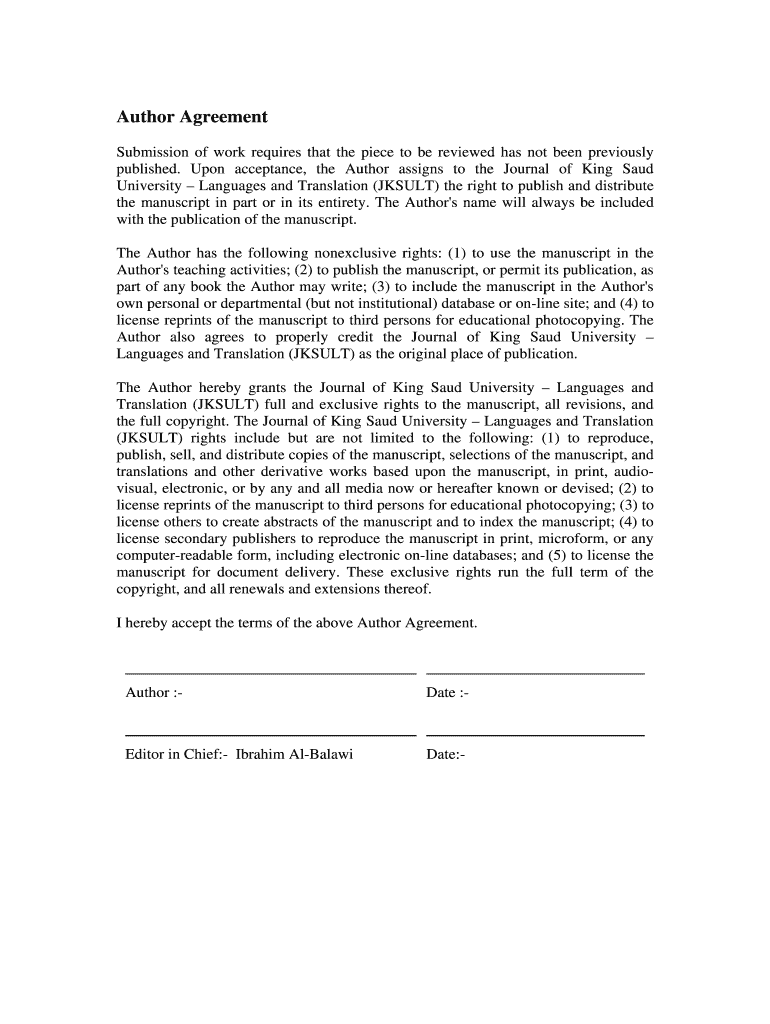







Understanding the Author Agreement Elsevier Template
The Author Agreement Elsevier template is a crucial document for authors who wish to publish their work in Elsevier journals. It outlines the rights and responsibilities of both the authors and publisher. This template ensures that all parties involved understand the implications of publication.
Key Components of the Author Agreement Elsevier Template
-
Originality Requirement: Authors must confirm that their submitted manuscripts are original, have not been previously published, and are not under consideration for publication elsewhere. This protects the integrity of published work.
-
Exclusive Rights and Non-exclusive Rights: Upon acceptance, authors grant Elsevier exclusive rights to publish and distribute the manuscript. However, authors retain certain non-exclusive rights for personal use, such as sharing their articles with colleagues or using parts of the work in future publications.
-
Reproduction and Distribution Rights: The agreement defines what rights Elsevier has regarding the reproduction, distribution, and licensing of the work. Authors give permission to publish their work in print and electronic formats, which allows wider dissemination.
Formatting and Submission Guidelines
Using the Author Agreement template involves specific formatting and submission protocols:
- Word Document Format: The template is available in a Word document format, making it easily editable for authors to complete their information.
- Template Sections: Authors are required to fill out specific sections, such as manuscript title, corresponding author details, and acknowledgments. This ensures all necessary information is collected.
- Electronic Submission: Authors can submit the signed document electronically through Elsevier’s platform, streamlining the publication process.
Importance of the Agreement for Authors
- Legal Protection: This agreement serves as a legal safeguard for both the author and the publisher. It clarifies ownership rights and usage terms, reducing potential disputes.
- Promotes Fair Use: By specifying what authors can do with their work post-publication, such as sharing their own articles or using them for educational purposes, the agreement promotes fair use practices.
- Facilitates Transparency: The clear outline of roles and responsibilities builds trust between authors and Elsevier, which is vital in the academic publishing landscape.
How to Complete the Author Agreement Elsevier Template
To effectively complete the Author Agreement Elsevier template:
- Download the Template: Obtain the latest version from the Elsevier website, ensuring it meets current publication standards.
- Fill in Required Information: Enter details accurately, including author names, affiliations, and the title of the work.
- Review All Terms: Carefully read through the agreement to understand the rights being transferred and retained. Ensure that you agree with all provisions.
- Obtain Necessary Signatures: All authors involved must sign the document where indicated, establishing consent and acknowledgment of the terms.
- Submit the Completed Agreement: Follow Elsevier's submission guidelines for returning the completed agreement to ensure it is processed efficiently.
Variations and Examples of Author Agreements
Different Elsevier journals may have slight variations in their author agreements based on specific policies or publication requirements. Common variations include:
- Modified Distribution Rights: Some journals may offer different terms regarding licensing, allowing authors to have more control over their work.
- Open Access Options: Certain agreements may include provisions for open access publishing, enabling wider public access to the work, which can enhance visibility and citations.
Understanding the nuances of the Author Agreement Elsevier template is essential for authors looking to navigate the publication landscape confidently. This template not only ensures compliance with publishing standards but also protects authors' intellectual property rights.




