
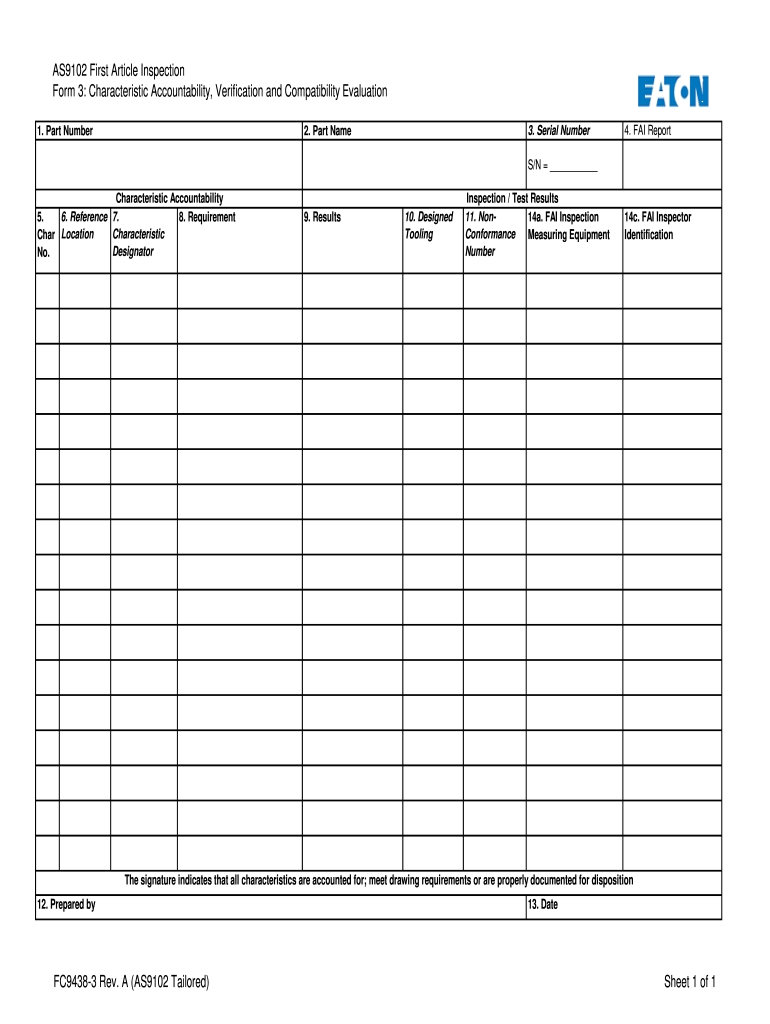







Definition and Overview of AS9102
AS9102 is a widely recognized standard that pertains to the First Article Inspection (FAI) process, particularly within the aerospace and defense industries. This standard is crucial for ensuring the quality and compliance of components that are part of aerospace and defense programs. The AS9102 standard provides a structured approach for documenting, verifying, and validating that the manufactured parts conform to design specifications before they enter production. This includes both the design features and the manufacturing processes.
By following the AS9102 guidelines, organizations aim to achieve greater accountability throughout the production process. The core focus lies in verifying the first products manufactured under a new design or process against the original design specifications, ensuring all characteristics are compliant. The AS9102 structure includes various forms, with the First Article Inspection Form being most prominent, allowing for comprehensive documentation of inspections.
How to Use the AS9102
Using the AS9102 involves several key steps that facilitate an effective FAI process. Organizations typically begin by becoming familiar with the standard's requirements, which may include the following:
- Prepare Documentation: Gather all relevant documentation related to the design and previous inspections of the part or assembly being evaluated. This might include engineering drawings, specifications, and previous inspection data.
- Complete the AS9102 Form: Populate the AS9102 First Article Inspection Form with part details, such as the part number, revision level, and other essential data points.
- Conduct Inspections: Carry out detailed inspections as dictated by the specifications. This typically includes verifying critical characteristics, dimensions, and material specifications.
- Record Findings: Document all findings in the AS9102 form, ensuring that discrepancies and deviations from expected results are noted and addressed.
In addition to these steps, organizations must also train their staff in the AS9102 guidelines and ensure that all personnel understand the importance of following the established processes for effective quality assurance.
Steps to Complete the AS9102
To effectively complete the AS9102 documentation, organizations should follow a series of structured steps. These steps are designed to ensure thoroughness and compliance with regulatory requirements:
- Review Design Documentation: Ensure all engineering drawings and specifications are accurate and up-to-date.
- Fill Out Part Information: Enter part identification details, including the part number and description, in the AS9102 form.
- Perform Required Inspections: Execute all inspections necessary to verify that part features meet specifications. This may involve physical measurements, visual inspections, and functional tests.
- Document Results: Write down all findings in the AS9102 form, clearly indicating whether each characteristic complies with requirements or if any non-conformance was observed.
- Sign and Submit: Once all data has been collected and reviewed, relevant personnel should sign the document to confirm its accuracy. The form should then be submitted to appropriate quality assurance or compliance teams.
By adhering to these steps, organizations can ensure that their completed AS9102 forms reflect a true picture of part compliance, facilitating future quality assurance processes.
Who Typically Uses the AS9102
The AS9102 standard predominantly serves stakeholders within the aerospace and defense sectors, where quality assurance is paramount. Typical users of the AS9102 forms and standard include:
- Manufacturers: Companies producing aerospace components, such as engines, airframes, or other critical parts, rely on AS9102 to assure product quality and compliance to specifications.
- Suppliers: Organizations supplying components to manufacturers often need to complete AS9102 documentation to demonstrate adherence to quality standards and facilitate certification processes.
- Quality Assurance Teams: Quality control professionals utilize AS9102 forms for inspection and audit purposes.
- Regulatory Bodies: Agencies and organizations involved in regulatory oversight may require documentation as part of compliance checks to ensure that production processes meet industry standards.
These entities work in a highly regulated environment, which necessitates strict adherence to quality and safety standards, thus making AS9102 an essential part of their operational frameworks.


Important Terms Related to AS9102
Understanding the terminology associated with AS9102 is essential for its effective application. Key terms include:
- First Article Inspection (FAI): A process for verifying that a manufacturing process is capable of producing parts that meet defined requirements before full production.
- Characteristic Accountability: Ensures that all characteristics of the product are verified against specified requirements.
- Deviation: Any instance where a characteristic does not conform to established specifications.
- Verification and Validation: The processes of confirming that a product meets defined requirements (verification) and fulfills its intended purpose (validation).
- Non-Conformance: Aspects of a product or process that do not meet established standards or specifications.
Familiarity with these terms allows for clearer communication among teams and improved compliance with the AS9102 standards.
Key Elements of the AS9102
The key elements of the AS9102 standard are critical for the effective execution of First Article Inspections. These elements ensure a comprehensive approach to quality assurance:
- Documentation Requirements: Clear guidelines on what documentation must be provided, including design records and inspection results.
- Inspection Criteria: Specific benchmarks for evaluating part features, such as dimensions, materials, and process capabilities.
- Discrepancy Handling: Procedures for managing any deviations identified during inspections, including documenting non-conformance and corrective action plans.
- Approval Process: Steps for obtaining sign-off from qualified personnel to validate the inspection results and assure adherence to specifications.
- Continuous Improvement: Provisions for reviewing FAI results to enhance manufacturing processes and address recurring non-conformances.
By incorporating these elements into their quality assurance practices, organizations can enhance their compliance with AS9102 and contribute to improved product quality.




