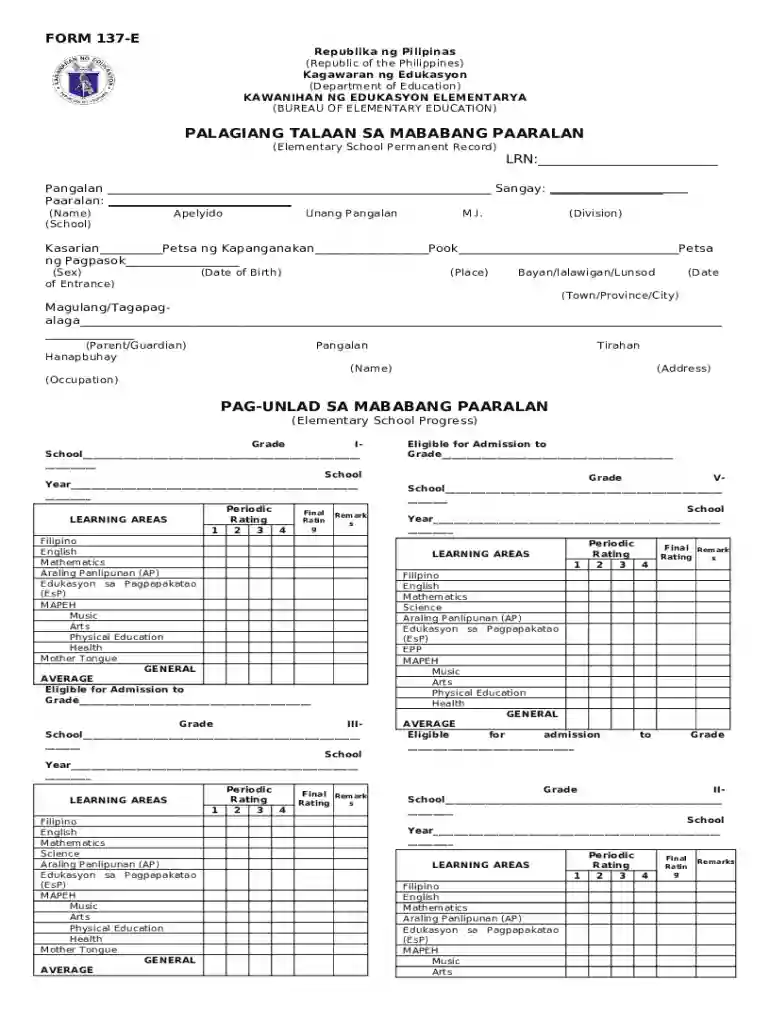
Definition and Meaning of Form 137
Form 137 is an official document primarily used in educational contexts, particularly in the United States, to maintain a comprehensive record of a student's academic performance and personal details. Often referred to as an academic transcript or record, this form includes essential information such as grades, attendance records, and other relevant academic indicators. It is crucial for students transitioning between schools, as it helps institutions verify a student's previous academic experiences and achievements.
Key Information Included in Form 137
- Personal Information: This section typically captures the student's name, date of birth, and identification number.
- Academic Performance: Details regarding the subjects taken, corresponding grades, and credits earned are outlined, providing a clear overview of the student’s educational journey.
- Attendance Records: Regular attendance is an important aspect of academic performance; hence, Form 137 often includes attendance metrics demonstrating the student's engagement and participation.
- Certification Statements: This section may contain certifications that the student meets the eligibility criteria for transferring to a new school or advancing to a higher grade level.
How to Use Form 137
Proper utilization of Form 137 is essential for students and educational administrators. Below are some key applications of this document.
Academic Transitions
- Transfer to Another School: When transferring schools, students typically need to present Form 137 to their new educational institution, allowing them to enroll in classes commensurate with their previous experiences.
College Admissions
- Required for Higher Education: Many colleges and universities require applicants to submit Form 137 as part of their admissions process. This ensures that admissions boards have access to reliable academic history before making decisions.
Proof of Enrollment
- Verification for Scholarships or Financial Aid: Students may need to submit Form 137 to demonstrate academic standing when applying for scholarships, grants, or financial assistance programs.
How to Obtain Form 137
Obtaining Form 137 can differ depending on the educational institution; however, the general steps included below guide users in acquiring this important document.
Request from Educational Institution
- Contact School Administration: Reach out to the registrar's office or school administration. They can provide specific forms and requirements needed for requesting Form 137.
- Complete Required Forms: Some schools may require students or parents to fill out request forms or provide identification for processing.
Online Access
- School Portals: Many institutions now offer online access where students can log into their accounts and download a digital version of Form 137. Be sure to check if the institution’s portal provides this feature.
Steps to Complete Form 137
Completing Form 137 accurately ensures its validity and effectiveness for academic and administrative use. Here are the main steps to take when filling out this form.
- Gather Personal Information: Ensure all personal data, such as full name, date of birth, and unique identification number, are correct.
- Enter Academic History: Fill in details regarding courses taken during the academic year, including grades received and any credits earned.
- Document Attendance Records: Input attendance data, showcasing the number of days present versus absent. This metric is often important for eligibility status.
- Review for Accuracy: Before submission, review all information for completeness and accuracy, considering any school requirements for submission formats.
Why Should You Use Form 137?
The use of Form 137 offers several significant benefits for students and educational institutions. Here are key reasons for its importance.
Verifying Academic History
- Supports Transitions: Form 137 aids in verifying a student’s academic history, which is vital for new schools assessing enrollment eligibility.
Facilitating Educational Plans
- Curriculum Planning: Schools can reference Form 137 to determine appropriate placement for students based on their past performance.
Who Typically Uses Form 137?
Form 137 is utilized by various stakeholders within the educational field.
Educational Administrators
- Registrars and Counselors: These individuals rely on Form 137 for record-keeping and advising students regarding their academic journey.
Students and Parents
- Current and Prospective Students: They may seek this form for college applications, transfers, or other academic-related purposes. Parents often assist their children in acquiring and submitting Form 137.
Important Terms Related to Form 137
Understanding terminology associated with Form 137 enhances clarity and comprehension in its use. Below are some common terms related to this document.
- Transcript: A document summarizing a student's academic performance.
- Credits: Units that represent the completion of specific courses that contribute to graduation requirements.
- Attendance Record: A log that indicates a student's presence in class on designated days.
Legal Use of Form 137
The legal implications of Form 137 are significant, especially in educational transitions and higher education admissions. The document serves not only as an academic record but can also become part of legal considerations surrounding enrollment verification, student rights, and data protection standards.
Compliance with Regulations
- ** FERPA Compliance:** Educational institutions must ensure that access to Form 137 adheres to the Family Educational Rights and Privacy Act (FERPA), which protects students' educational records.
Authentication and Verification
- Legitimacy of Enrollment: Schools may require legitimate proof of previous education as part of enrollment criteria, making Form 137 crucial for students entering new learning environments.