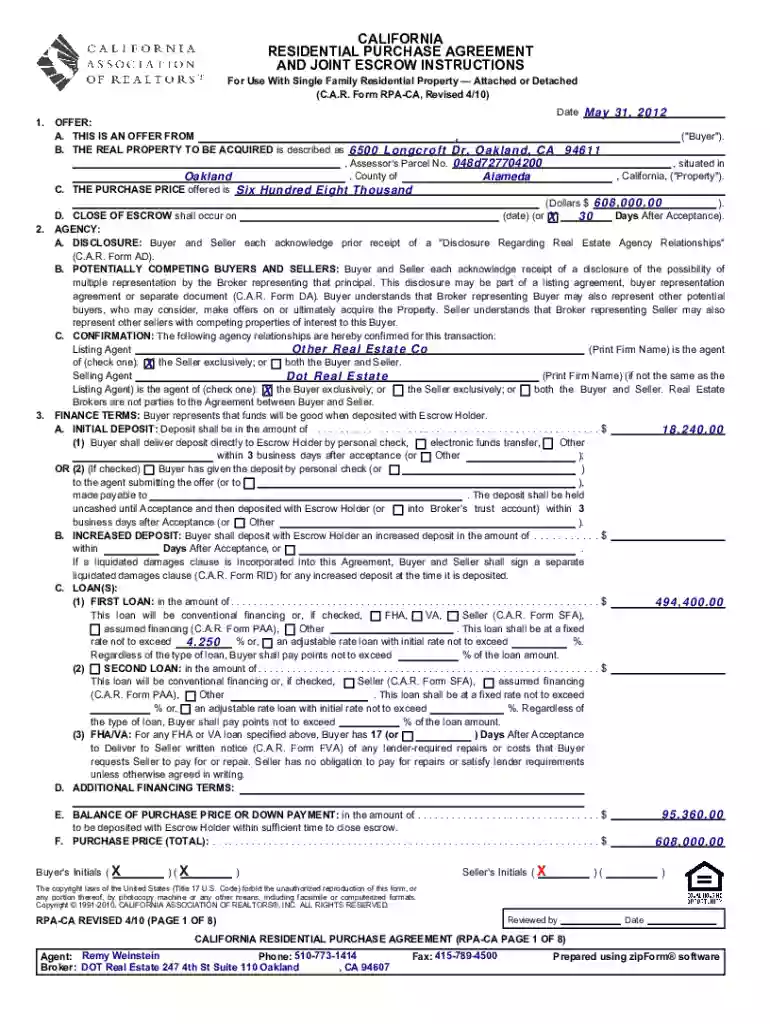
Rpa form 2026

Get Form
rpa form Preview on Page 1

Here's how it works

01. Edit your rpa form online
Type text, add images, blackout confidential details, add comments, highlights and more.

02. Sign it in a few clicks
Draw your signature, type it, upload its image, or use your mobile device as a signature pad.

03. Share your form with others
Send rpa forms via email, link, or fax. You can also download it, export it or print it out.

Understanding the RPA Form: Definition and Purpose

The RPA form, or Residential Purchase Agreement, is a crucial document used primarily in real estate transactions to outline the terms and conditions under which a property is being sold. It serves as a legally binding contract that delineates the rights and obligations of the buyer and seller, ensuring that both parties are aware of the relevant details before moving forward with the sale. This agreement is particularly common in residential real estate transactions and is utilized extensively across various states in the U.S., including California.

The RPA form typically includes essential elements such as the purchase price, financing details, property description, and disclosures related to the property's condition. It also addresses various contingencies that could affect the completion of the sale, such as inspections or financing approval, which are important for protecting the interests of both the buyer and seller.

How to Utilize the RPA Form Effectively

To effectively use the RPA form in a real estate transaction, it is important to follow a structured approach. Below are key steps:

  1. Acquire the Form: The first step in using the RPA form is to obtain the most current version available for your state. In California, the "New RPA California 2023 PDF" is a reliable format to use.
  2. Complete Basic Information: Fill out the essential details, including the names of the buyer and seller, the property address, and the specific terms of the sale.
  3. Identify Contingencies: Clearly outline any contingencies that must be met for the deal to be valid, such as property inspections or financing conditions.
  4. Review and Sign: Once both parties have filled out and agreed to all terms, the RPA form must be signed to be legally enforceable. It's advisable to consult with a real estate professional or attorney to ensure that nothing is overlooked.
  5. Distribute Copies: After signing, make additional copies of the RPA form for all parties involved to keep.

These steps ensure that the RPA form serves its purpose of providing a clear framework for the transaction, minimizing misunderstandings, and protecting the rights of both parties.

Key Elements to Include in the RPA Form

To ensure the RPA form is comprehensive and effective, several critical elements should always be included:

  • Purchase Price: The total amount agreed upon for the sale of the property.
  • Financing Terms: Details about how the buyer intends to finance the purchase, including whether it will be a cash transaction or mortgage-based.
  • Property Descriptions: A detailed description of the property being sold, including physical address and legal description.
  • Contingency Clauses: Specific conditions that must be met for the agreement to proceed, such as successful home inspections or loan approval.
  • Disclosures: Any known issues with the property that could affect its value or usability, as mandated by law.
  • Closing Date: The expected date by which the transaction will be completed.

Including these essential components helps ensure that all parties have a mutual understanding of the agreement, enhancing clarity and reducing the likelihood of disputes.

Important Legal Considerations Regarding the RPA Form

Certain legal considerations should be kept in mind when using the RPA form:

  • Compliance with State Laws: Each state has specific laws governing real estate transactions, which may dictate what must be included in the RPA form. For instance, California has particular requirements concerning disclosure statements that must be attached.
  • Legally Binding Nature: The RPA form serves as a binding contract once signed by both parties; thus, misunderstandings or failure to adhere to the terms can lead to legal consequences.
  • Required Signatures: Most states require that both buyer and seller must sign the RPA form for it to be legally enforceable. The absence of a signature may void the agreement.
  • Adhere to Deadlines: Timelines for contingencies and closing dates specified in the RPA form must be adhered to strictly, as failing to meet these deadlines can result in breach of contract.

Understanding these legal aspects is crucial for ensuring that the use of the RPA form is not only effective but also compliant with regulations, thereby protecting the interests of both parties in a real estate transaction.

Common Variants and Updates to the RPA Form

The RPA form can come in various versions and may be updated based on regulatory changes or market conditions.

  • State-Specific Variants: Different states may have tailored RPA forms to accommodate local real estate laws and practices. It's essential to use the correct version for your jurisdiction, such as the "New RPA California 2023 PDF."
  • Previous Versions: Being aware of older versions of the RPA form can be helpful, especially if prior agreements were made using them. Ensure that any references to previous forms are updated to reflect current standards.
  • Digital vs. Paper Versions: With the advancement of technology, both digital and paper versions of the RPA form are widely accepted. However, ensure compliance with e-signature regulations if the digital version is used.

Understanding these aspects allows parties to navigate the complexities of real estate contracts effectively while ensuring adherence to legal requirements.

be ready to get more

Complete this form in 5 minutes or less

Get form

Got questions?

We have answers to the most popular questions from our customers. If you can't find an answer to your question, please contact us.
Contact us
The Residential Purchase Agreement is used to create a legally binding agreement between the buyer and the seller. Within the RPA are all the terms, conditions, and stipulations agreed upon by all parties in the transaction.
What is RPA? Robotic process automation (RPA), also known as software robotics, uses intelligent automation technologies to perform repetitive office tasks of human workers, such as extracting data, filling in forms, moving files and more.
RPA bots can be programmed to apply any updates in finance legislation, for example. Alternatively, they can process and review payroll or expense reports and ensure consistent enforcement of policy across the organization flagging anomalies or exceptions for human intervention.
A California Residential Purchase Agreement (RPA) is a legally binding contract between a buyer and seller. It lays out the terms of a real estate transaction, covering everything from price to closing dates.
RPAs are a valid form of UCAS application available for you to use to recruit applicants who you have gained through a direct application.

Security and compliance

At DocHub, your data security is our priority. We follow HIPAA, SOC2, GDPR, and other standards, so you can work on your documents with confidence.

Learn more
be ready to get more

Complete this form in 5 minutes or less

Get form

People also ask

These Files are created by iTWO, a construction planning and engineering software package; contains an archive of a Progress ObjectStore database, which is the backend storage format for iTWO project data; used for creating backups as well as archiving projects. RPA files are backup copies of the data stored in .

new rpa california 2022